 Save
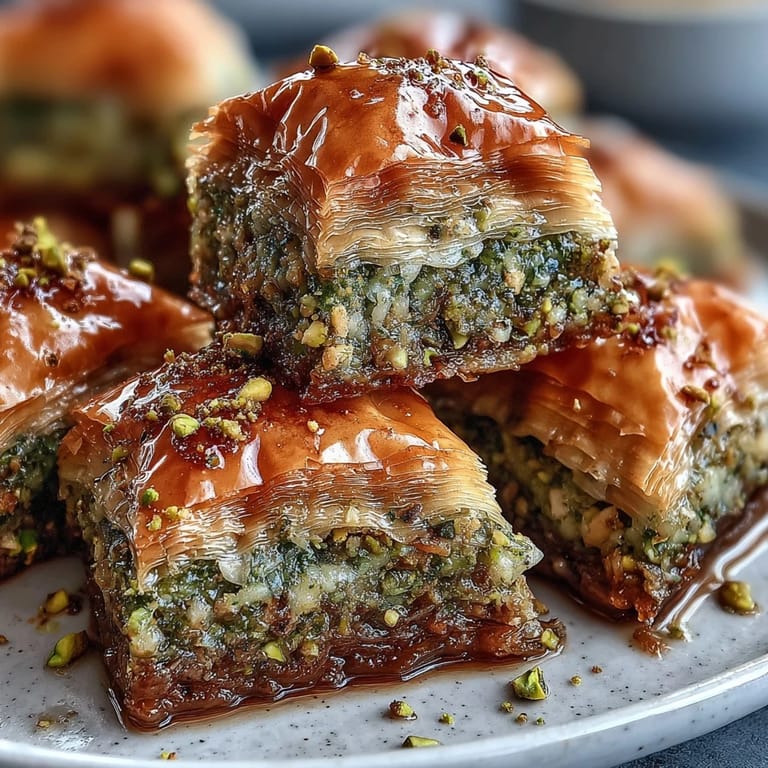
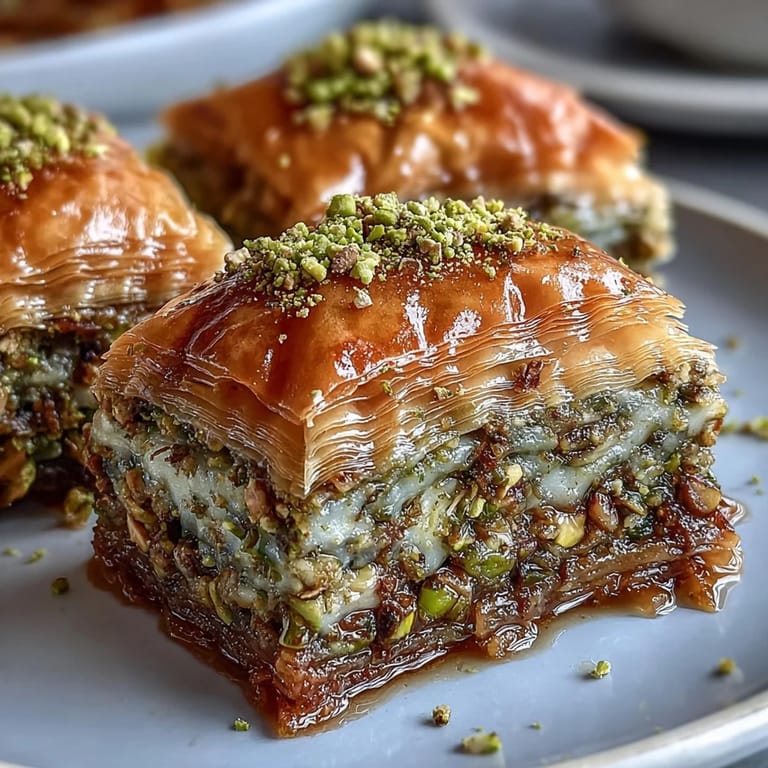
Save My neighbor brought over a box of baklava during a surprise visit, and watching her unwrap it from tissue paper felt like opening a treasure. The way those golden diamonds caught the kitchen light, how the honey dripped slowly when I lifted one—it made me want to understand the patience behind every layer. That afternoon, I decided to stop buying them and start building them myself, one buttered sheet at a time.
I made this for my book club last spring, and everyone went quiet the first bite—that rare, beautiful silence that means food just won. One guest asked for the recipe three times, then finally admitted she'd written it down from memory during dessert because she didn't want to forget. That's when I knew these baklava diamonds were worth the thirty minutes of careful brushing.
Ingredients
- Phyllo dough (16 oz, thawed): This paper-thin pastry is the soul of baklava; thaw it slowly in the refrigerator the night before, then let it sit at room temperature for an hour so it becomes pliable without tearing.
- Unsalted butter (1 cup, melted): Use real butter, not margarine—the flavor is non-negotiable, and the moisture it provides is what creates those golden, crispy layers.
- Shelled pistachios (2 cups, finely chopped): Pulse them in a food processor until they're the texture of coarse breadcrumbs; too fine and they become paste, too chunky and they won't bind together.
- Granulated sugar (1/2 cup for filling): The sugar draws out the pistachio oils and creates a subtle sweetness that doesn't overpower the nut flavor.
- Ground cinnamon (1 tsp): This spice is the whispered secret that makes people ask what they're tasting; it bridges the nutty and honey notes beautifully.
- Honey (1 cup): Choose a good quality honey because it's the star of the syrup; avoid the plastic squeeze bottles and reach for real honey instead.
- Water (3/4 cup): This dilutes the honey just enough so the syrup soaks in rather than sitting on top.
- Lemon juice (1 tbsp): A small amount cuts the honey's sweetness and adds brightness that keeps the dessert from feeling heavy.
- Orange blossom water (1 tsp, optional): If you can find it, this transforms baklava from delicious into transcendent; it adds a floral note that feels authentically Middle Eastern.
Tired of Takeout? 🥡
Get 10 meals you can make faster than delivery arrives. Seriously.
One email. No spam. Unsubscribe anytime.
Instructions
- Prepare your canvas:
- Preheat the oven to 350°F and brush your 9x13-inch baking dish generously with melted butter—this prevents sticking and helps the bottom layers crisp up. Think of this as coating the foundation so everything that follows has a chance to shine.
- Mix the pistachio filling:
- Combine your finely chopped pistachios with the sugar and cinnamon in a bowl, stirring until the mixture looks like damp sand. This blend is what fills every layer, so taste it and adjust the cinnamon if it feels too subtle or too strong for your preference.
- Build the first foundation:
- Lay down 8 sheets of phyllo, brushing each one individually with melted butter before laying the next sheet on top. Work gently—phyllo tears easily, but small tears don't ruin anything; they just create interesting texture variation.
- Add the first pistachio layer:
- Sprinkle one-third of your pistachio mixture evenly over the phyllo, covering it in an even blanket. This is where the construction starts feeling real and satisfying.
- Build the middle section:
- Layer 4 more phyllo sheets with butter between each, then sprinkle another third of the pistachio filling, then repeat with 4 more sheets and the remaining nuts. By now, your hands understand the rhythm, and it goes faster than you expected.
- Crown with the top layers:
- Finish with the final 8 phyllo sheets, brushing each one with butter as you go until the whole thing is sealed. This top layer will become golden and crispy, protecting everything underneath.
- Score before baking:
- Using a sharp, straight knife, cut the entire baklava into diamonds or squares, cutting all the way through to the bottom of the pan. Some people say to cut before baking, others after—cut before, so the syrup seeps into every piece.
- Bake until golden:
- Slide into the oven for 35 to 40 minutes, watching until the top turns deep golden brown and you can hear the phyllo crackling slightly. The smell alone will make you question why you don't make this every week.
- Prepare the honey syrup while baking:
- In a saucepan, combine honey, water, sugar, and lemon juice, bringing it to a boil before reducing heat to a gentle simmer for 8 to 10 minutes. Stir in the orange blossom water if using, then remove from heat and let it cool slightly—you want it warm, not scalding.
- Pour the syrup immediately:
- The moment the baklava comes out of the oven, pour the warm honey syrup evenly over the entire pan, letting it soak into every cut piece. This contrast between hot syrup and hot pastry is what creates that signature texture.
- Let it cool completely:
- Leave the baklava at room temperature for at least an hour, or better yet, overnight—this allows the syrup to fully absorb and the layers to set. Patience here transforms good baklava into extraordinary baklava.
 Save
Save There's a particular kind of joy in watching someone's eyes close the moment baklava touches their tongue, that involuntary reaction when honey and crispy phyllo and pistachio all arrive at once. I've learned that this dessert is more than technique; it's a small act of care that says you spent time thinking about someone's pleasure.
Storage & Keeping
Baklava is one of those rare desserts that actually improves over the first day or two as the flavors meld and the syrup settles deeper into the layers. Store it in an airtight container at room temperature for up to five days, and resist the urge to refrigerate it—cold baklava loses its crispy magic. If you find yourself with leftover pieces after a week, they still taste good, though the phyllo softens slightly.
Variations & Substitutions
You can absolutely swap pistachios for walnuts, almonds, or a blend of whatever nuts you have on hand; the technique remains identical, and the flavor profile shifts slightly in interesting directions. Some people layer their nuts differently, creating stripes of pistachio and walnut for visual drama. I've experimented with adding a tiny pinch of cardamom to the filling, and it created this unexpected warmth that made the whole thing feel more exotic.
Serving Suggestions
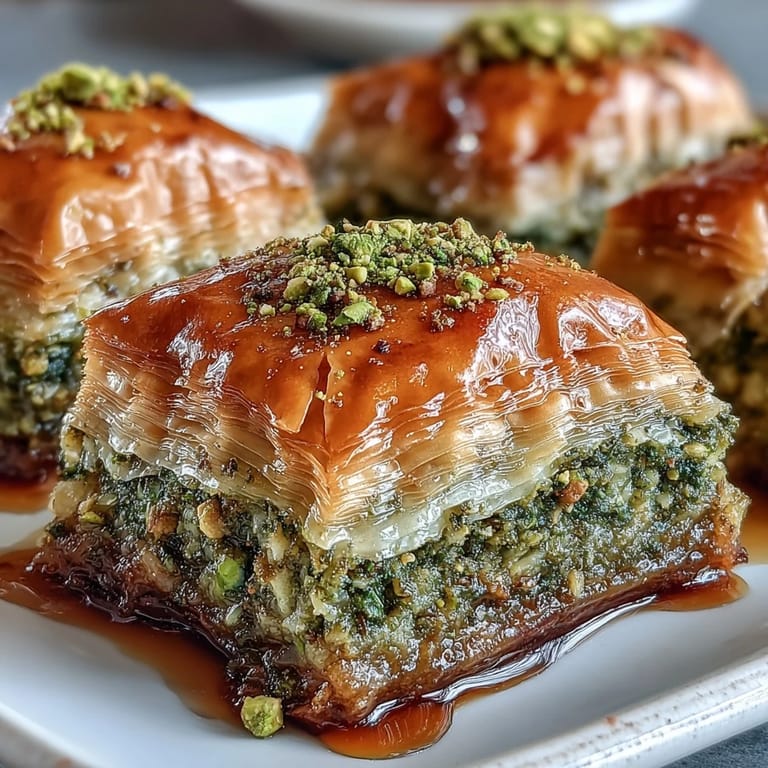
Baklava tastes best alongside something to cut through the sweetness—strong coffee, bitter dark tea, or delicate mint tea all work beautifully. The contrast between sweet dessert and slightly astringent beverage creates a rhythm of flavors that feels balanced and intentional. You can also dust the finished pieces with a tiny bit of ground cardamom or chopped pistachios before serving for extra visual appeal and a flavor reminder.
- Serve baklava at room temperature so the layers maintain their crispy texture and the honey stays pourable.
- A single piece with coffee is perfect; two pieces means you're officially having a moment, and three means you've accepted your fate.
- Wrap individual pieces in small napkins or parchment for gifting—it shows you made these by hand, and people notice details like that.
 Save
Save Making baklava taught me that some of the most impressive desserts are built through repetition and patience rather than complicated techniques. Now when I bring a box of these golden diamonds to a gathering, I carry a small secret—the knowledge of every layer, every brush stroke, every choice that made them possible.
Kitchen Tips & Answers
- → How should I store baklava to maintain freshness?
Keep it in an airtight container at room temperature to preserve crispness for up to a week. Refrigeration may soften the layers.
- → Can I use other nuts instead of pistachios?
Yes, walnuts or mixed nuts provide a great alternative while complementing the honey syrup’s sweetness.
- → What is the role of orange blossom water in the syrup?
It adds a subtle floral fragrance that enhances the dessert’s aromatic profile without overpowering other flavors.
- → How do I ensure the phyllo layers bake evenly?
Brush each sheet generously with melted butter and spread the nut filling evenly to prevent sogginess and encourage uniform crisping.
- → Is it possible to prepare the nut filling in advance?
Absolutely, chopping and mixing nuts with sugar and cinnamon a day before saves time and allows flavors to meld.
- → What is the best way to cut baklava before baking?
Use a sharp knife to cut into diamond or square shapes; cutting prior to baking helps create uniform pieces and even cooking.