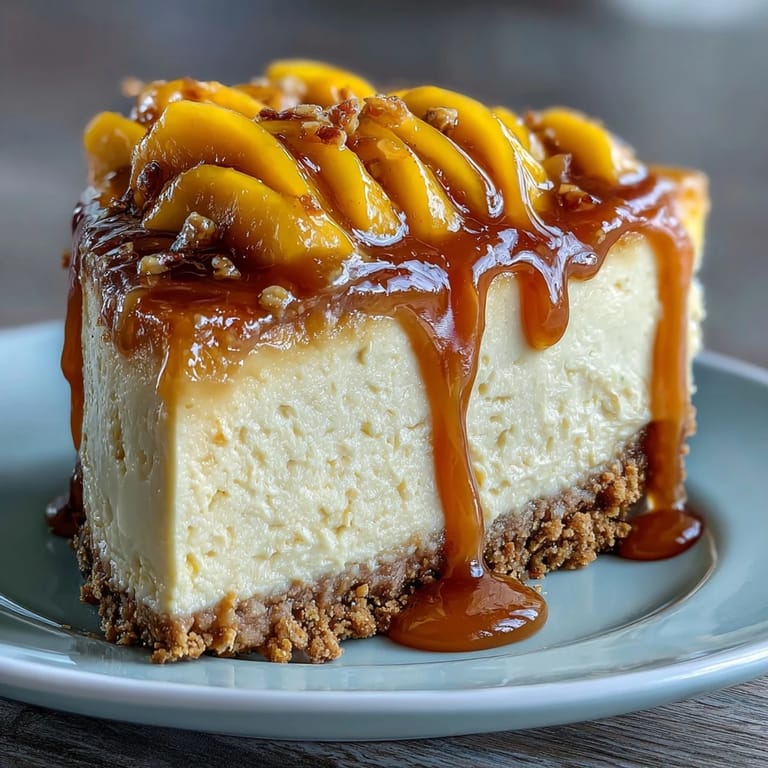
 Save
Save My friend texted me a photo of a mango she'd bought at the farmer's market—perfectly golden, still warm from the sun—and asked what she should do with it. I found myself typing out an entire cheesecake recipe without thinking, suddenly transported to a dinner party where I'd served this exact dessert and watched someone's eyes light up at that first bite of creamy, tropical indulgence. The combination of buttery biscuit, silky cheesecake, and that bright mango swirl feels like a celebration in every slice.
I made this for my sister's engagement party on a sweltering August afternoon, and something magical happened in that kitchen—the smell of baking cheesecake mixed with the tropical brightness of fresh mangoes, and somehow it felt like summer itself was in the oven. When I pulled it from the fridge the next morning and drizzled that glossy coulis over the top, even I was impressed, and that's saying something.
Ingredients
- Digestive biscuits (200g): The foundation of everything, and honestly, the butter-to-crumb ratio here is what makes people ask for your recipe.
- Unsalted butter, melted (80g): The glue that holds the base together; use real butter because it tastes like it matters.
- Full-fat cream cheese, softened (500g): Don't skip the softening step—cold cream cheese will leave lumps and ruin your texture before you even get to the oven.
- Granulated sugar (150g): Sweet enough to balance the tang of cream cheese without making it cloying.
- Mango puree (200g for filling, 100g for swirl, 150g for coulis): This is where the entire soul of the dessert lives; use mangoes that smell fragrant and yield slightly to pressure.
- Sour cream (150ml): It adds a subtle tang that keeps the cheesecake from tasting one-dimensional.
- Large eggs (3): Room temperature makes them incorporate smoothly and bake more evenly.
- Vanilla extract (1 tsp): A whisper of warmth that reminds you this isn't just fruit and cream.
- Lemon juice (1 tbsp for filling, 1 tsp for coulis): The secret weapon that brightens everything and prevents the mango from tasting muddy.
- All-purpose flour (2 tbsp): A small amount helps stabilize the filling so it doesn't crack or weep.
- Powdered sugar: Optional for the swirl, but it helps the coulis cling to the cheesecake beautifully.
Tired of Takeout? 🥡
Get 10 meals you can make faster than delivery arrives. Seriously.
One email. No spam. Unsubscribe anytime.
Instructions
- Set the stage:
- Preheat your oven to 160°C and line your springform pan with parchment paper—this small act of preparation will save you from a stuck, ruined cake later.
- Build the biscuit base:
- Crush the digestive biscuits until they're fine crumbs (a food processor does this in seconds, but a rolling pin and patience work too). Mix with melted butter until it feels like wet sand, then press firmly into the pan and chill—this step lets the butter set and makes everything more stable.
- Create the filling:
- Beat cream cheese and sugar together until smooth and creamy, which takes about 2–3 minutes if your cream cheese is truly soft. Add sour cream, eggs one at a time (beating briefly between each), vanilla, lemon juice, and flour, mixing just until combined—overbeating whips air into the batter and causes cracking later.
- Fold in the mango:
- Gently fold 200g of mango puree into the filling with a rubber spatula, using broad strokes that create a marbled effect without fully incorporating the puree. Pour this over the chilled base and smooth the top.
- Create the swirl:
- Mix the remaining 100g of mango puree with a bit of powdered sugar if you want, then drop spoonfuls randomly over the filling. Use a skewer or knife to drag through the mango, creating those beautiful swooshes that make it look intentional.
- The water bath magic:
- Place your springform pan inside a larger baking tray, then pour hot water into the outer tray until it reaches halfway up the sides—this gentle, humid heat prevents the top from cracking and keeps the filling creamy instead of rubbery.
- Bake with patience:
- Bake for 55–60 minutes until the edges are set but the very center still has a slight wobble when you gently shake the pan. The center will continue cooking as it cools, which is the key to that perfect texture.
- Cool slowly:
- Turn off the oven and prop the door open slightly, letting the cheesecake sit there for a full hour—this gradual temperature change prevents shocking the cake and causing cracks. Then remove it completely and chill in the refrigerator for at least 4 hours, preferably overnight.
- Make the coulis:
- Blend the remaining 150g of mango puree with powdered sugar and lemon juice until completely smooth. You can strain it through a fine mesh if you want it silky, but the rustic approach tastes just as good.
- The grand finale:
- When you're ready to serve, spread or drizzle the chilled mango coulis over the top, slice with a hot, wet knife (clean between slices), and watch people fall in love with this dessert all over again.
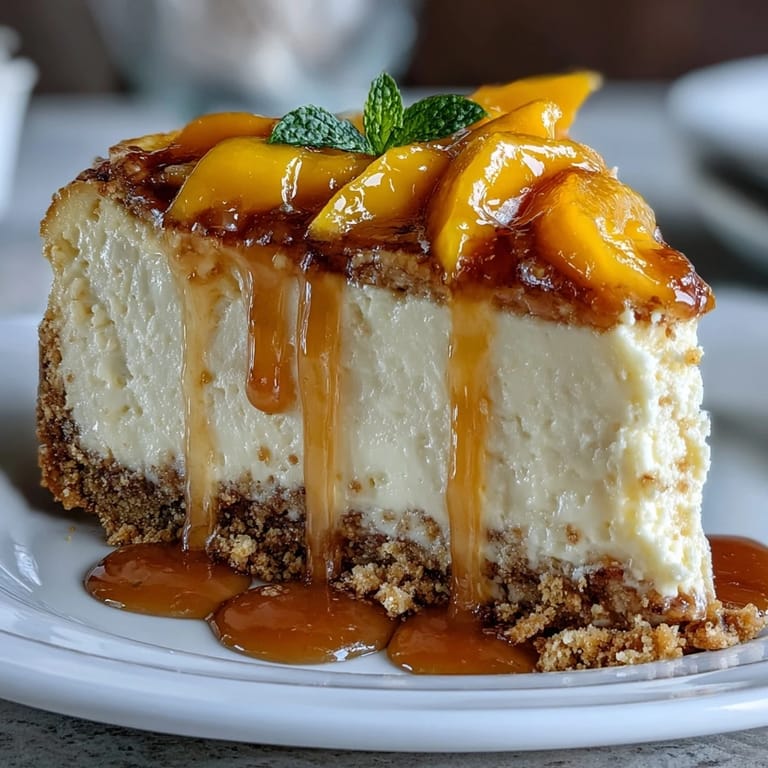 Save
Save There's a moment that happens every time I make this—when someone takes that first bite and closes their eyes, and suddenly this dessert becomes something more than just food. It's tropical warmth meeting creamy indulgence, and honestly, that's why I keep making it.
Choosing Your Mangoes
The entire recipe hinges on using mangoes that actually taste like mangoes, not bland watery ones. Look for Alphonso or Ataulfo varieties if you can find them—they're sweeter and more fragrant than most others. Hold the mango in your palm and give it a gentle squeeze; it should yield slightly but not be mushy. If you find yourself at the farmer's market and the person selling fruit is recommending a specific mango, buy that one—they always know what's good.
The Texture Game
Cheesecake texture is everything, and it's determined by patience more than skill. The water bath keeps it from drying out. The slow cooling prevents cracks. And the overnight chill allows the flavors to settle and the texture to firm up into something genuinely creamy, not grainy. If you try to cut into it warm, it'll fall apart. If you give it time, it'll slice like silk.
Serving and Storage Secrets
This cheesecake keeps beautifully in the refrigerator for up to five days, covered with plastic wrap, and it actually tastes better by day two once all the flavors have had time to know each other. You can also freeze it for up to a month if you ever need to make it ahead, though you'll want to thaw it slowly in the refrigerator before serving.
- A hot, wet knife makes clean slices every time—dip it in hot water and wipe between cuts.
- Serve it cold or at cool room temperature depending on the weather; either way, pair it with something like a late-harvest Riesling or Moscato.
- The coulis should be drizzled just before serving so it stays glossy and vibrant.
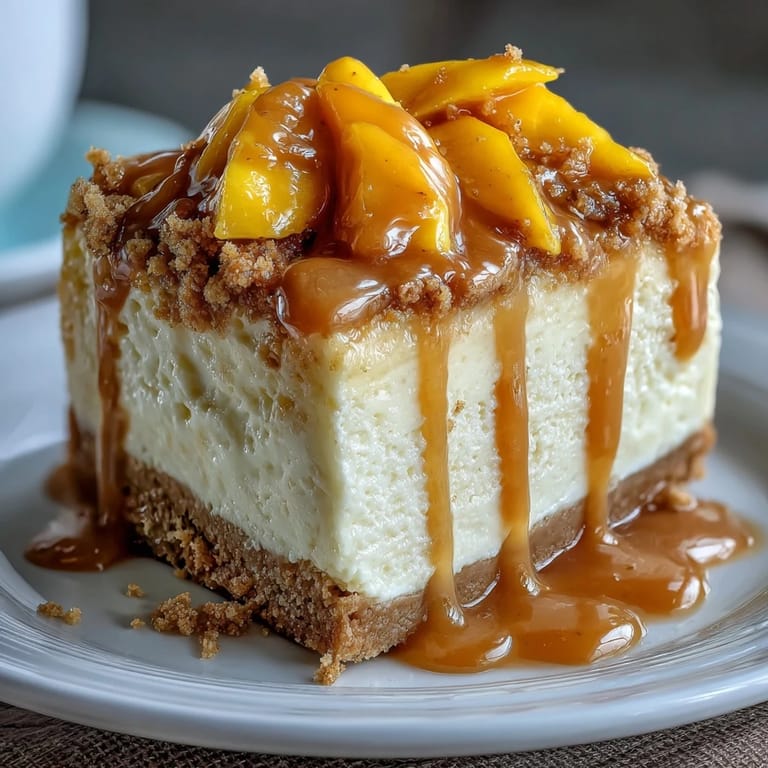 Save
Save This mango cheesecake has become the dessert I reach for when I want to feel both like I've done something impressive and like I'm serving something genuinely delicious to the people I love. It's worth every minute of waiting.
Kitchen Tips & Answers
- → What type of mango is best for this dessert?
Ripe, sweet mangoes like Alphonso or Ataulfo are ideal for a rich, vibrant puree that enhances flavor.
- → How long should it be chilled before serving?
Chill the dessert for at least 4 hours, preferably overnight, to achieve optimal texture and flavor.
- → Can I use gluten-free biscuits for the base?
Yes, substituting with gluten-free biscuits creates a gluten-free base without compromising texture.
- → What is the purpose of the water bath during baking?
The water bath helps bake the filling gently and evenly, preventing cracks and ensuring a smooth finish.
- → Is there a way to adjust the mango coulis sweetness?
You can modify the amount of powdered sugar in the coulis to suit your preferred sweetness level.