 Save
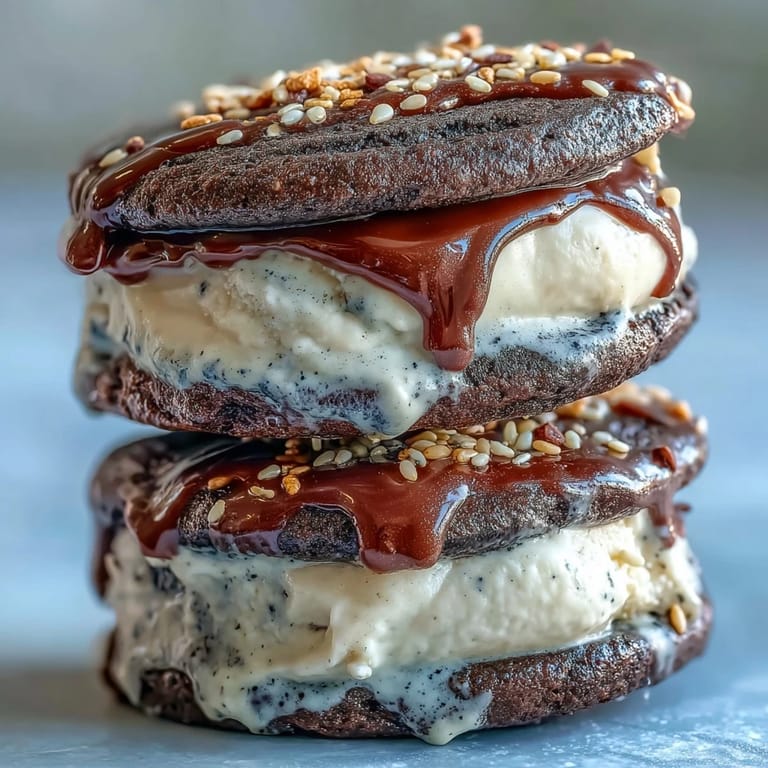
Save I discovered black sesame ice cream on a humid August afternoon at a small Tokyo shop tucked between a bookstore and a temple. The vendor handed me a tiny wooden spoon, and that first taste—earthy, nutty, almost bitter-sweet—completely rewired what I thought ice cream could be. Years later, I finally figured out how to make it at home, and then came the natural next step: sandwiching it between chewy cookies for something that felt like a small edible work of art.
I made these for my sister's book club once, mostly as an experiment. Three people went back for seconds, the fourth person ate one and immediately asked for the recipe, and my sister—who never compliments my cooking—quietly said they tasted like something she'd been missing her whole life. That's when I knew this wasn't just a fun project; it was something worth perfecting.
Ingredients
- Whole milk: This keeps the ice cream from becoming too dense; it's the gentle hand that balances the cream's richness.
- Heavy cream: Non-negotiable for that silky texture that melts on your tongue rather than coating it.
- Granulated sugar: Don't get fancy here; regular sugar dissolves cleanly and won't muddy the subtle sesame flavor.
- Egg yolks: They create that custard base that makes homemade ice cream taste like actual ice cream, not frozen milk.
- Black sesame paste: This is the star, and quality matters tremendously; unsweetened lets the natural nuttiness shine through without competition.
- Pure vanilla extract: A small amount whispers in the background, rounding out the earthiness without announcing itself.
- Salt: Just a pinch, but it's the difference between ice cream and transcendent ice cream.
- All-purpose flour: Standard choice for cookies that hold together without being tough or cake-like.
- Black sesame seeds: Toasted and ground, they add texture and intensity to the cookie dough itself.
- Baking soda: Helps the cookies spread just enough to get crispy edges while staying chewy inside.
- Unsalted butter: You control the salt level, and butter at room temperature creams into those fluffy clouds you're after.
- Egg: Binds everything and contributes to that tender, slightly cakey structure.
Tired of Takeout? 🥡
Get 10 meals you can make faster than delivery arrives. Seriously.
One email. No spam. Unsubscribe anytime.
Instructions
- Heat your cream and milk gently:
- Combine milk and cream in a saucepan and warm over medium heat until you see steam rising and tiny bubbles gathering at the edges—you're not boiling, just heating. This temperature matters because it's about to temper your egg yolks without scrambling them.
- Create a pale, thick egg mixture:
- While the cream heats, whisk egg yolks with sugar in a separate bowl until the mixture lightens in color and thickens slightly, about 3 minutes. This aerating step is crucial; you're building the base that will hold air and create smoothness.
- Temper the yolks slowly:
- Pour the hot milk mixture into the egg mixture in a thin, steady stream while whisking constantly—this gradual approach prevents the yolks from cooking into scrambled egg bits. Once combined, pour everything back into the saucepan.
- Cook to custard perfection:
- Over low heat, stir constantly until the mixture reaches 170°F (77°C) on a thermometer or coats the back of a spoon so thickly that a finger drawn through leaves a clean trail. This takes patience, usually 8-10 minutes, but rushing means scrambled eggs and ruined ice cream.
- Fold in the black sesame magic:
- Remove from heat and whisk in black sesame paste, vanilla, and salt until completely smooth—no lumps hiding anywhere. The paste will darken the mixture dramatically, and the aroma will make you want to skip straight to eating.
- Strain for silkiness:
- Pour through a fine sieve into a clean bowl; this catches any cooked egg bits or sesame particles that might create grittiness. The custard should look glossy and feel silky smooth against the sides of the bowl.
- Chill thoroughly:
- Let the custard cool to room temperature, then refrigerate for at least 2 hours—cold custard churns better and creates smaller ice crystals, meaning smoother ice cream. This is not the place to rush; cold custard is happy custard.
- Churn to creamy life:
- Pour into your ice cream maker and follow the manufacturer's instructions, usually 20-25 minutes. You'll watch it transform from pourable custard to soft-serve consistency, and that moment never gets old.
- Prep your oven and baking sheet:
- Preheat to 350°F (180°C) and line a baking sheet with parchment paper—this prevents sticking and ensures even browning from underneath.
- Mix dry ingredients for cookies:
- In a bowl, whisk together flour, ground black sesame seeds, baking soda, and salt. Whisking distributes the leavening evenly and blends the sesame seeds throughout.
- Cream butter and sugar:
- In another bowl, beat softened butter and sugar together for 2-3 minutes until light, fluffy, and noticeably paler. This creaming action incorporates air that helps the cookies rise slightly and stay tender.
- Build the wet mixture:
- Beat in the egg and vanilla until combined, then gradually mix in the dry ingredients just until you see no flour streaks. Overmixing creates tough cookies; you're going for tender and slightly chewy.
- Scoop and shape:
- Drop tablespoon-sized balls onto the parchment paper and gently flatten each one with the bottom of a glass or your palm. Uniform thickness ensures they bake evenly and stay chewy inside with set edges.
- Bake until edges set:
- Bake for 10-12 minutes; they should look barely set at the edges while the centers still look slightly underdone. They'll continue cooking from residual heat after removal, so resist the urge to leave them in longer.
- Cool completely before assembly:
- Let cookies sit on the baking sheet for 5 minutes, then transfer to a wire rack. Warm cookies will melt your ice cream; cold cookies are structural heroes.
- Match and pair:
- Choose two cookies of similar size and shape—this creates even ice cream distribution and a sandwich that holds together confidently.
- Scoop and stack:
- Place a generous scoop of black sesame ice cream on the flat side of one cookie, then top with the second cookie flat-side down. The ice cream should peek out slightly at the edges.
- Press gently and freeze:
- Apply gentle pressure to spread the ice cream evenly, then wrap each sandwich in parchment paper and freeze for at least 1 hour. This re-freezing ensures structure and prevents them from falling apart when you bite in.
 Save
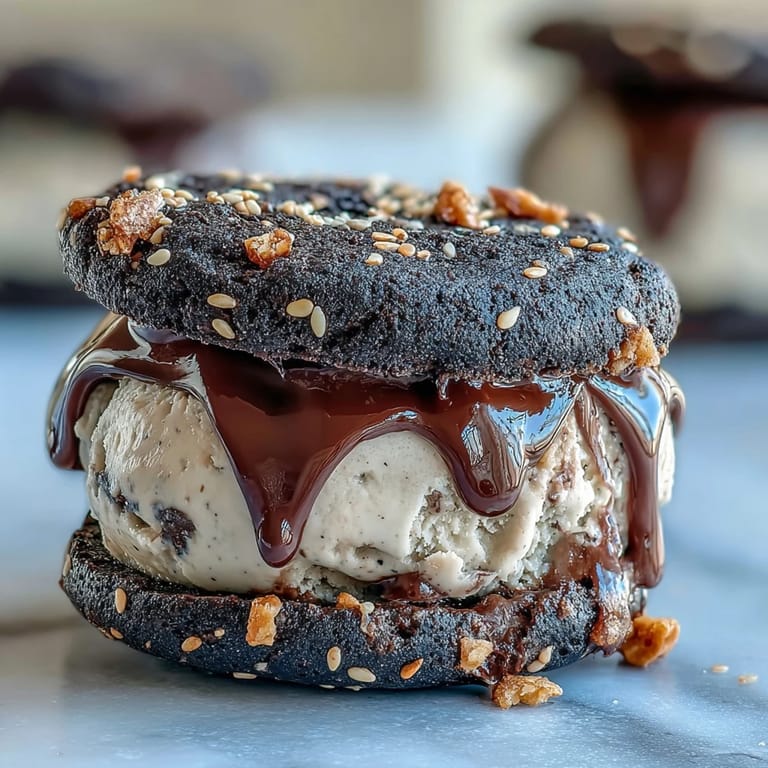
Save There's something almost ceremonial about biting into one of these for the first time after all that effort. The cold ice cream hits first, then the cookie gives way, and suddenly you're tasting something that feels both humble and elegant at the same time.
The Black Sesame Story
Black sesame isn't like white sesame—it has this deeper, almost mineral quality that takes people by surprise if they're expecting something sweet. In Asian cuisines, it shows up in both savory and sweet applications, which is why it works so beautifully in ice cream. The earthiness plays against the richness of the cream, creating balance instead of pure sweetness.
Why This Sandwich Format Works
Ice cream sandwiches are brilliant because they exist in two states at once—the cold ice cream is happening while the slightly soft cookie is happening, and your mouth gets to experience the contrast. The cookies here are sturdy enough to handle scooping and holding, but still tender enough that they don't feel like you're eating a hockey puck. The black sesame in both components ties everything together into a cohesive flavor story rather than feeling like random components.
Assembly and Storage Wisdom
These sandwiches are actually more forgiving than you might think—once assembled and refrozen, they hold together beautifully for up to a week. This means you can make a batch when you have time and dip into them whenever the mood strikes. If they start softening as you eat, just dip the edges in more toasted sesame seeds for extra flavor and a slightly crunchy exterior.
- Roll the ice cream sandwich edges in additional toasted black sesame seeds for visual drama and an extra nutty bite.
- Store in an airtight container with parchment between layers so they don't fuse together.
- Pull them from the freezer 2-3 minutes before serving so the cookie softens just enough to bite through comfortably.
 Save
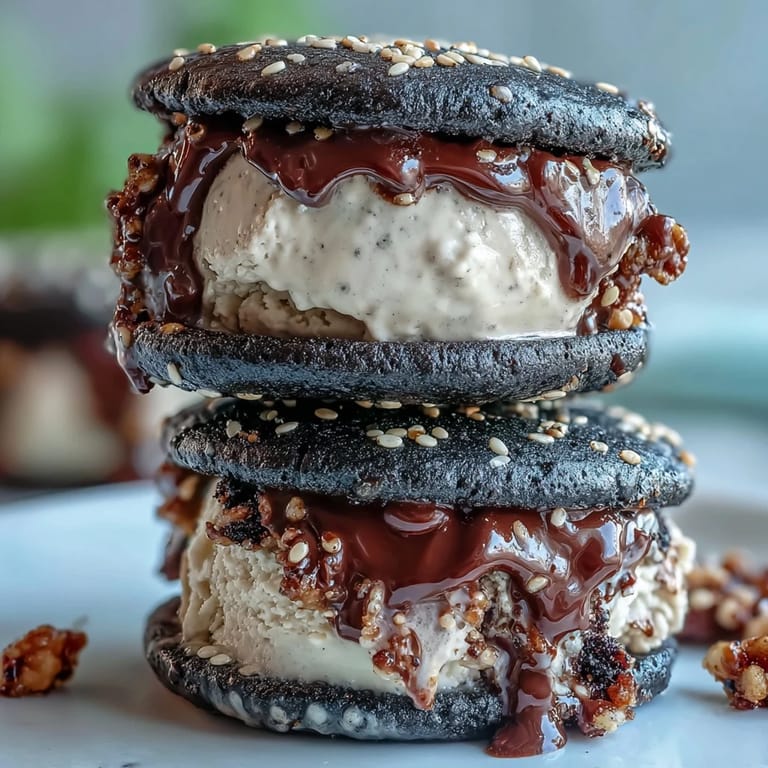
Save These ice cream sandwiches taste like a small luxury, the kind of thing that makes ordinary moments feel a little bit special. Make them once, and you'll understand why they deserve a permanent spot in your dessert rotation.
Kitchen Tips & Answers
- → What gives the ice its black sesame flavor?
Black sesame paste is whisked into the custard base, imparting a rich, nutty flavor and striking color to the ice.
- → How are the cookies made chewy?
Using softened unsalted butter and a balance of sugar helps create a tender, chewy texture in the black sesame cookies.
- → Can the texture of the ice be adjusted?
Yes, churning the ice cream until firm and freezing properly ensures a smooth and creamy consistency.
- → Why toast and grind black sesame seeds for the cookies?
Toasting enhances the sesame’s aroma and flavor, while grinding helps distribute it evenly throughout the cookies.
- → How should these sandwiches be stored before serving?
After assembly, wrap in parchment and freeze for at least an hour to let the ice firm up and meld flavors.