 Save
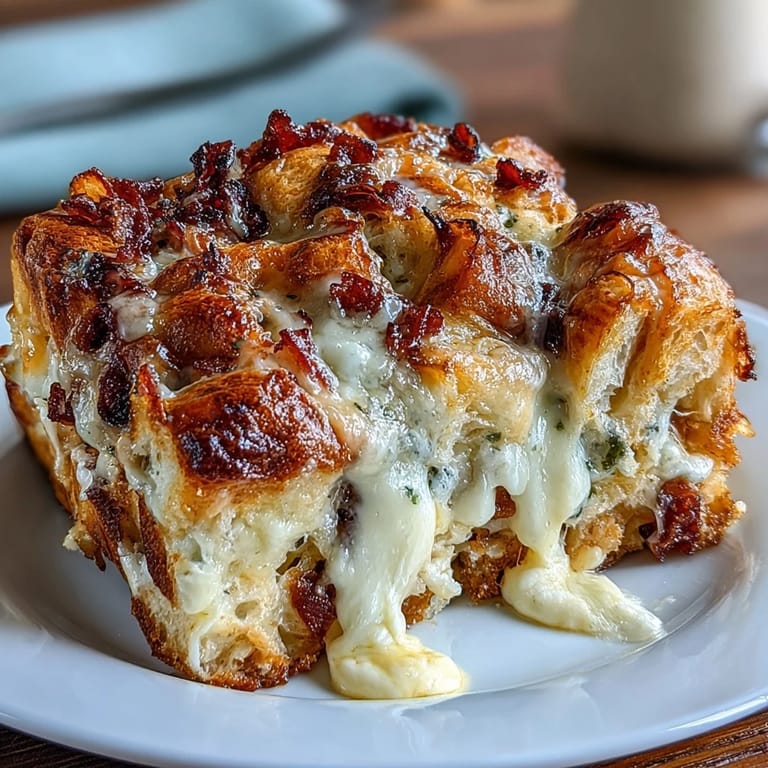
Save My sister called me three days before hosting her annual brunch, voice slightly panicked, asking if I knew anything foolproof enough for eight people. I suggested this ham and cheese croissant bake, mostly because I'd made it once by accident—I had leftover croissants going stale and ham in the fridge, and somehow it became the dish everyone asked about. There's something magical about how day-old croissants soak up a silky custard without falling apart, transforming into something warm and luxurious that tastes far more complicated than it actually is.
I'll never forget watching my brother take his first bite at that brunch, then immediately go back for seconds without even finishing his first piece. He's not the type to get excited about food, but something about the combination of crispy ham, melted cheese, and that impossibly tender custard-soaked croissant had him genuinely thrilled. My sister caught my eye from across the table with this relieved smile, and I realized that sometimes the simplest recipes create the warmest moments.
Ingredients
- 4 large croissants, preferably day-old, torn into bite-sized pieces: Day-old croissants are actually your secret weapon here—fresh ones are too delicate and fall apart when soaked, but ones that have spent a night on the counter have the perfect structure to absorb all that custard while staying pillowy inside.
- 1 1/2 cups diced cooked ham: Quality ham makes a huge difference; I learned this the hard way when I once used the thinnest supermarket stuff and the flavor completely disappeared into the custard.
- 1 1/2 cups shredded Gruyère or Swiss cheese and 1/2 cup shredded cheddar cheese: The Gruyère brings this nutty sophistication while the cheddar adds a sharp bite—if you skip the second cheese, the bake tastes one-dimensional, but together they're a complete flavor story.
- 6 large eggs, 2 cups whole milk, and 1/2 cup heavy cream: This ratio creates a custard that's rich without being heavy; I've tried lighter versions and they always come out a bit sad and watery.
- 1 teaspoon Dijon mustard, 1/2 teaspoon salt, 1/4 teaspoon ground black pepper, and 1/4 teaspoon garlic powder: The mustard is the secret ingredient that makes people say this tastes special without knowing why—it adds a subtle complexity that just makes everything else sing.
- 2 tablespoons chopped fresh chives or parsley (optional): Finish with fresh herbs if you have them; the brightness cuts through the richness beautifully.
Tired of Takeout? 🥡
Get 10 meals you can make faster than delivery arrives. Seriously.
One email. No spam. Unsubscribe anytime.
Instructions
- Get your dish ready:
- Preheat your oven to 350°F and grease a 9x13-inch baking dish generously—I use butter so it adds a little extra flavor. The low temperature is important because you want the custard to set gently without the edges getting tough and watery.
- Layer everything in:
- Tear those day-old croissants into bite-sized pieces and scatter them across the bottom of your dish, then sprinkle the ham over them, followed by both cheeses together. You want them distributed pretty evenly so every forkful has a little bit of everything.
- Make the custard magic:
- In a big bowl, whisk together the eggs, milk, cream, mustard, salt, pepper, and garlic powder until it's completely smooth and pale. Take a second to actually taste a tiny bit (the raw egg worry is worth it)—you should taste the mustard and seasoning; if it's bland, you'll taste bland bake.
- Pour and soak:
- Pour that custard mixture evenly over the croissants and fillings, then press down gently with a spatula so everything gets wet—the croissants should be submerged or at least touching the liquid. Let it sit for 10 to 15 minutes so the bread can really absorb all that richness, or if you're planning ahead, cover it and slide it into the fridge overnight.
- Bake until golden:
- Bake uncovered for 35 to 40 minutes until the top is golden and puffed and the center only slightly jiggles when you gently shake the dish. You don't want it completely solid—it should be set but still tender.
- Rest and serve:
- Let it sit for 10 minutes out of the oven so everything firms up a bit and the layers stay intact when you cut into it. Scatter chives or parsley on top if you have them, then serve warm while it's still got that beautiful custardy texture inside.
 Save
Save There's a moment during brunch when everyone's a little quieter, just eating contentedly, that feels different from any other meal. This casserole creates that moment—it's the kind of dish that brings people together not because it's fancy, but because it's genuinely delicious and it makes everyone feel taken care of. That's worth more than any complicated recipe could ever be.
Make-Ahead Magic
The best part about this casserole is that you can assemble everything the night before and just pop it in the oven when you're ready to eat. Cover the baking dish tightly with plastic wrap and refrigerate—the croissants will continue absorbing custard overnight, which actually improves the texture. In the morning, let it sit on the counter for about 15 minutes while the oven preheats, then bake as directed; it might take an extra 5 minutes since it's coming from cold, but that's it.
Flavor Variations That Actually Work
Once you understand how this dish works, you can start playing with it. I've swapped ham for crispy bacon (use about 12 slices, crumbled), and it tastes completely different but equally good. Some mornings I'll add a tiny pinch of nutmeg to the custard—just 1/8 teaspoon—and it adds this subtle sweetness that makes people wonder what they're tasting. You could also try adding sautéed mushrooms or caramelized onions if you're feeding vegetarian guests, or use a smoked turkey for something lighter.
Timing and Temperature Tips
The low oven temperature of 350°F is honestly non-negotiable if you want a silky custard and tender bread instead of rubbery eggs. I once tried bumping it to 375°F thinking I'd save time, and the edges set beautifully while the center stayed liquid. Watch it around the 35-minute mark and look for the top to turn golden—the center should jiggle just slightly when you shake it, which means it's perfectly set but still custardy inside. Serve it warm, not hot; it actually tastes better and it's easier to cut into neat portions that way.
- If your oven runs hot, start checking at 30 minutes and tent with foil if the top browns too fast.
- For really rich flavor, use homemade or quality deli ham—the difference is genuinely noticeable.
- Leftovers keep in the fridge for three days and reheat beautifully at 325°F for about 15 minutes.
 Save
Save This casserole became a regular on my brunch rotation because it promises delicious food without promising stress, and honestly, that's the kind of cooking that actually sustains you long-term. Make it once and you'll understand why it's become such a reliable favorite.
Kitchen Tips & Answers
- → Can I use fresh croissants for this dish?
Day-old croissants are best as they absorb the custard better without becoming soggy, but fresh ones can be used if torn into smaller pieces.
- → What cheeses work well in this bake?
Gruyère or Swiss combined with cheddar offers a balanced melt and flavor, but feel free to experiment with similar cheeses.
- → How long should I let it rest before baking?
Allow the assembled dish to stand for 10–15 minutes at room temperature to let croissants soak up the custard thoroughly.
- → Can this be prepared ahead of time?
Yes, assemble the night before, refrigerate covered, and bake fresh in the morning for convenience.
- → Are there any good substitutions for ham?
Cooked bacon, turkey, or sautéed vegetables can replace ham for different flavor profiles.
- → What temperature and time should I bake it at?
Bake uncovered at 350°F (175°C) for 35–40 minutes until puffed and golden brown.