 Save
Save My neighbor brought over a container of cottage cheese she'd made herself, and I spent an afternoon experimenting with ways to use it before it spoiled. That's when I stumbled onto these flatbreads—a dough so forgiving it felt less like cooking and more like play. The first batch came out puffy and tender, nothing like the dense flatbreads I'd tried before, and I realized the cottage cheese wasn't just an ingredient, it was solving a problem I didn't know I had.
I made a batch the morning my sister visited unexpectedly, and we ended up using them to wrap leftover roasted vegetables and hummus while sitting on the kitchen counter. She kept reaching for more, torn between using them as wraps and just eating them plain with olive oil. That moment—no fussing, just good food appearing—is when I knew this recipe belonged in regular rotation.
Ingredients
- Plain flour: The foundation, but don't sift it unless you're being precious—the dough is forgiving enough to handle slight variations.
- Greek yogurt: This is what makes the dough tender and adds a subtle tang that balances the cottage cheese.
- Cottage cheese: The secret to their pillowy texture; it hydrates the dough in a way that keeps them soft even after they cool.
- Baking powder: Just enough to give them a gentle lift without making them cake-like.
- Fine sea salt: Use it, don't skip it—it brings everything into focus.
- Olive oil or melted butter: For pan-frying; either works, but butter gives them a richer color.
Tired of Takeout? 🥡
Get 10 meals you can make faster than delivery arrives. Seriously.
One email. No spam. Unsubscribe anytime.
Instructions
- Mix the dry base:
- Combine flour, baking powder, and salt in a large bowl. This takes 30 seconds and sets everything up to succeed.
- Add the dairy:
- Spoon in Greek yogurt and cottage cheese, then stir with a wooden spoon until the mixture looks shaggy and reluctant to come together. Don't overthink this step—the dough will feel rough right now, and that's exactly right.
- Knead gently:
- Turn the dough onto a lightly floured surface and knead for 2–3 minutes until it feels smooth and only slightly sticky. If it's clinging to everything, dust in a little more flour, but go easy—the cottage cheese is meant to keep it slightly moist.
- Portion and shape:
- Divide the dough into 6 equal pieces and roll each into a ball. Then, using a rolling pin or even just your hands, flatten each ball into a round about 5–6 mm thick, dusting with flour as you go.
- Heat your pan:
- Set a nonstick skillet or cast iron pan over medium heat. You want it hot enough that a drop of water sizzles, not so hot that it smokes.
- Cook the flatbreads:
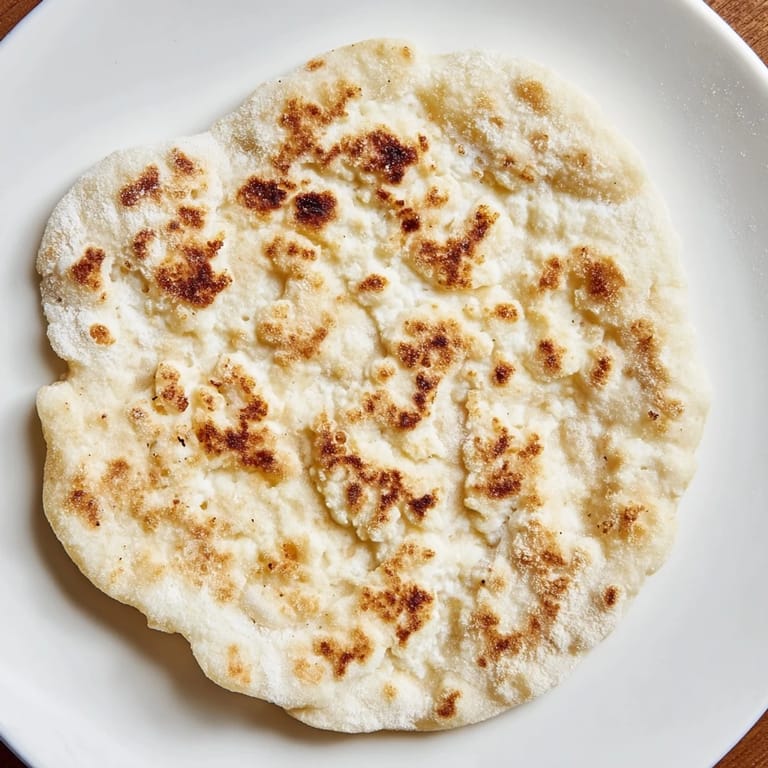
- Brush the pan lightly with oil or butter, then lay one or two flatbreads in it. Cook for 2–3 minutes per side until golden spots appear and the bread feels set when you press it gently. Transfer to a plate and cover with a clean towel to trap the steam and keep them soft.
 Save
Save I remember the first time I made these for a soup night, and everyone assumed I'd bought them from a bakery. There's something humbling about watching people realize you made something this good in less than an hour, no special equipment, no mystique—just flour, yogurt, and cottage cheese doing their job perfectly.
Flavor Variations That Work
Once you've made these once, the dough becomes a blank canvas. I've mixed in fresh parsley and chives in summer, added minced garlic and a pinch of red pepper flakes on nights when I wanted something bolder, and even played with dill when I had leftover herbs from fish dinners. The cottage cheese holds everything together beautifully, so you're never at risk of making the dough worse—just different.
Storage and Reheating
Flatbreads are best eaten the day you make them, warm and slightly steaming. But I've stored leftovers in an airtight container for up to three days and reheated them in a dry pan over medium heat for about 30 seconds per side until they warm through and regain some of their softness. It's not quite the same as fresh, but it's close enough that you won't mind.
What to Serve Them With
These flatbreads are the kind of thing that makes a meal feel more thoughtful without actually being more work. Tear them warm and use them to wrap roasted vegetables, pile them on a board alongside dips and cheese, or just brush them with good olive oil and sea salt and eat them as they are. I've learned that simplicity often tastes better than complicated accompaniments.
- Serve them warm with hummus, tzatziki, or your favorite dip.
- Use them to wrap grilled vegetables, leftovers, or fresh greens.
- Toast leftover flatbreads lightly and break them into chips for soup or salad.
 Save
Save These flatbreads have a way of becoming a weeknight staple once you realize how little effort they ask for. They're the kind of recipe that proves you don't need complicated techniques or long ingredient lists to make something people genuinely want to eat.
Kitchen Tips & Answers
- → What gives the flatbread its tenderness?
The addition of cottage cheese enriches the dough, providing extra moisture and a subtle tang that contributes to a tender texture.
- → Can I add herbs or spices to the dough?
Yes, chopped parsley, chives, dill, or minced garlic can be mixed into the dough to enhance the flavor without altering the texture.
- → What is the best cooking method for these flatbreads?
Pan-frying in a lightly oiled nonstick or cast iron skillet over medium heat ensures an even golden color and chewy interior.
- → How should leftovers be stored?
Store flatbreads in an airtight container to maintain freshness and reheat them gently in a dry pan to preserve softness.
- → Can these flatbreads be used for wraps?
Absolutely, their soft yet sturdy texture makes them ideal for wrapping fillings or enjoying with various spreads.