 Save
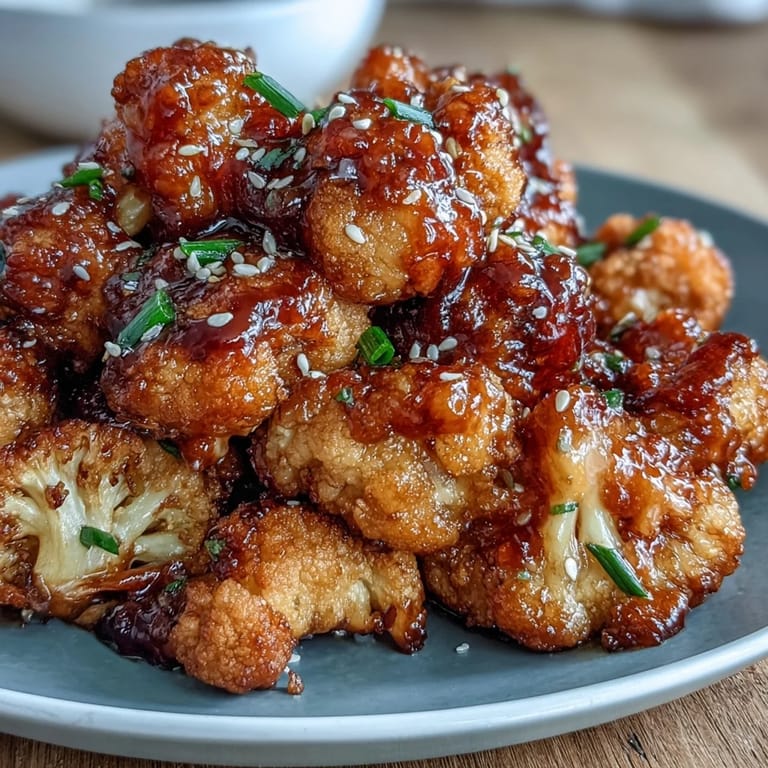
Save My friend Sarah texted me a photo of her takeout General Tso's chicken at 11 PM with the caption 'Why is this so good but also so heavy?' That question stuck with me, and a week later I found myself standing in front of my air fryer wondering if I could capture that addictive sweet, tangy, spicy magic without the grease. Cauliflower seemed like the logical choice—crispy when air fried, absorbent enough to soak up every bit of that glossy sauce. The first batch came out looking almost suspicious in its golden perfection, but one bite proved the gamble was worth it.
I made this for my sister's book club last month, and watching five grown women fight over the last few florets was genuinely hilarious. One person asked if I'd deep fried them, another demanded the recipe immediately, and someone else asked if they could make this a permanent fixture at future meetings. That's when I knew this wasn't just a lightened-up knockoff—it was actually its own thing, something people genuinely wanted to eat.
Ingredients
- Cauliflower: One large head cut into bite-sized florets is your canvas—make sure they're roughly the same size so they cook evenly and get that coveted crispy exterior.
- All-purpose flour: This is your base for crispiness, and 2/3 cup mixed with cornstarch creates that delicate, shattering crust that makes people lean in closer.
- Cornstarch: The secret weapon at 1/3 cup—it's what gives you that extra crunch and helps the batter stay crispy even when coated in sauce.
- Baking powder: Just one teaspoon creates tiny pockets of air that puff up in the fryer and make each bite impossibly light.
- Salt, garlic powder, white pepper: Season the batter itself so the cauliflower tastes interesting before the sauce even touches it.
- Cold water: Keep it cold and measure to 3/4 cup—this is what makes the batter cling without getting gluey.
- Low-sodium soy sauce: Use 1/3 cup as your umami foundation, which lets the other flavors shine instead of drowning everything in saltiness.
- Rice vinegar: The 1/4 cup provides bright acid that keeps the sauce from tasting one-note sweet.
- Sugar: Just 1/3 cup balances the vinegar and creates that glossy glaze without making it taste like candy.
- Hoisin sauce: Two tablespoons add depth and a subtle fermented complexity that makes people wonder what the secret ingredient is.
- Cornstarch for the sauce: One tablespoon thickens everything without making it pasty—it's the difference between sauce that clings and sauce that pools.
- Garlic and ginger: Minced fresh garlic and grated fresh ginger are non-negotiable—dried versions will taste stale by comparison.
- Chili garlic sauce: Start with one teaspoon and adjust upward—this is where your heat preference gets honored.
- Toasted sesame oil: One tablespoon at the end adds a nutty finish that takes everything from good to memorable.
- Scallions and sesame seeds: The sliced scallions add freshness and crunch, while the toasted seeds give you visual appeal and toasty flavor.
Tired of Takeout? 🥡
Get 10 meals you can make faster than delivery arrives. Seriously.
One email. No spam. Unsubscribe anytime.
Instructions
- Heat your air fryer properly:
- Get it to 400°F (200°C) before you start battering anything. A fully preheated fryer is what separates crispy from soggy.
- Make your batter smooth and lump-free:
- Whisk the flour, cornstarch, baking powder, salt, garlic powder, and white pepper together first, then add cold water slowly while whisking. You want something that clings to the florets without dripping off like pancake batter.
- Coat the cauliflower evenly:
- Toss the florets in the batter using two hands or tongs, making sure every surface gets a thin, complete coating. Uncoated spots will brown faster and taste different.
- Prepare your air fryer basket:
- A light spray of oil prevents sticking and helps with browning, but too much will make things greasy. A brief, even mist is all you need.
- Arrange and fry:
- Spread the battered florets in a single layer, leaving space between each piece so air circulates. Cook for 15–18 minutes at 400°F, shaking the basket halfway through—this is crucial for even crispiness.
- Make the sauce while you wait:
- Combine soy sauce, rice vinegar, sugar, hoisin, garlic, ginger, and chili garlic sauce in a saucepan over medium heat. Let it come to a gentle simmer while you're finishing the cauliflower.
- Create your cornstarch slurry:
- Mix one tablespoon cornstarch with 1/2 cup water in a small bowl until there are no lumps. This is what thickens your sauce without making it gloppy.
- Thicken the sauce:
- Pour the slurry into your simmering sauce while stirring constantly. It will thicken noticeably within 1–2 minutes—don't walk away or you'll get lumps.
- Finish with sesame oil:
- Remove the sauce from heat and stir in one tablespoon toasted sesame oil. This adds richness and aroma that wakes everything up.
- The crucial toss:
- Transfer the hot, crispy cauliflower to a bowl and pour the sauce over it, tossing gently until every piece is coated. Hot cauliflower absorbs the sauce better than cold cauliflower.
- Plate and garnish immediately:
- Transfer to a serving platter and scatter with sliced scallions and toasted sesame seeds while everything is still warm. This freshness contrast is what makes each bite interesting.
 Save
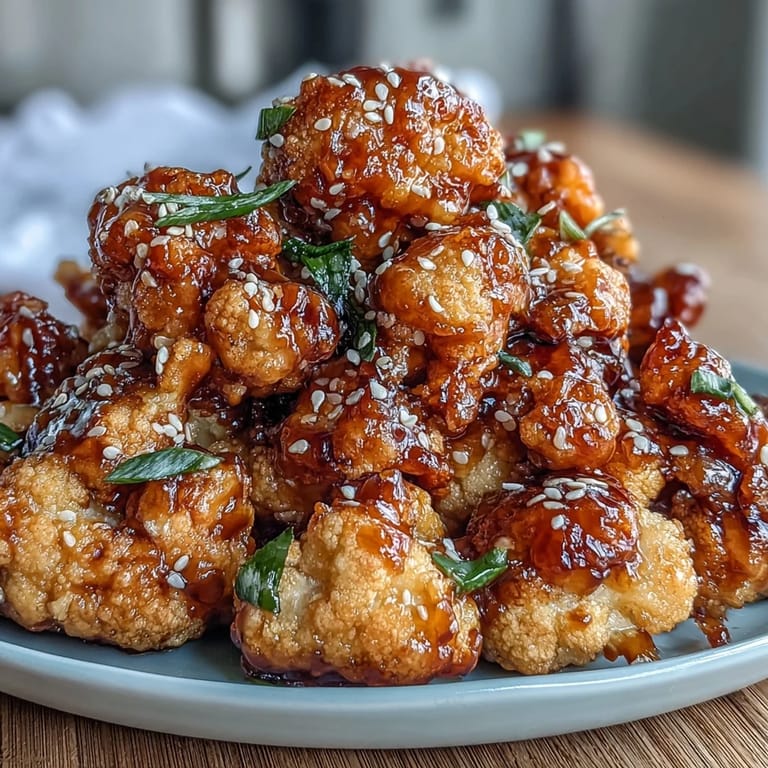
Save My partner declared this his new favorite way to eat vegetables, which felt like a small victory in our ongoing negotiation about what constitutes 'dinner.' More importantly, it became the thing people ask me to bring to potlucks now, replacing my old standby appetizer entirely.
When to Serve This Dish
This works equally well as a main course over steamed rice (with maybe some stir-fried broccoli on the side) or as an appetizer at a gathering where people stand and eat with their hands. I've made it for casual weeknight dinners, dinner parties where I wanted to feed vegetarian guests something exciting, and even as a lazy Sunday dinner when I didn't feel like going out. The beauty is that it's impressive enough for company but easy enough for solo cooking.
Customizing Your Heat Level
The chili garlic sauce is your heat dial, and honestly, the amount you use matters more than any other ingredient. I started with one teaspoon for my family gathering because I didn't know everyone's spice tolerance, but I made a second batch later that week with two teaspoons for myself, and the difference was exactly what I wanted. If you're cooking for people, consider making the sauce with just one teaspoon and setting out extra chili garlic sauce on the side so everyone can adjust their own plate.
Beyond the Basic Recipe
Once you've made this a few times and your hands know the steps, you start seeing variations everywhere. I've added steamed broccoli chunks to the same sauce and gotten amazing results, tried diced bell peppers in the batter mix for color, and even experimented with a squeeze of fresh lime juice stirred into the finished sauce for brightness. The core technique is so forgiving that you can play with it—add more ginger if you want earthiness, include a pinch of five-spice powder for complexity, or finish with a drizzle of sriracha for extra heat and tang.
- Gluten-free version: swap all-purpose flour for a gluten-free blend and use tamari instead of soy sauce to keep the umami intact.
- Make it a whole meal by serving over rice with quick-pickled vegetables or a crisp cucumber salad alongside.
- Double the sauce recipe if you like things extra glossy and prefer more sauce per bite.
 Save
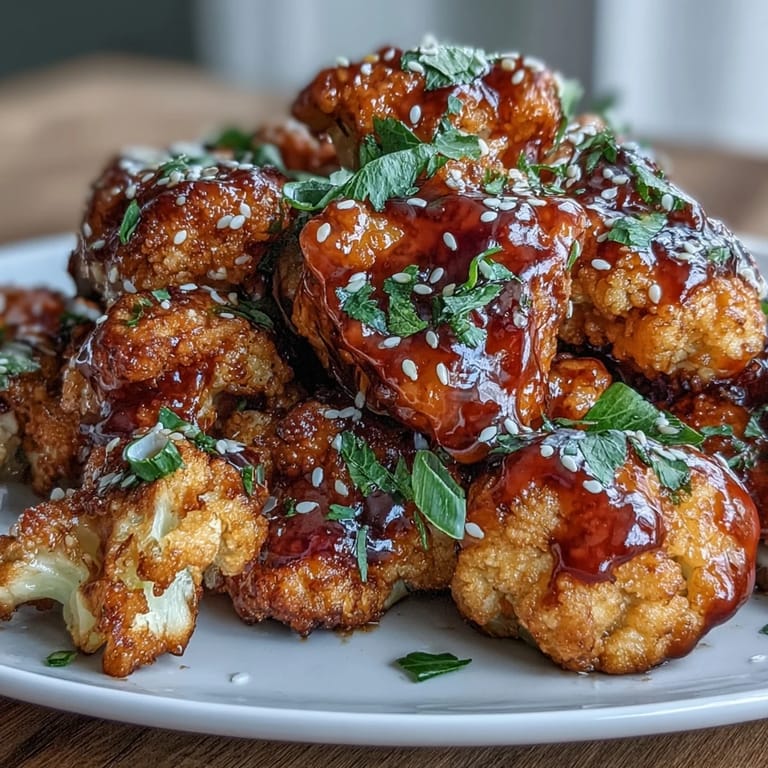
Save This recipe taught me that sometimes the lightest, crispiest version of a favorite dish is just a different approach, not a compromise. Make this and let people surprise themselves with how much they love it.
Kitchen Tips & Answers
- → How do I achieve a crispy texture using an air fryer?
Lightly coat cauliflower florets with a batter and arrange in a single layer inside the air fryer. Cook at 400°F, shaking halfway through to ensure even crisping.
- → Can I adjust the spice level of the sauce?
Yes, the chili garlic sauce amount can be modified according to your preferred heat, ranging from mild to spicy.
- → What alternatives can replace regular flour for gluten-free cooking?
Gluten-free all-purpose flour can be used, and swapping soy sauce with tamari helps maintain flavor while avoiding gluten.
- → How should the sauce be thickened properly?
Mix cornstarch with water to create a slurry, then stir it into the simmering sauce until it thickens, usually within 1–2 minutes.
- → What garnishes enhance the final dish?
Thinly sliced scallions and toasted sesame seeds add freshness and a nutty crunch to finish the plated cauliflower.