 Save
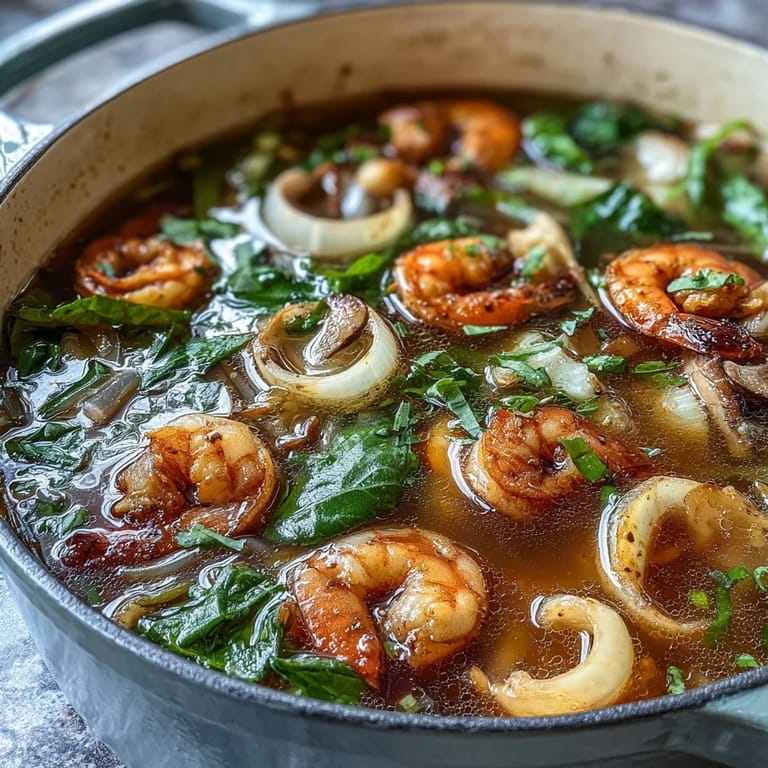
Save My sister called me one winter evening asking if I could host a dinner party, and I panicked until I remembered watching a chef in Hong Kong build an entire meal around a bubbling pot of broth right at the table. That's when it clicked—hot pot isn't just food, it's an experience where everyone becomes the cook. The first time I made it, my kitchen filled with the most incredible aroma from ginger and lemongrass, and suddenly the whole meal felt less like cooking and more like creating a moment together.
I made this for four friends on a random Tuesday, and what started as a casual weeknight dinner turned into everyone staying until nearly midnight, fishing for the last piece of shrimp and debating whether more lime or cilantro was better. Someone said it tasted like traveling, and I realized that's exactly what happened—we took a culinary trip without leaving the table.
Ingredients
- Low-sodium chicken or seafood stock (8 cups): This is your foundation, so use something you'd actually taste on its own—the quality makes an enormous difference in the final broth.
- Fresh ginger (3 slices): Slice it thick so it releases its warming oils without disintegrating into the broth.
- Garlic cloves (3, smashed): Smashing opens them up completely, letting the flavor spread more evenly than mincing would.
- Lemongrass (2 stalks, bruised and chopped): The bruising is key—it cracks the outer layers and lets all that citrusy aromatics escape.
- Soy sauce (2 tablespoons): Use low-sodium here since you're controlling the salt, and taste as you go.
- Fish sauce (1 tablespoon): Trust this ingredient even if it smells sharp in the bottle—it rounds out the broth with umami depth.
- Rice vinegar (1 tablespoon): A little acidity brightens the entire pot without making it sour.
- Fresh red chilies (1–2, sliced): Leave the seeds in if you like heat, remove them for gentle warmth.
- Raw shrimp (8 large, peeled and deveined): Buy them this way if possible to save yourself time and the slightly fishy smell.
- White fish fillet (200 g), cut into bite-sized pieces: Cod and snapper stay firm in the broth, which matters more than flavor here.
- Fresh mussels or clams (8, scrubbed): Rinse them well just before cooking and discard any that don't close when tapped.
- Squid rings (150 g): These cook in seconds, so add them last and watch carefully or they'll turn rubbery.
- Napa cabbage (1 cup, chopped): The leaves soften beautifully and absorb broth flavor.
- Baby bok choy (1 cup, halved): These stay crisp-tender if you don't overcook them, which is the whole point.
- Shiitake mushrooms (1 cup, sliced): Their earthiness plays beautifully against the seafood and bright aromatics.
- Enoki mushrooms (1 cup, trimmed): These are delicate and cook almost instantly, adding a subtle sweetness.
- Carrot (1 medium, thinly sliced): Thin slices ensure they cook through in the same time as everything else.
- Zucchini (1 small, sliced): It should go in near the end so it doesn't fall apart into the broth.
- Firm tofu (1 cup, cubed): Pressing it first helps it absorb broth flavor instead of diluting it.
- Glass noodles or rice vermicelli (200 g): Soaking them ahead means they'll finish cooking in the hot broth without becoming mushy.
- Spring onions and fresh cilantro: These are your final flourish, adding brightness and life to each bowl.
- Lime wedges: A squeeze transforms everything, so don't skip this step.
Tired of Takeout? 🥡
Get 10 meals you can make faster than delivery arrives. Seriously.
One email. No spam. Unsubscribe anytime.
Instructions
- Build Your Broth Foundation:
- Pour your stock into a large pot and add the ginger, garlic, lemongrass, and chilies. Bring it to a rolling boil—you'll smell the moment the aromatics wake up—then turn the heat down and let it simmer gently for 20 minutes. This slow simmering extracts all the subtle flavors without boiling them away.
- Strain to Clarity:
- Once the broth has mellowed and deepened in color, carefully strain out all the solids through a fine strainer, pressing gently on the ginger and lemongrass to squeeze out every last bit of flavor. Return the clear, golden broth to your pot.
- Season the Broth:
- Stir in the soy sauce, fish sauce, and rice vinegar while the broth is still warm—these seasonings blend in smoothly when there's heat. Taste it and adjust: more soy for saltiness, more fish sauce for umami, more vinegar for brightness.
- Arrange Your Platters:
- Before anyone sits down, arrange all your seafood on one platter, vegetables on another, tofu separately, and noodles on a third. This moment of preparation is calming and keeps the actual cooking stress-free.
- Set Up at the Table:
- Place your portable burner or induction cooktop at the center of the table and set your hot pot or wide saucepan on top. Pour the broth in and bring it back to a gentle simmer—it should bubble softly, not aggressively.
- Let Everyone Cook Together:
- Invite each person to add what they want: seafood cooks in 2–3 minutes until the shrimp turns opaque and the fish flakes easily. Vegetables should go in around the same time so they finish tender-crisp, and noodles go last since they soften so quickly.
- Serve and Celebrate:
- As each diner finishes cooking their selection, ladle their ingredients and broth into a bowl, then garnish generously with spring onions, cilantro, and a squeeze of lime. This is the moment when everything comes together.
 Save
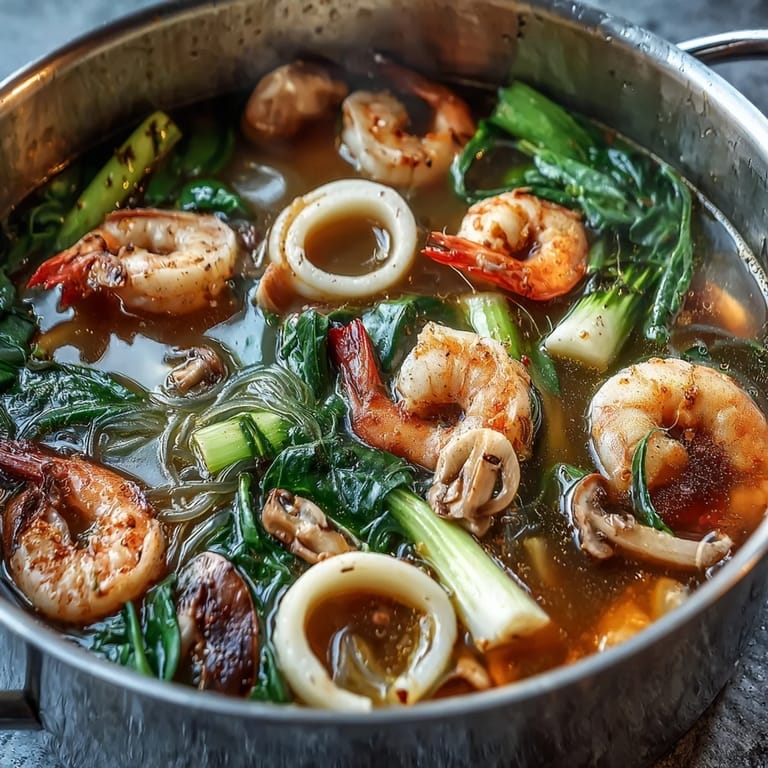
Save My favorite moment came when one guest said she'd never eaten anything she'd cooked herself at a restaurant, and watching her face light up as she pulled a perfect piece of fish from the broth made me understand why people have been gathering around hot pots for centuries. It's not about the food being complicated—it's about the freedom and connection.
Building Flavor Layers in Your Broth
The magic of this dish lives entirely in the broth, and I learned early on that rushing this step results in a flat, one-dimensional taste. Each ingredient—the ginger, lemongrass, fish sauce—contributes something specific that only develops with time and gentle heat. When I first made hot pot, I tried to speed things up by raising the temperature, and the broth turned bitter instead of complex. Since then, I've treated the simmering phase like a meditation: 20 minutes of patience transforms ordinary stock into something that tastes like it came from a restaurant kitchen.
Preparing Seafood With Confidence
The seafood selection matters less than understanding how each piece behaves in hot broth. Shrimp becomes firm and sweet, fish flakes apart if it's fresh, and squid toughens instantly if you look away for a second. I've learned to arrange everything by cooking time: delicate items like squid go in last, sturdy vegetables go in first, and noodles always finish everyone else. One evening I cooked the squid too long while chatting with a friend, and it turned into rubber bands, which taught me that the beauty of hot pot is actually its speed—respect the timing and you'll never have an issue.
Making This Meal Your Own
This recipe is a framework, not a prison, and the best versions I've made came from working with what my market offered that day or what guests actually wanted to eat. Some people are seafood lovers who'll skip vegetables entirely, while others want double the noodles. I've added scallops when they were on sale, swapped in chicken for skeptical eaters, and even tried beef once for someone who didn't eat seafood. The broth is what ties everything together, so as long as that's perfect, you can fill the rest with confidence.
- Add whatever seafood makes your heart happy—scallops, crab, even lobster tail if you're feeling fancy.
- Keep extra broth warming on the side in case the pot gets low during dinner.
- Offer dipping sauces on the side: simple soy sauce, chili oil, or a creamy sesame sauce for people who want extra flavor layers.
 Save
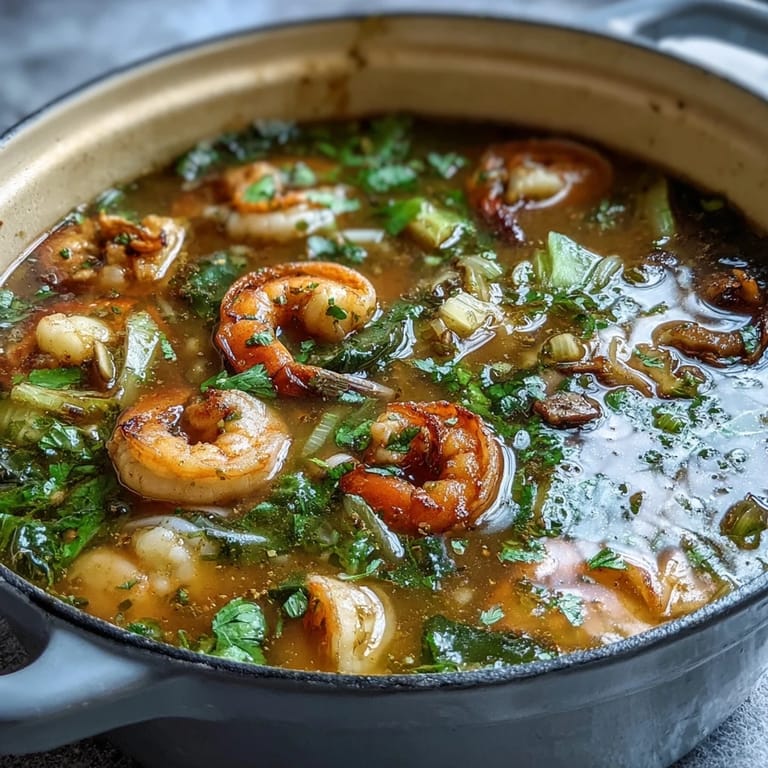
Save There's something deeply human about gathering around a shared pot of simmering broth, each person cooking exactly what they want while talking and laughing. This dish does that effortlessly.
Kitchen Tips & Answers
- → What seafood works best in this dish?
Use a variety of fresh shrimp, white fish, mussels or clams, and squid rings for balanced textures and flavors.
- → How do I achieve the broth's rich aroma?
Simmer fresh ginger, smashed garlic, lemongrass, soy sauce, fish sauce, and chilies gently to infuse the broth with complex fragrant notes.
- → Can I adjust the spiciness?
Yes, adding sliced fresh red chilies or chili paste will increase heat according to your preference.
- → What vegetables complement the broth best?
Use napa cabbage, baby bok choy, shiitake and enoki mushrooms, carrot, zucchini, and firm tofu for a satisfying variety.
- → How long should the ingredients be cooked in the broth?
Seafood and vegetables cook quickly; typically 2–3 minutes until seafood turns opaque and vegetables remain tender-crisp.