 Save
Save I discovered the power of empty space the first time I arranged food on a long wooden board, not to fill it, but to honor what wasn't there. A friend had sent me an article about Japanese design principles, and something about the concept of ma—negative space as its own kind of presence—stuck with me. That evening, I started playing with vegetables and cheese, pushing them to opposite ends of a board, and suddenly the meal felt less about abundance and more about intention. The simplicity of it surprised me, and I realized I'd been overthinking presentation my whole life.
I made this for my partner during a stressful week when we'd both been buried in work and takeout containers. We sat down to this quiet, ordered arrangement and something shifted—we actually talked, actually noticed the sweetness of the grapes and the earthiness of the radishes. That board became a small ritual for us, a way of saying we were worth the deliberate pause.
Ingredients
- Fresh Cucumber: Eight thin slices create a clean, cooling base that anchors one side of the board—choose firm cucumbers and slice them just before serving so they stay crisp.
- Baby Carrots: Eight whole or halved carrots bring a gentle sweetness and their bright orange color is essential to the visual balance.
- Radishes, halved: Eight pieces add a peppery snap and that beautiful pink interior that photographs like it was painted on.
- Goat cheese: Sixty grams shaped into small rounds becomes almost sculptural—its tanginess plays beautifully against the sweet vegetables.
- Gluten-free crackers: Eight crackers provide texture and a vessel for the cheese if guests want them, though they're equally lovely to look at.
- Roasted almonds: Thirty grams scattered across both sides add crunch and richness, already salted is perfect.
- Seedless red grapes: Eight grapes are like little jewels—their sweetness surprises people who expect only savory.
- Fresh herbs: Chives or dill aren't just decoration; they release a subtle aroma that signals to your senses that this is a living, carefully considered arrangement.
Tired of Takeout? 🥡
Get 10 meals you can make faster than delivery arrives. Seriously.
One email. No spam. Unsubscribe anytime.
Instructions
- Find your canvas:
- Choose a long wooden or slate board at least 60 centimeters—this isn't about cramming food on; it's about giving each element room to breathe. Wipe it completely clean so the natural wood grain or slate texture becomes part of the presentation.
- Build one side:
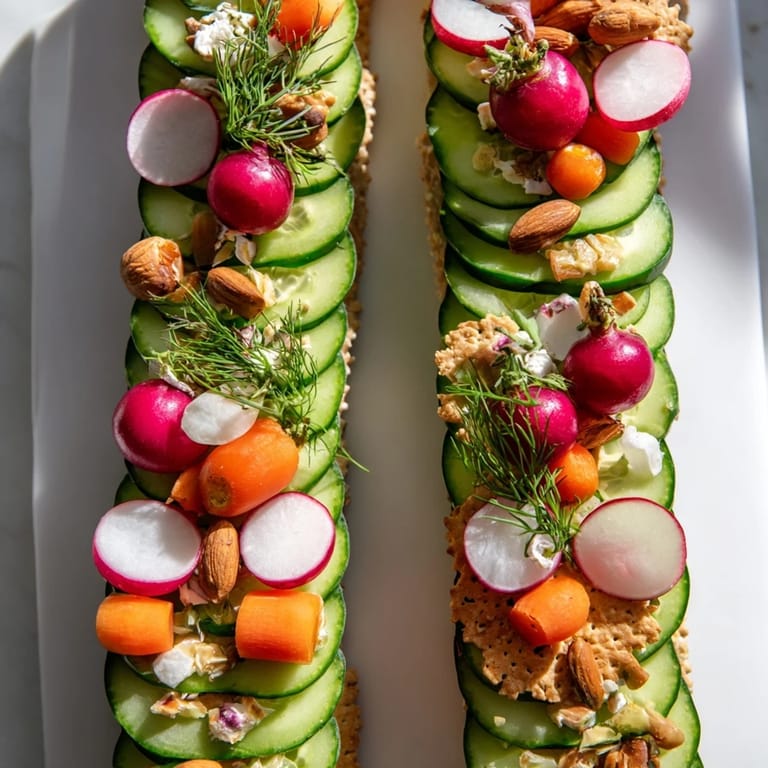
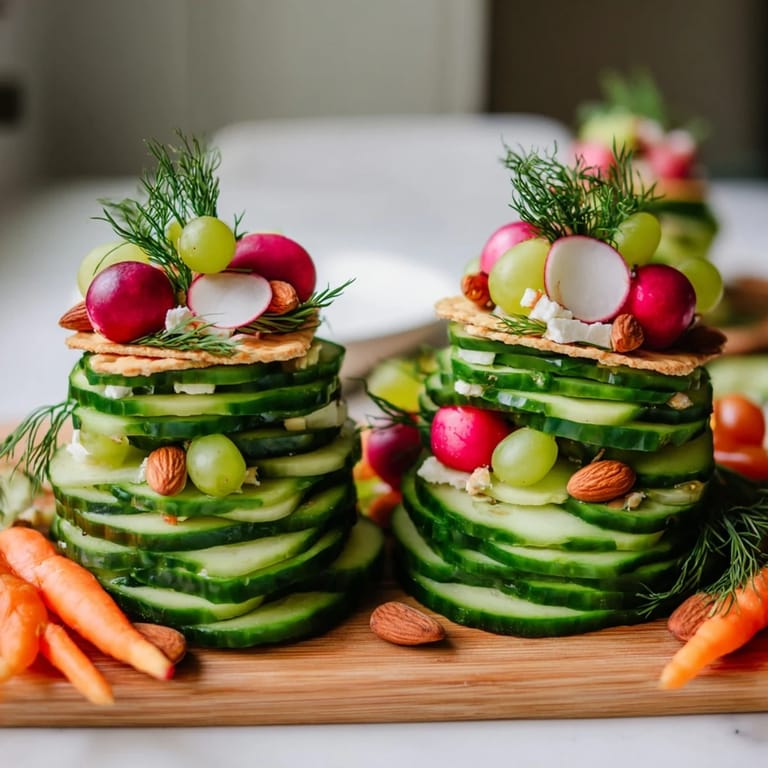
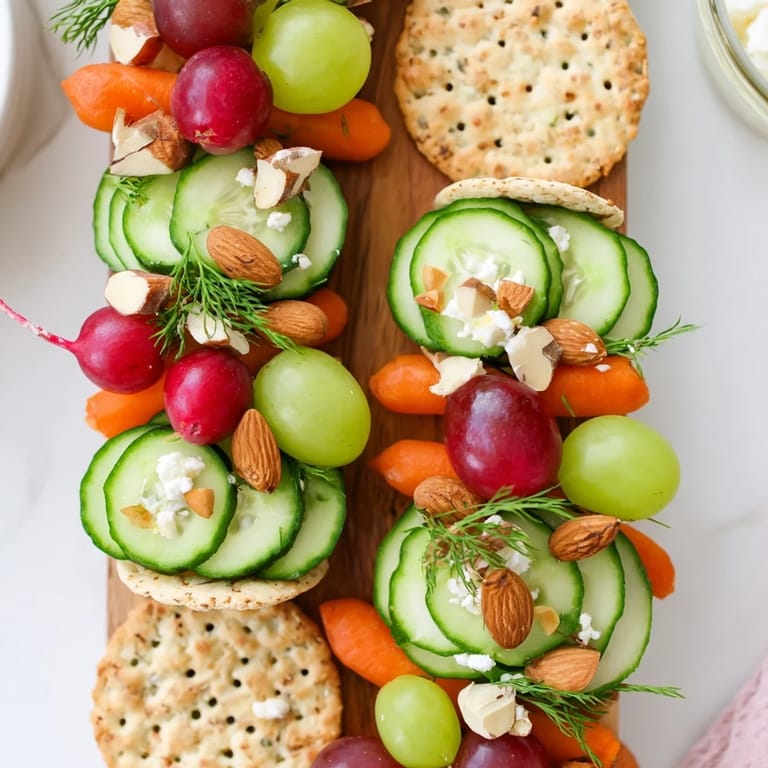
- Start at one end and create a modest pile: lay down cucumber slices and crackers as your foundation, then arrange carrots, radishes, grapes, half the goat cheese rounds, and a quarter of the almonds in whatever order feels right to you. The beauty is in the restraint, not the fussiness.
- Mirror the other side:
- Move to the opposite end and repeat exactly—same ingredients, same arrangement, so the two sides echo each other like a reflection. This symmetry is what makes the empty space between them feel intentional rather than forgotten.
- Garnish with intention:
- Place a few sprigs of fresh herbs on each side—not scattered randomly, but positioned where they'll catch light and release fragrance when guests lean in close.
- Honor the emptiness:
- Leave the central section of the board completely bare, a deliberate void that makes everything else feel more present. This is the whole point.
- Serve with presence:
- Bring it to the table and pause for a moment before anyone eats, letting the arrangement land in people's eyes first.
 Save
Save My sister called it "fancy nothing" the first time I made it for a family dinner, but she was quiet while eating it, which was rare for her. Later she told me she'd been thinking about something difficult, and the calm of the board had given her space to think. Food doesn't always have to feed your hunger; sometimes it feeds your need for peace.
Why the Empty Space Matters
In a world of maximalism and abundance, the most radical thing you can do is arrange food and then step back. The emptiness isn't laziness—it's confidence that the ingredients speak louder when they're not fighting for attention. When you look at this board, you're not overwhelmed; you're invited to notice.
Mindful Eating as Practice
This recipe was born from a moment when I realized I was eating without tasting, scrolling without seeing, moving without noticing. Building this board and serving it slowly taught me that food can be meditation. The arrangement asks you to pause before you eat, to acknowledge what's in front of you, to actually taste the difference between a carrot and a radish instead of just chewing.
Customizing Your Arrangement
The beauty of this minimalist approach is that it works with whatever vegetables or nuts you have on hand—autumn calls for roasted beets and walnuts, spring could be baby asparagus and pistachios. The principle stays the same: select carefully, divide equally, and let the empty space do the talking. You're not following a recipe so much as learning a visual language.
- Try swapping seasonal produce while keeping the two-to-the-end symmetry intact.
- Vegan versions work perfectly with cashew cream shaped into rounds instead of goat cheese.
- A crisp white wine like Sauvignon Blanc becomes part of the experience, not an afterthought.
 Save
Save This board is proof that restraint can be more elegant than abundance, and that sometimes the most nourishing thing you can offer someone is permission to slow down. Serve it like you mean it.
Kitchen Tips & Answers
- → What types of cheese are used in this dish?
It features soft goat cheese shaped into small rounds, providing a creamy contrast to the fresh produce.
- → Can this be made vegan-friendly?
Yes, by substituting the goat cheese with plant-based cheese alternatives.
- → What is the purpose of leaving the center of the board empty?
The empty central section highlights the visual balance and separation between the two symmetrical servings.
- → What nuts are included and how are they prepared?
Roasted almonds add crunch and a toasted flavor to complement the fresh ingredients.
- → Are there recommended accompaniments for this dish?
A crisp white wine, such as Sauvignon Blanc, pairs well with the freshness of the ingredients.
- → What tools are best for preparing this platter?
A large wooden or slate board, a small paring knife, and a cheese knife are ideal for arranging and serving.