 Save
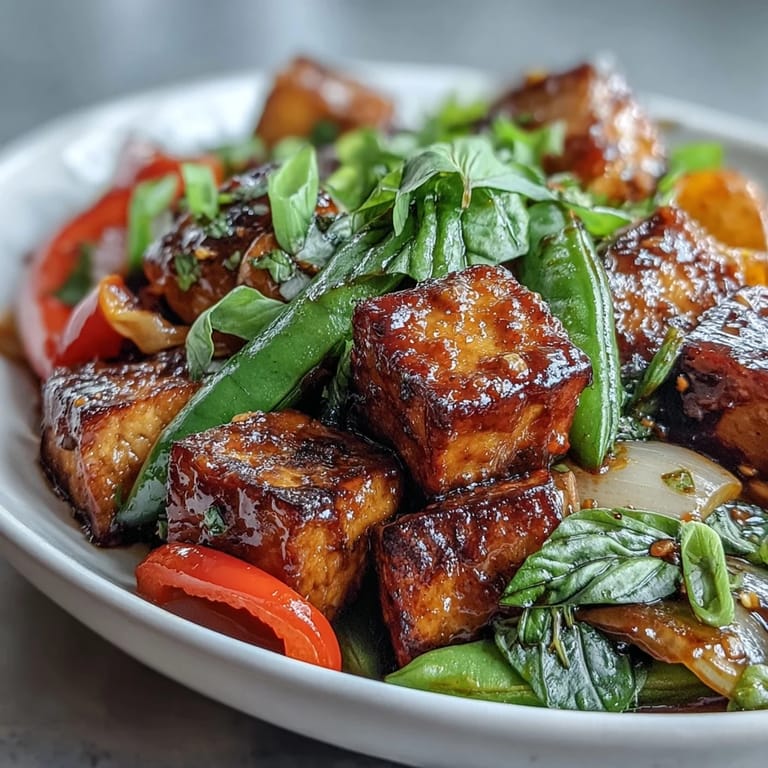
Save My friend called on a Thursday evening asking if I could whip up dinner in thirty minutes, and I found myself reaching for tofu and whatever vegetables were lingering in my crisper drawer. That's when this Thai basil stir-fry became real, not from a cookbook but from that lovely pressure of making something delicious when time is tight. The way the tofu crisps up in the pan while aromatics fill your kitchen feels almost meditative, and suddenly you're not rushing anymore—you're just cooking. What emerges is bright, savory, and alive with the kind of flavors that make people ask for the recipe before they've finished eating.
I made this for my partner after they'd mentioned craving something spicy and vibrant, and watching them close their eyes on that first bite while the steam rose from the bowl told me everything I needed to know. There's something about feeding someone properly seasoned food that asks nothing of them—no apologies for it being vegan, no explanations about texture or taste. It just arrived as comfort and flavor, complete.
Ingredients
- Firm tofu, pressed and cubed: Pressing matters here—it removes moisture so the cubes can actually crisp up in the pan and soak up the sauce instead of steaming. I learned to wrap mine in a clean kitchen towel and weight it for fifteen minutes; the difference is real.
- Red and yellow bell peppers, sliced: They add sweetness and crunch that balances the savory sauce, and their different colors make the finished dish almost too beautiful to eat.
- Medium carrot, julienned: Thin strips cook quickly and stay snappy, adding slight sweetness and a textural contrast that keeps each bite interesting.
- Red onion, sliced: Raw onion mellows slightly when it hits the heat, and its sharpness plays perfectly against the sweet-salty sauce.
- Snap peas, trimmed: These are the secret texture keeper—they stay crisp even after a few minutes in the pan, giving you that satisfying crunch.
- Garlic and red chili, minced: Garlic blooms in hot oil for just seconds, releasing its perfume into everything else; the chili is optional but worth it if you like a gentle warmth building as you eat.
- Soy sauce and dark soy sauce: Regular soy brings salt and umami, while the dark version adds depth and color without overpowering, but use tamari if gluten is a concern.
- Maple syrup or coconut sugar: Just enough sweetness to round out the savory-spicy edges and help the sauce coat everything evenly.
- Rice vinegar: A tablespoon cuts through the richness and brightens the whole dish with a subtle tang.
- Fresh Thai basil: This is the soul of the dish—don't substitute with Italian basil or mint, as Thai basil has its own peppery, almost anise-like character that nothing else captures.
- Vegetable oil: Use a neutral oil with a high smoke point so your tofu and vegetables crisp up without burning.
Tired of Takeout? 🥡
Get 10 meals you can make faster than delivery arrives. Seriously.
One email. No spam. Unsubscribe anytime.
Instructions
- Combine your sauce first:
- Whisk together soy sauce, dark soy sauce, maple syrup, rice vinegar, black pepper, and water in a small bowl. This takes two minutes but anchors everything that comes next, and you'll have it ready when you need it most.
- Sear the tofu until it's golden:
- Heat oil in your wok or skillet over medium-high heat until it shimmers, then add tofu cubes in a single layer—don't crowd the pan. Let them sit for a minute before turning so they can develop that beautiful caramelized crust, turning occasionally until all sides are golden and crisp, about six to eight minutes total.
- Build your flavor base:
- Add the remaining oil to the now-empty pan, then immediately add minced garlic, red onion, and chili if using. The sizzle happens fast, so stay with the pan and stir for just thirty seconds until the smell hits you—that's when you know it's perfect.
- Add your vegetables and let them stay crisp:
- Toss in bell peppers, carrot, and snap peas, then stir constantly for three to four minutes. You want them tender but still with some snap when you bite them, not soft or mushy.
- Reunite everything in the sauce:
- Return the seared tofu to the pan, pour in your sauce, and toss everything together for two to three minutes, letting the sauce coat every piece and thicken slightly as it cooks.
- Finish with Thai basil gently:
- Remove from heat and fold in the Thai basil leaves, letting the residual heat just barely wilt them so they keep their fragrance and character. This step takes ten seconds but changes everything.
 Save
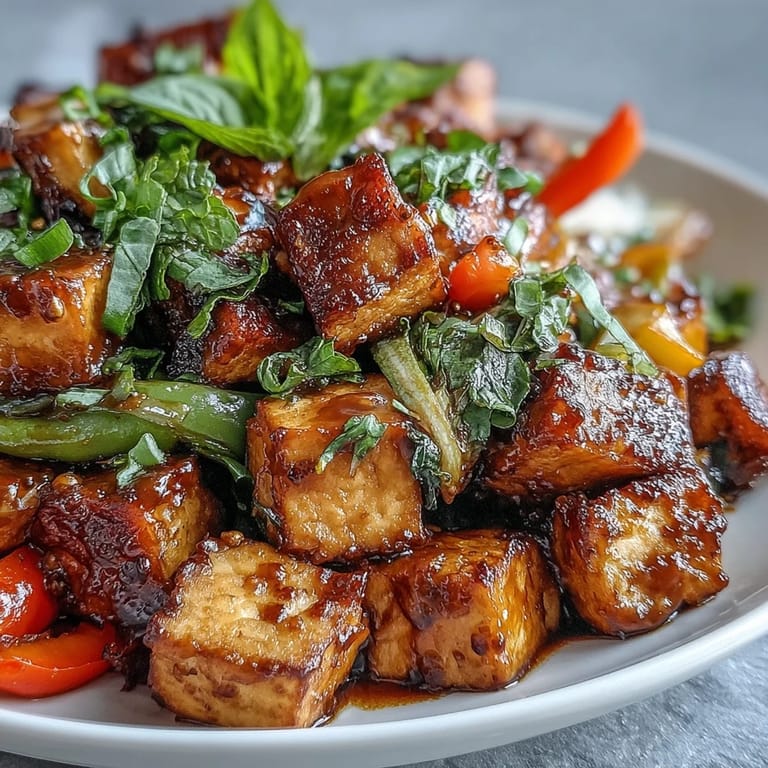
Save There was an evening when I made this for someone who'd mentioned they'd given up Thai food after going vegan, thinking they couldn't recreate the flavors they missed. Watching them taste it and smile, genuinely smile, reminded me that the best cooking isn't about technique or ingredients—it's about giving people back something they thought they'd lost.
The Magic of Tofu Texture
I used to fear tofu, convinced it would always be bland or rubbery, until I realized the secret is respecting its potential rather than fighting it. Pressing it removes the water that prevents browning, and a hot enough pan with enough oil lets the surface develop a thin, golden crust that holds up beautifully in sauce. Once you achieve that crispness on the outside while keeping the interior tender, tofu stops being a substitute and becomes its own thing entirely.
Building Layers of Flavor
Thai cooking taught me that great dishes aren't about single bold flavors but about how different tastes play against each other—the sweetness of maple syrup, the saltiness of soy, the brightness of vinegar, the heat of chili, and the complexity of Thai basil all working in conversation rather than competition. Each element matters, and none should overwhelm, which is why the sauce ratios matter more than you might think. I've learned to taste as I go, adjusting the balance until it feels right on my tongue.
Serving and Pairing
This dish shines over jasmine rice, where the fragrant grains soak up every drop of sauce and complete the meal with their delicate sweetness. A crisp white wine like Sauvignon Blanc plays beautifully with the spice and aromatics, though honestly, a tall glass of cold water works just fine when you're enjoying good company.
- Squeeze fresh lime over everything just before eating for a brightness that ties the whole dish together.
- Make extra sauce if you're serving over rice, as the grains will drink it up eagerly.
- Leftovers reheat gently in a pan with a splash of water, though the basil is best added fresh if you can manage it.
 Save
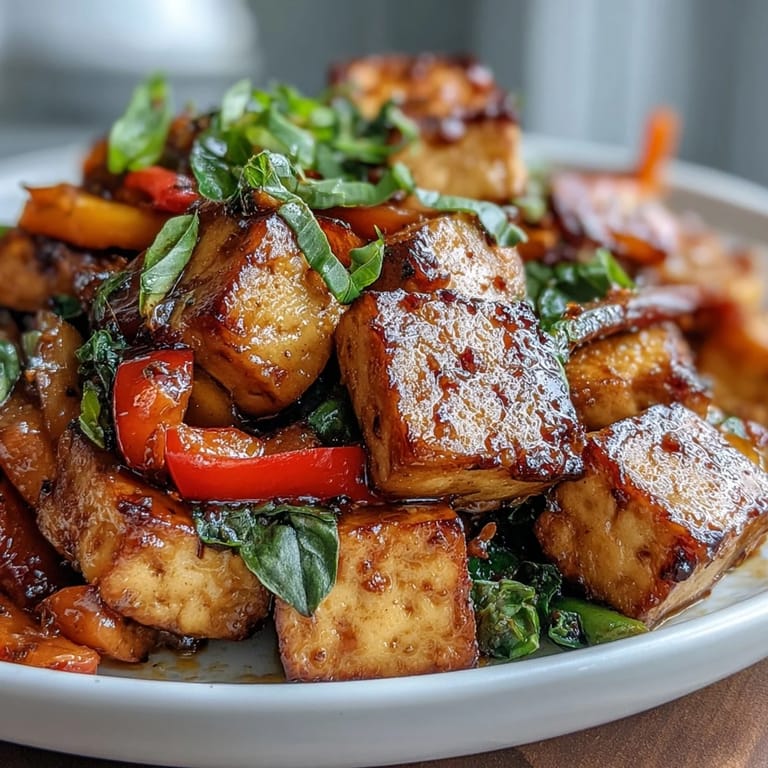
Save This recipe lives in my rotation now, pulled out whenever I need something fast, nourishing, and genuinely delicious. It's proof that plant-based cooking doesn't require apologies—just good ingredients, proper technique, and the willingness to let simple things taste like themselves.
Kitchen Tips & Answers
- → How do I get crispy tofu?
Press firm tofu for 15 minutes to remove excess moisture, then cut into uniform cubes. Cook in hot oil over medium-high heat, turning occasionally until golden on all sides. Avoid overcrowding the pan.
- → Can I use regular basil instead of Thai basil?
Thai basil has a distinct anise-like flavor and holds up better to heat. Sweet basil works as a substitute but will have a different flavor profile. Add it at the very end to prevent wilting.
- → Is this dish gluten-free?
Simply replace regular soy sauce with tamari to make this gluten-free. All other ingredients, including tofu and vegetables, are naturally gluten-free.
- → How spicy is this stir-fry?
The spice level is mild to medium with one red chili. Adjust heat by adding more chili, chili flakes, or omitting entirely for a mild version everyone can enjoy.
- → What vegetables work best?
Bell peppers, snap peas, carrots, and red onion provide color and crunch. Broccoli, baby corn, zucchini, or green beans make excellent substitutions based on what's in season.
- → Can I meal prep this dish?
This stores well for 3-4 days in the refrigerator. Keep the rice and stir-fry in separate containers. Reheat gently in a pan or microwave, adding a splash of water if needed.