 Save
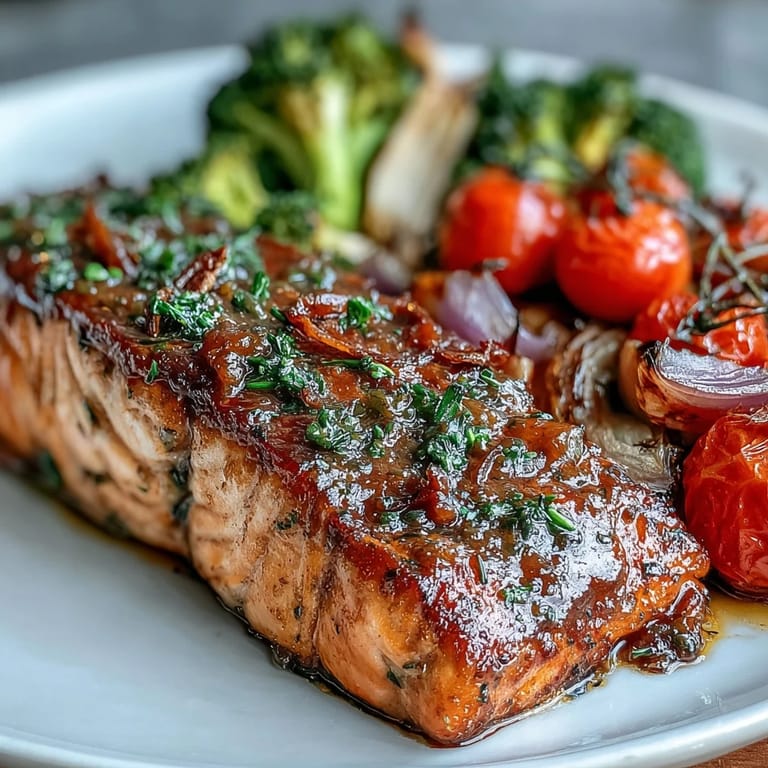
Save There's something about a sheet pan dinner that feels like a small victory, especially when you're juggling work and life and still want to eat well. I discovered this Dijon salmon combination on a Tuesday evening when I had salmon thawing and a colorful pile of vegetables that needed using up. The mustard glaze happened almost by accident, whisking together what I had on hand, and the result was so bright and satisfying that it became my go-to when I need something reliable but still feels a little special.
I made this for my sister last month when she was stressed about meal planning, and watching her face when she tasted it was genuinely worth the effort. She kept asking about the glaze like it was some complicated technique, and I loved being able to tell her it was just mustard, honey, and lemon juice whisked together in a bowl. That's the thing about this recipe, it looks more complicated than it actually is, which makes you feel competent in the kitchen.
Ingredients
- Salmon fillets (4, about 170 g each): The star of the show, and skin-on or skinless depending on what you prefer. I find skin-on keeps the fish moister during roasting, but skinless works beautifully too.
- Dijon mustard (2 tablespoons): Not the yellow ballpark stuff, this needs real Dijon with actual character and tang to carry the whole glaze.
- Olive oil (3 tablespoons total): Use something you like the taste of since you can actually taste it here, not one of those super-refined bottles.
- Lemon juice (1 tablespoon): Fresh squeezed makes a real difference, though bottled works in a pinch.
- Honey (1 teaspoon): This balances the sharpness of the mustard and helps everything caramelize beautifully.
- Garlic clove (1, minced): Raw garlic roasts to something mellow and sweet, so don't skip this even if you're not a huge garlic person.
- Broccoli (2 cups florets): The sturdy vegetable that stands up to high heat without turning to mush.
- Cherry tomatoes (2 cups, halved): These burst and create little pockets of sweet juice throughout the pan.
- Red bell pepper (1 large, sliced): Adds brightness and sweetness as it softens in the heat.
- Red onion (1 medium, cut into wedges): It turns jammy and tender when roasted, adding depth to every bite.
- Dried Italian herbs (1 teaspoon): Herbes de Provence works too if that's what you have hanging around.
- Salt and black pepper: Use this to season both the vegetables and the salmon glaze separately for better overall flavor.
- Lemon wedges and fresh parsley (to serve): These finish the dish with brightness and make it look like you actually know what you're doing.
Tired of Takeout? 🥡
Get 10 meals you can make faster than delivery arrives. Seriously.
One email. No spam. Unsubscribe anytime.
Instructions
- Heat your oven and prep your pan:
- Get that oven to 220°C (425°F) so it's ready and roaring when you need it. Line a large sheet pan with parchment paper or a light grease to make cleanup actually pleasant.
- Whisk together the glaze:
- In a small bowl, combine Dijon mustard, olive oil, lemon juice, honey, minced garlic, salt, and black pepper. Whisk it until it's smooth and cohesive, and taste it, actually taste it, to make sure the balance feels right to you.
- Arrange and season the vegetables:
- Spread all your vegetables across the sheet pan, leaving some room in the middle for the salmon. Drizzle with olive oil, sprinkle with herbs, salt, and pepper, then toss everything until it's evenly coated and sitting in a single layer.
- Nestle the salmon and glaze it:
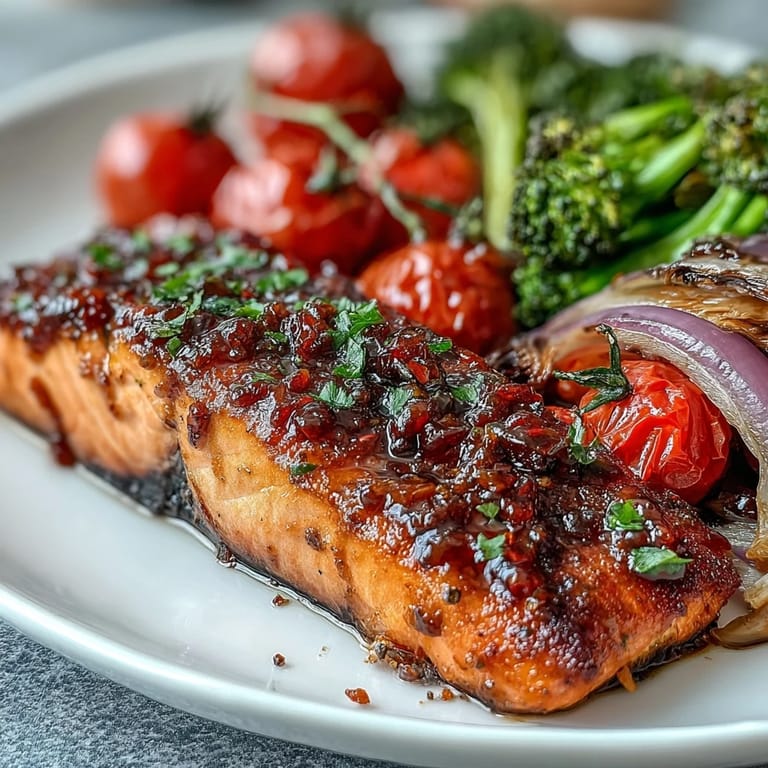
- Place salmon fillets skin-side down (if using skin-on) among the vegetables. Brush each fillet generously with that Dijon glaze, making sure to coat the top and sides so it caramelizes as it roasts.
- Roast everything together:
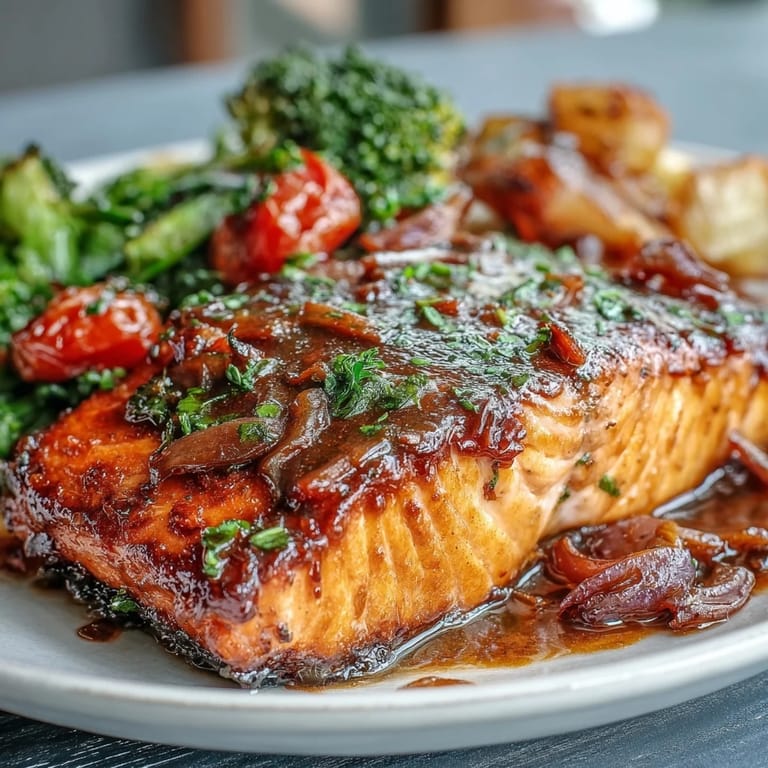
- Pop the pan into the oven for 20 to 25 minutes, checking around the 20-minute mark. The salmon should be opaque and flake easily with a fork, and the vegetables should be tender with caramelized edges that look almost charred.
- Finish and serve:
- Pull the pan from the oven and let it sit for just a moment so everything settles. Serve immediately with lemon wedges and fresh parsley scattered over the top if you have it.
 Save
Save There was a moment last summer when my neighbor smelled this cooking and knocked on the door asking what was happening in my kitchen. That's when I knew this recipe had crossed over from just being dinner into something that actually smells like you're doing something intentional and good in the kitchen.
Why This Works as a Complete Meal
The beauty of this dish is that it's genuinely complete on its own, protein and vegetables all in one place, no sides required unless you want them. The salmon provides those healthy fats that make you feel satisfied, and the roasted vegetables add fiber and actual flavor that goes beyond just being good for you. I've served this to people who swear they don't like salmon, and something about the glaze and the roasting method wins them over.
Timing and Make-Ahead Options
If you're organized, you can prep everything earlier in the day, keeping the glaze separate and the vegetables and salmon covered in the fridge until you're ready to roast. The actual cooking takes about 25 minutes, so this is perfect for those evenings when you want something that feels more involved than it is. I usually start my oven while I'm prepping vegetables, which somehow makes the whole process feel less chaotic.
Variations and Swaps You Can Make
This recipe is flexible enough to work with what you actually have in your kitchen, which is the mark of a truly useful recipe. Asparagus or green beans swap in beautifully for broccoli, and zucchini or snap peas add their own sweetness to the mix. If you want to get creative with the glaze, a touch of whole grain mustard adds texture, or you could finish everything with grated lemon zest right before serving for extra brightness.
- Vegetable swaps: Asparagus, green beans, zucchini, snap peas, or even Brussels sprouts all roast beautifully at this temperature.
- Glaze variations: Whole grain mustard adds texture, or trade half the Dijon for spicy brown mustard if you like more heat.
- Wine pairing: A crisp Sauvignon Blanc or unoaked Chardonnay complements the tangy glaze and delicate salmon.
 Save
Save This is the kind of recipe that becomes part of your regular rotation without you even planning for it to, because it's reliable and satisfying and genuinely tasty. Every time I make it, I remember why I keep coming back to it.
Kitchen Tips & Answers
- → What temperature should I roast the salmon at?
Roast at 220°C (425°F) for 20–25 minutes until the salmon is opaque and flakes easily with a fork.
- → Can I use frozen salmon fillets?
Yes, thaw frozen salmon completely in the refrigerator before cooking and pat dry to ensure proper glaze adhesion.
- → What vegetables work best for sheet pan roasting?
Broccoli, cherry tomatoes, bell peppers, and red onions are excellent choices that roast in similar timeframes to the salmon.
- → How do I know when the salmon is done?
The salmon is done when it's opaque throughout and flakes easily when tested with a fork at the thickest part.
- → Can I make the Dijon glaze ahead of time?
Yes, whisk the glaze ingredients together up to 24 hours in advance and store refrigerated in an airtight container.
- → What wine pairs well with this dish?
A crisp Sauvignon Blanc or unoaked Chardonnay complements the tangy Dijon flavors beautifully.