 Save
Save I'll never forget the December evening when my cousin Sarah arrived at our holiday gathering with a stunning cheese board she'd seen at a fancy restaurant. She described it so vividly—twelve distinct sections, each telling its own story—that I became obsessed with recreating it. That night, after everyone left, I stood in my kitchen with twelve different cheeses scattered across the counter, feeling like a tiny conductor about to orchestrate a symphony of flavors. What started as an attempt to recreate her memory became my own tradition, and now whenever someone asks what to bring to a winter celebration, I smile and say, 'Let me tell you about the Twelve Days of Cheese.'
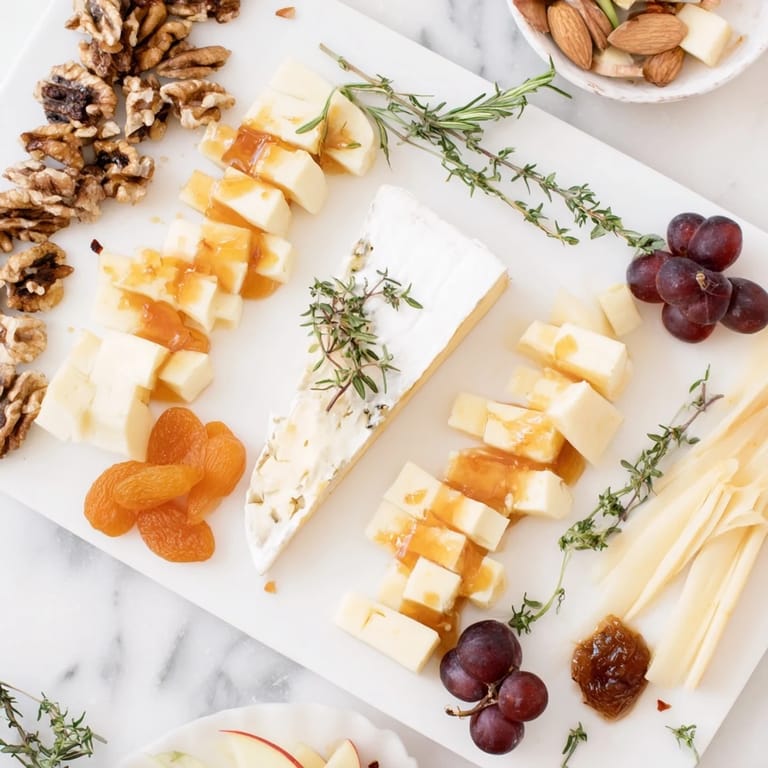
I remember watching my friend Marcus take one bite of the Brie with honey and apple, and his eyes lit up like he'd just discovered something magical. He stood there for a moment, then called everyone over to taste it. That's when I realized this board wasn't just food—it was a conversation starter, a moment that brought people together in the most unexpected way.
Ingredients
- Brie: Creamy and buttery, this is your gateway cheese—pair it with honey and apple to let its delicate richness shine
- Aged Cheddar: Sharp and complex, it can stand up to bold flavors like fig jam and walnuts without getting lost
- Manchego: This Spanish classic has a slightly nutty character that plays beautifully with quince paste and almonds
- Roquefort or Blue Cheese: The bold one of the group—it demands respect and partners perfectly with pear and walnut
- Goat Cheese: Tangy and herbaceous, fresh thyme and grapes highlight its bright, clean flavors
- Gruyère: Nutty and caramel-like, it's sophisticated enough to pair with whole grain mustard and cornichons
- Camembert: Earthy and elegant, it welcomes apple slices and the crunch of toasted almonds
- Gouda: Slightly sweet and creamy, it bridges the gap between savory and sweet with dried apricot and dark chocolate
- Comté: Deep and complex, it appreciates the simple pairing of grapes and walnuts to let its character emerge
- Pecorino: Sharp and assertive, pear slices and honey soften its edges beautifully
- Havarti: Creamy with subtle sweetness, fig jam and almonds are its ideal companions
- Smoked Cheese: The wildcard that adds intrigue—cornichons and dark chocolate create an unexpected, sophisticated combination
- Artisanal bread or assorted crackers: Your edible vessels—choose varied textures so people have options for how they want to enjoy each cheese
- Honey, fig jam, whole grain mustard: These spreads are the bridges between flavors, each adding its own emotional note to the experience
- Fresh fruits: Grapes, apricots, apple, pear—they provide brightness and cleanse the palate between tastings
- Nuts and chocolate: These add texture and complexity, transforming simple pairings into memorable moments
- Fresh herbs: Thyme and rosemary aren't just garnish—they're a visual reminder that this is a celebration
Tired of Takeout? 🥡
Get 10 meals you can make faster than delivery arrives. Seriously.
One email. No spam. Unsubscribe anytime.
Instructions
- Set your stage:
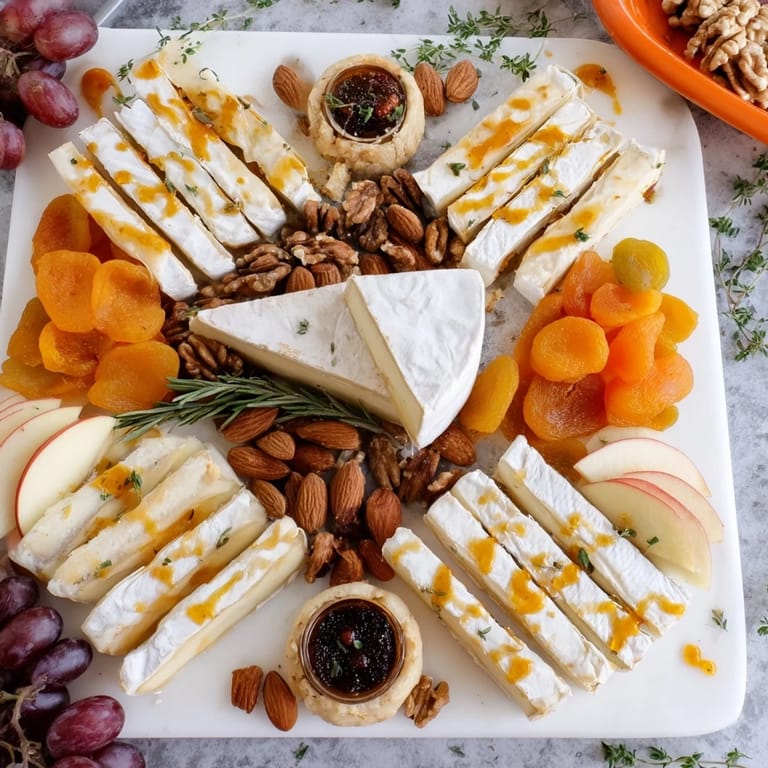
- Find a large, beautiful board or platter—this is your canvas. Take a moment to really look at it and imagine the finished creation. You might use small bowls or ramekins to visually divide the space into twelve sections, or simply arrange them in a circle or grid pattern. There's no right way, just your way.
- Introduce each cheese:
- Open each cheese and really look at it. Notice its color, its texture, how it feels in your hand. Place each one in its designated section, cutting them into generous bite-sized pieces. This is where you get to be an artist—arrange them so they look inviting and approachable.
- Build the pairings:
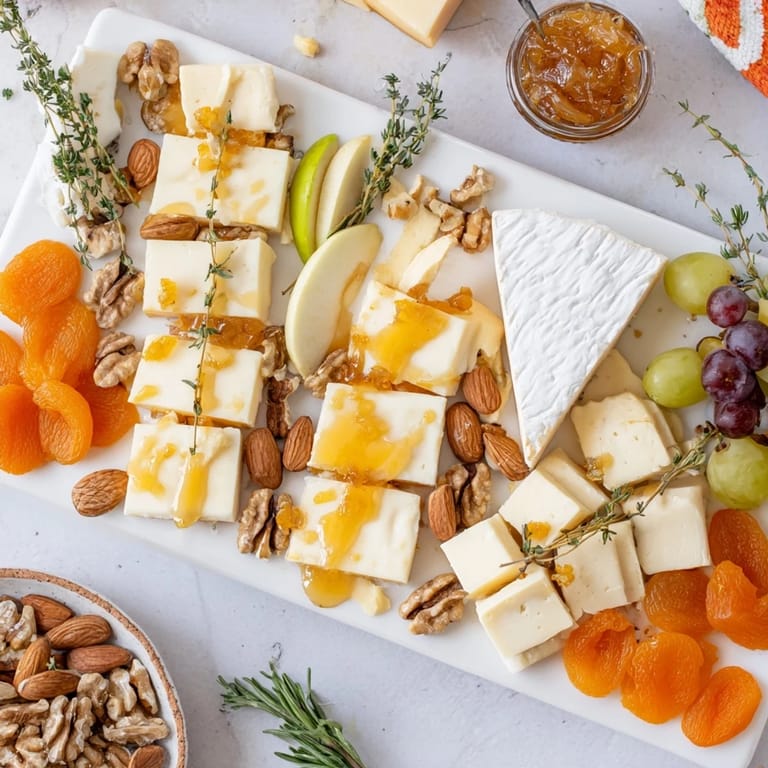
- Now comes the magic. For each section, place its pairing ingredients nearby: Brie gets a drizzle of honey and an apple slice; Aged Cheddar meets fig jam and a walnut; Manchego welcomes an almond and quince paste. As you work through each pairing, notice how different each section becomes. You're not just assembling food—you're telling twelve tiny flavor stories.
- Frame with crackers and bread:
- Arrange your bread and crackers around the board, filling the negative space. Think of them as a frame around your masterpiece. Make sure there are enough pieces so no one feels shy about taking what they want.
- Crown it with green:
- Just before serving, scatter fresh thyme and rosemary sprigs across the board. This final touch transforms it from beautiful to absolutely stunning, and it fills the space with a whisper of festive promise.
- Serve at room temperature:
- Let the board sit for a few minutes before serving—this allows the cheeses to settle into their optimal flavor state. Room temperature is where cheese speaks its truth, where flavors aren't muted by cold.
 Save
Save One New Year's Eve, a quiet moment happened around this board. Everyone had been chatting and laughing, but suddenly they all paused, really tasting. A colleague who'd been stressed all evening closed her eyes over a piece of Roquefort with pear, and I watched the tension leave her shoulders. That's when I understood—good food, thoughtfully arranged, has the power to slow people down and bring them home to the present moment.
The Art of Pairing
After making this board dozens of times, I've learned that the most memorable pairings aren't always the obvious ones. Yes, honey and soft cheese is a classic for a reason—sweet enhances rich, and it's immediately satisfying. But I've discovered that the magic happens when you introduce contrast: the sharp brightness of cornichons against creamy Gruyère, the unexpected sophistication of dark chocolate with smoked cheese. These combinations create little moments of surprise that make people pause and really taste. When you're building your board, think about creating a journey for the palate—warm and welcoming, then surprising, then complex, then back to comfort.
Making It Personal
The beauty of this board is that it can be entirely customized to reflect the people you're serving. Are they adventurous eaters? Swap the smoked cheese for something even more unusual, like a truffle-infused variety. Do they have a favorite fruit? Use it instead of what's suggested. One year, a friend brought quince paste because that's what reminded her of her grandmother's table in Spain, and suddenly that section became the most talked-about part of the board. Your version of the Twelve Days should feel like an invitation into your kitchen, your tastes, your memories.
Serving Suggestions and Drink Pairings
I've learned that how you serve this board matters almost as much as what's on it. The right beverage can elevate the experience from nice to unforgettable. Sparkling wine is my go-to because its effervescence cuts through rich cheese and prepares your palate for the next flavor. Light red wines work beautifully if you have guests who prefer that—a young Pinot Noir or Beaujolais won't overpower the delicate cheeses. Cider is my secret weapon, especially during the holidays, because it brings a certain warmth and approachability to the table. Pour generously, encourage people to taste the wine between each pairing, and watch how the experience deepens. These aren't just drinks—they're part of the story you're telling with the board itself.
- Give yourself at least thirty-five minutes to assemble—this isn't a race, and the time spent organizing is actually meditative
- If you're transporting the board, cover sections individually with small plastic domes rather than plastic wrap to prevent condensation and protect the beautiful arrangement
- Remember that this is meant to be social and interactive—the best boards are the ones where people linger and converse, not just grab and go
 Save
Save Every time I set out this board, I think of Sarah and that December evening when she shared her restaurant-inspired vision. What began as an attempt to recreate someone else's memory has become something entirely my own—a tradition that's taught me that the most beautiful tables are built with intention, generosity, and just a little bit of love.
Kitchen Tips & Answers
- → What cheeses are included in the twelve days cheese board?
The board features Brie, Aged Cheddar, Manchego, Roquefort, Goat Cheese, Gruyère, Camembert, Gouda, Comté, Pecorino, Havarti, and Smoked Cheese like Smoked Provolone.
- → What accompaniments pair best with the cheeses?
Each cheese is paired with distinctive sides such as honey, fig jam, whole grain mustard, artisanal bread or crackers, grapes, dried apricots, walnuts, almonds, apple and pear slices, dark chocolate, cornichons, and fresh herbs.
- → How should the cheese board be prepared and presented?
Divide a large board into twelve sections using small bowls or ramekins, place cheese and pairings in each section attractively, garnish with herbs, and serve at room temperature to enhance flavors.
- → Can this cheese board accommodate dietary preferences?
Yes, vegetarian cheeses can be used to keep it vegetarian, and plant-based alternatives enable a vegan option. Gluten-free crackers work as a substitute for traditional bread or crackers.
- → What beverages complement this cheese board?
Pairings include sparkling wine, light red wines, and cider to complement the diverse cheese flavors and accompaniments.
- → Are there common allergens in the cheese board?
The board contains dairy, tree nuts like walnuts and almonds, gluten from bread or crackers, and possibly soy in some chocolates. Check labels accordingly.