 Save
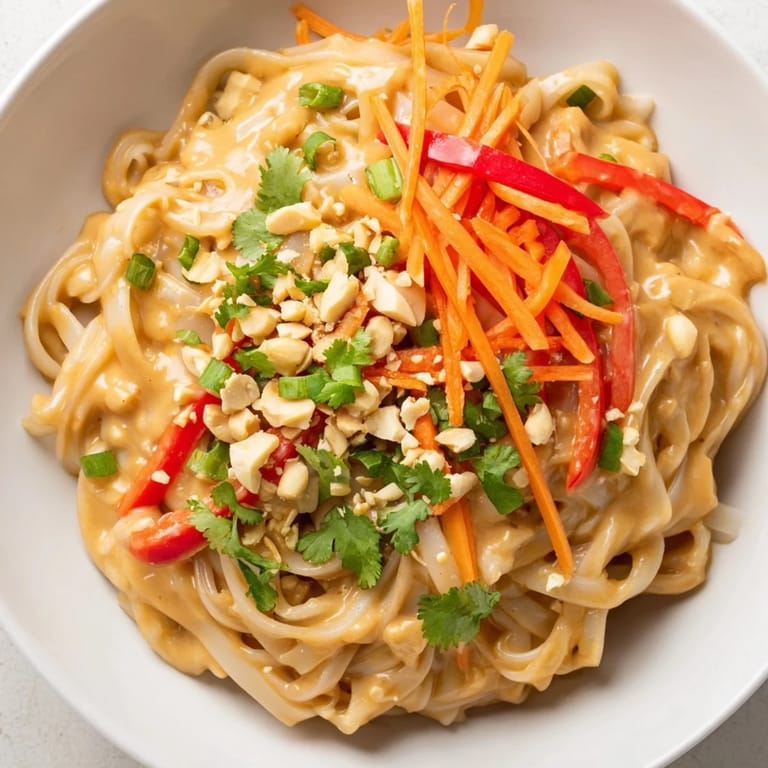
Save There's something magical about the moment when a simple bowl of noodles transforms into something unforgettable. I was rushing through a weeknight, hungry and uninspired, when I spotted a jar of peanut butter in the back of my pantry alongside some sesame oil. Within minutes, I'd thrown together this spicy peanut sauce, and the smell that rose from my mixing bowl stopped me in my tracks. That first bite was a revelation—creamy, spicy, with just enough tang to keep it interesting. Now it's the dish I turn to whenever I need something that tastes like I spent hours in the kitchen, even though I haven't.
I made this for my roommate once when she came home looking absolutely defeated by her day. She sat at the counter, and I started cooking—the sesame oil hitting the warm noodles, the ginger and garlic releasing that incredible aroma. By the time I set the bowl down in front of her, she'd already perked up just from the smell. She took one bite and exhaled like she'd been holding her breath all day. That's when I realized this dish does something beyond just feeding you.
Ingredients
- Dried rice noodles or spaghetti (12 oz): Rice noodles absorb the sauce beautifully and have a delicate texture, but don't be afraid to use spaghetti if that's what's in your cabinet—it works just as well and holds the sauce wonderfully.
- Creamy peanut butter (1/2 cup): This is the soul of the sauce, so use one you'd actually eat straight from the jar; the better the peanut butter, the better your sauce will taste.
- Soy sauce (1/4 cup): It adds that deep, savory backbone that makes everything else sing—don't skip it or dilute it.
- Rice vinegar (2 tbsp): This brightness cuts through the richness and keeps the sauce from feeling heavy, which is its secret job.
- Toasted sesame oil (1 tbsp): Just a little goes a long way; regular sesame oil won't give you that roasted, nutty depth that makes people ask what you did.
- Honey or maple syrup (2 tbsp): A touch of sweetness balances the heat and ties everything together—it's not about making it candy-sweet, just rounding out the flavors.
- Sriracha or chili garlic sauce (2–3 tbsp): Start with 2 and taste as you go; some bottles are hotter than others, and you want to control the fire.
- Fresh garlic and ginger (2 cloves and 1 tbsp): Minced fresh is non-negotiable here—they brighten everything and give the sauce that just-made quality.
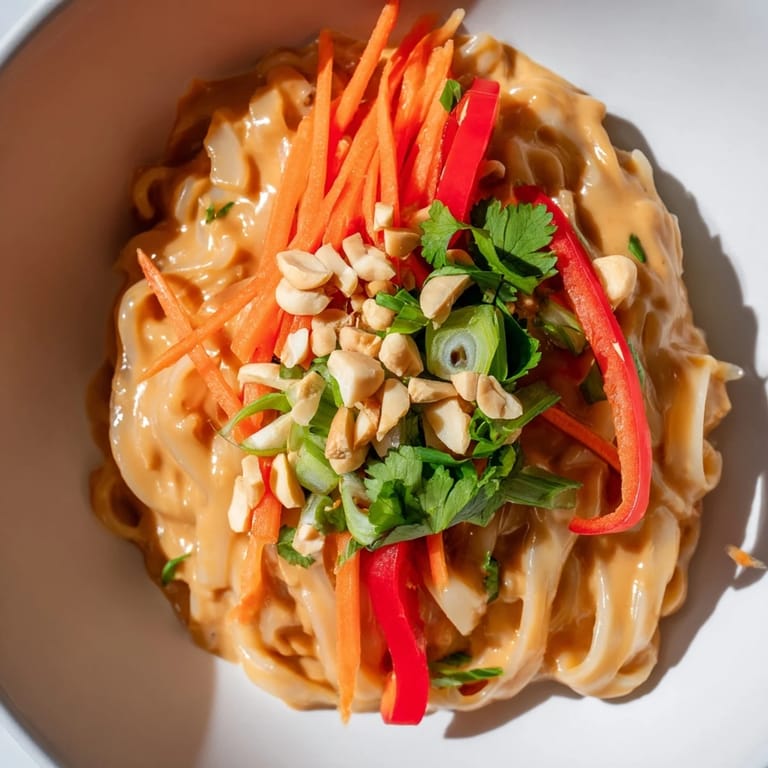
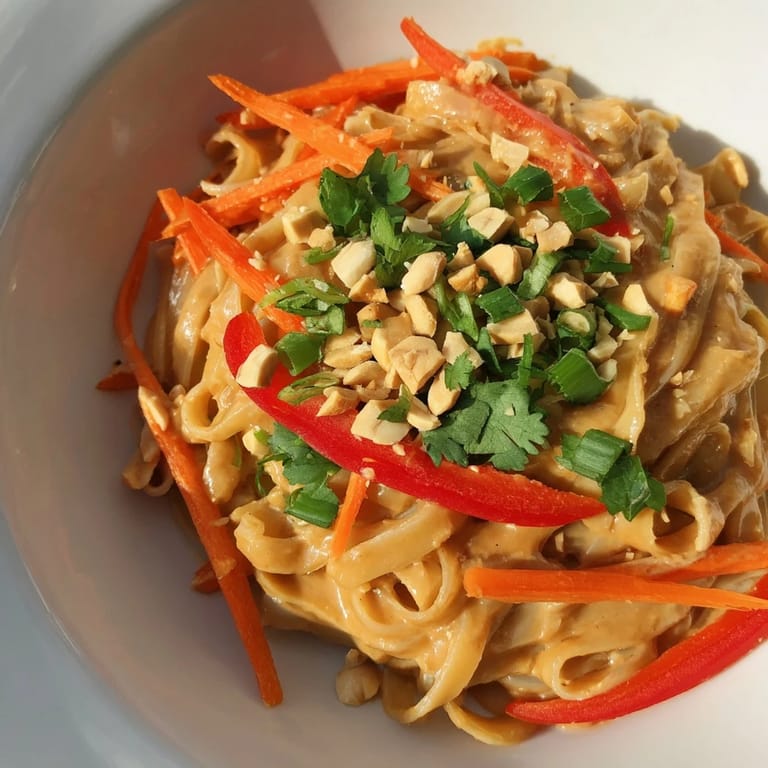
- Shredded carrots (1 cup): Their sweetness and slight crunch provide a textural contrast that makes each bite more interesting.
- Sliced bell pepper (1 cup): Raw peppers keep their snap and add color, but if you want them softer, toss them in just before serving.
- Scallions, roasted peanuts, and fresh cilantro for garnish: These aren't decorations—they add layers of freshness and crunch that transform a good bowl into one you'll crave.
Tired of Takeout? 🥡
Get 10 meals you can make faster than delivery arrives. Seriously.
One email. No spam. Unsubscribe anytime.
Instructions
- Cook and cool the noodles:
- Boil your noodles according to package directions, then drain and rinse under cold water until they're no longer steaming. This stops them from cooking further and keeps them from clumping together.
- Build the sauce:
- In a bowl, whisk together the peanut butter, soy sauce, vinegar, sesame oil, honey, sriracha, garlic, and ginger until it's smooth and pourable. If it's too thick, add warm water a splash at a time until it flows like silk.
- Combine everything:
- Toss the cooled noodles with the carrots and bell pepper, then pour the sauce over and stir until every strand is coated. Don't be shy—mix it thoroughly so nothing sits plain at the bottom.
- Plate and garnish:
- Divide into bowls and scatter scallions, peanuts, and cilantro on top, then squeeze a lime wedge over everything. The lime is the final note that makes it feel fresh rather than heavy.
- Serve warm or chill:
- This is wonderful right away while there's still some warmth, but it's equally good cold the next day straight from the fridge.
 Save
Save There's a moment after you've tossed everything together where you pause and take a bite before it goes into bowls. That's when you realize you've made something that tastes intentional, complex, and somehow better than the sum of its simple parts. It's the kind of dish that makes you feel capable in the kitchen.
Making It Your Own
This recipe is genuinely flexible without losing its character. I've made it with whatever vegetables were in my fridge—cucumbers, snap peas, shredded cabbage—and it's been delicious every time. The sauce is the constant that ties everything together, so feel free to play with the vegetables depending on what you have or what sounds good that day.
Protein Additions That Work
If you want to make this a more substantial meal, you have options. Crispy tofu adds texture if you pan-fry it first, shredded rotisserie chicken turns it into comfort food, and cooked shrimp brings a different kind of richness. Even a soft-boiled egg on top feels right somehow.
The Heat Factor
The spice level is entirely up to you, and this is where the recipe truly becomes yours. Some days I'm in the mood for a gentle warmth that just reminds you it's spicy; other times I want it to have real bite. Start conservative with the sriracha and taste as you adjust—you can always add more, but you can't take it back.
- Add the sriracha gradually and taste between additions to find your personal sweet spot.
- If you've made it too spicy, a drizzle of extra honey or a splash more peanut butter can dial it back.
- Remember that the cilantro and lime at the end help cut through the heat and refresh your palate.
 Save
Save This is the kind of recipe that becomes a regular in your rotation, the one you make when you want something satisfying without stress. It's proof that good food doesn't require complexity, just a few honest ingredients and the willingness to taste as you go.
Kitchen Tips & Answers
- → Can I use different noodles for this dish?
Yes, rice noodles or spaghetti both work well, just follow package instructions for cooking times.
- → How can I adjust the spice level?
Modify the amount of sriracha or chili garlic sauce to suit your preferred heat intensity.
- → What are some good protein additions?
Sautéed tofu, cooked chicken, or shrimp can be added for extra protein and heartiness.
- → Is there a gluten-free alternative for the soy sauce?
Yes, tamari is a great gluten-free substitute without compromising flavor.
- → Can I substitute peanut butter with other nut butters?
Almond or cashew butter can be used as alternatives, offering different flavor notes.