 Save
Save My friend threw a dinner party last minute, and I was tasked with bringing an appetizer that could feed eight people without requiring any actual cooking skills on her part. I pulled out three flatbreads from my pantry, remembered a charcuterie board I'd once seen at a wine bar, and thought: what if we turned the whole thing into something you could actually eat with your hands? The Rustic Raft was born in that moment of improvisation, and honestly, it's become the appetizer I reach for whenever I need something that looks impressive but won't stress me out.
I made this for a book club gathering where everyone was bringing something, and I watched people completely abandon the tiny appetizer plates we'd set out. Instead, they gathered around the board with napkins in hand, picking through the flatbreads and cheeses like they were hunting for buried treasure. One of my friends spent a solid five minutes trying to architect the perfect bite—prosciutto, brie, a grape, basil, a drizzle of honey—and when she finally took it, she closed her eyes like she'd just tasted something revelatory. That's when I knew this dish had something special.
Ingredients
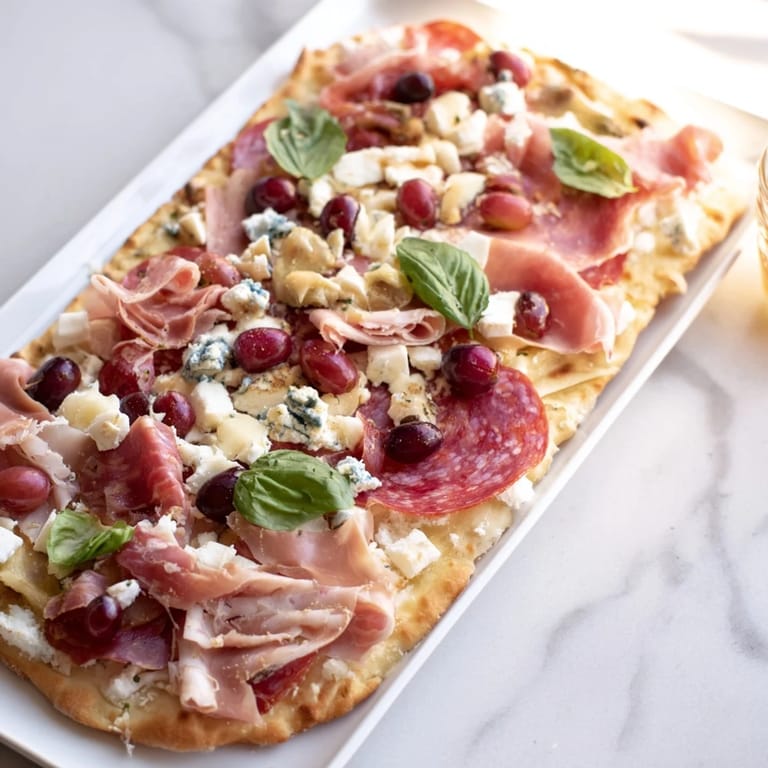
- Large rectangular flatbreads (lavash, naan, or ciabatta): These are your edible foundation, sturdy enough to hold weight but tender enough to tear cleanly with your teeth.
- Olive oil and garlic: A simple brush that toasts the flatbread just enough to deepen its flavor without making it brittle.
- Prosciutto, salami, smoked turkey, and soppressata or chorizo: Buy these sliced thin from the deli counter, or ask the butcher to do it if you're buying whole pieces—the thinness matters because it lets the other flavors through.
- Brie, aged cheddar, manchego, and blue cheese: Four different cheeses might sound like overkill, but each one brings a different personality: brie melts softly, cheddar adds sharpness, manchego brings nuttiness, and blue cheese provides a salty edge that ties everything together.
- Grapes, cherry tomatoes, olives, and roasted red peppers: These are your flavor breaks, the bright spots that prevent the board from feeling too heavy.
- Fresh basil and honey or fig jam: Basil adds an herbaceous whisper, while the honey creates a sweet-salty moment that makes people reach for another piece.
Tired of Takeout? 🥡
Get 10 meals you can make faster than delivery arrives. Seriously.
One email. No spam. Unsubscribe anytime.
Instructions
- Get your oven and flatbreads ready:
- Preheat your oven to 400°F and brush each flatbread lightly with olive oil on both sides, then sprinkle the minced garlic evenly across. The garlic will seem sparse, but it'll toast and intensify as the bread crisps.
- Toast until they hold their shape:
- Warm the flatbreads for 5 to 7 minutes until they're lightly golden and just firm enough to hold toppings without bending or sagging. You want them crispy at the edges but still pliable enough for guests to tear.
- Arrange your rafts:
- Lay the warm flatbreads on a large wooden board or platter, leaving a little space between them so people can clearly see each one and break off their own section without awkwardness.
- Layer meats and cheeses with intention:
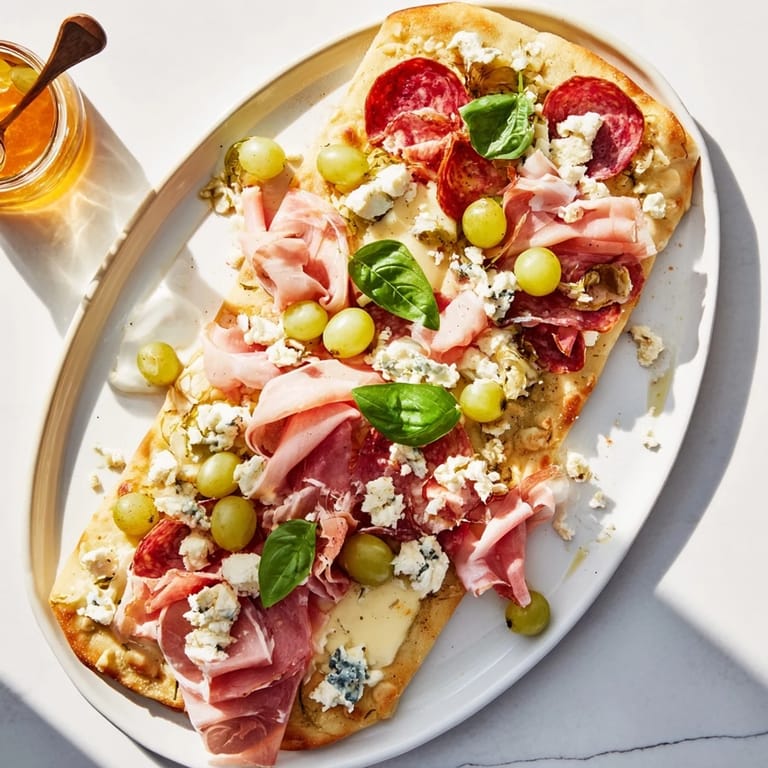
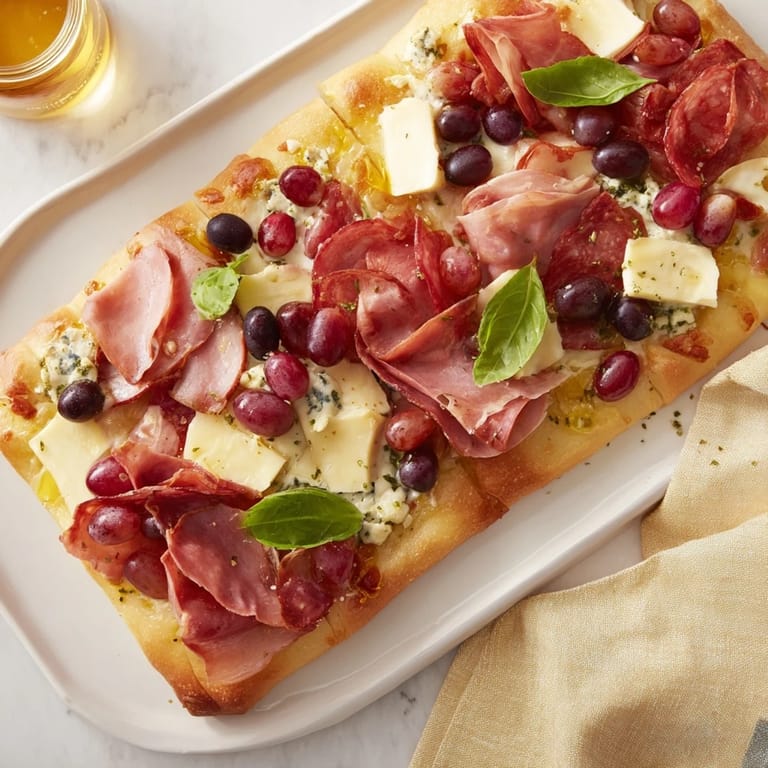
- Start with the sliced meats, alternating types as you go to create visual rhythm and so no single flavor dominates. Drape the cheese slices over the top, mixing the varieties so each flatbread becomes its own flavor journey.
- Fill the spaces between:
- In the empty areas around your flatbread rafts, scatter the halved grapes, cherry tomatoes, olives, and pepper slices like you're creating a landscape. These gaps are where the color happens.
- Finish and serve:
- Tear basil leaves by hand and scatter them across the board just before serving—tearing rather than cutting preserves their fragrance. Pour the honey or fig jam into a small bowl and let guests drizzle or dip as they please.
 Save
Save The real magic of this dish hit me when my neighbor, who's usually skeptical of anything fancy, came over and ate four pieces without putting down her wine glass. She told me she loved that she could control exactly what went into each bite instead of having someone else decide for her. It's a small thing, but that freedom—the ability to customize, to experiment, to make mistakes—is what transforms an appetizer into an experience.
Swapping and Substituting
One of the best parts of this recipe is that it demands almost nothing from you except good taste and whatever you have on hand. Can't find manchego? Use fontina or gruyère instead. Don't like blue cheese? Swap in fresh mozzarella or goat cheese. I've made versions with spicy coppa instead of soppressata, added thin slices of fresh pear alongside the grapes, and once even threw on some thinly shaved fennel for crunch. The structure stays the same; only the players change.
Making It Feel Generous
There's a difference between an appetizer that feels stingy and one that feels abundant, and it comes down to how much you pile on. Use the full amounts listed here, and don't second-guess yourself when layering the meats and cheeses—overlapping them slightly actually makes the board look more generous and inviting than spacing them neatly. A board that looks abundant makes guests feel welcome, and that matters just as much as the flavors do.
Timing and Temperature
The best version of this dish is served when the flatbread is still warm but the cheeses haven't started to sweat or soften. That window is usually about 10 to 15 minutes after it comes out of the oven, which is why I always toast the bread last and bring everything else to the table already assembled on the board. If you're making this ahead, toast the flatbreads early and let them cool to room temperature, then assemble the toppings just before guests arrive.
- Keep the honey or fig jam warm (or at room temperature) so it flows beautifully when drizzled over the warm flatbread.
- If you're adding nuts like Marcona almonds, toast them lightly first so they're warm and fragrant when they hit the board.
- Taste a tiny piece of the cold cheese and meats to make sure the flavors are balanced—sometimes a single ingredient needs to shine a little brighter than the others.
 Save
Save This dish has a way of turning a simple gathering into something that feels celebratory without any fuss. Serve it with a crisp white wine or light-bodied red, watch people smile as they build their perfect bites, and enjoy the kind of appetizer that lets the ingredients speak for themselves.
Kitchen Tips & Answers
- → What types of flatbreads work best?
Rectangular flatbreads like lavash, naan, or ciabatta provide a sturdy base and crisp nicely when warmed.
- → Can I substitute the meats listed?
Yes, feel free to use any cured or smoked meats you prefer or have on hand.
- → How should the flatbreads be prepared before layering?
Brush them lightly with olive oil and garlic, then warm in the oven until just crisp to enhance texture and flavor.
- → What accompaniments enhance the flavors here?
Fresh grapes, cherry tomatoes, olives, roasted red peppers, and a drizzle of honey or fig jam add sweet and savory contrasts.
- → Is this suitable for large gatherings?
Yes, the shareable format and variety of flavors make this a perfect appetizer for groups.
- → How can I add texture variation?
Incorporate nuts like Marcona almonds or pickled vegetables for extra crunch and tang.