 Save
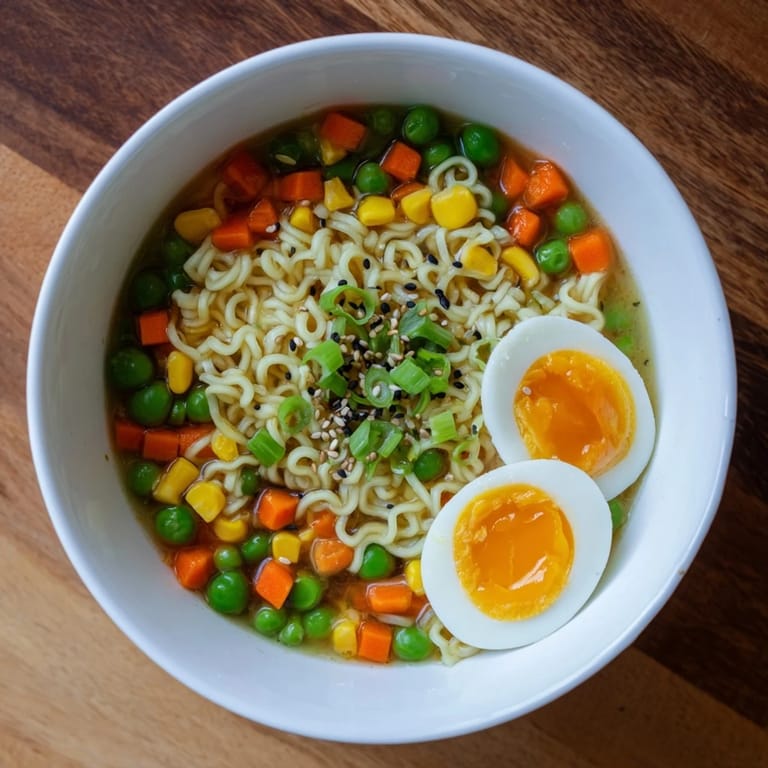
Save I tossed frozen peas into my ramen on a Tuesday night when the fridge was nearly empty, and it turned out better than half the meals I'd planned that week. The peas thawed in seconds, added sweetness, and somehow made the whole bowl feel less like desperation and more like discovery. I started keeping a bag in the freezer just for nights like that. Now it's muscle memory: boil water, grab peas, don't overthink it. It's become my favorite kind of cooking, the kind that doesn't ask for much but gives back plenty.
I made this for a friend who came over after a long shift, and she looked at the bowl like I'd done something impressive. All I did was add vegetables and an egg, but she said it tasted like care. That stuck with me. Sometimes the smallest upgrades, a splash of sesame oil, a soft yolk, a sprinkle of green onions, turn something ordinary into something that feels like a gift. It's proof that comfort doesn't need to be complicated.
Ingredients
- Instant ramen noodles: The foundation of the dish. Use any brand you like, and feel free to skip the seasoning packet if you want more control over the salt.
- Frozen peas: They cook in under three minutes, add color and a pop of sweetness, and never go bad in the freezer.
- Frozen mixed vegetables: Carrots, corn, and green beans bulk up the bowl and add texture without any knife work.
- Green onions: Bright, fresh, and they make everything look intentional even when you're winging it.
- Garlic: Just two cloves, but they perfume the broth and make the kitchen smell like you're actually cooking.
- Vegetable broth: Low sodium gives you room to season as you go. Water works too if that's what you have.
- Soy sauce: Adds depth and saltiness. Tamari works if you need it gluten free.
- Sesame oil: A teaspoon is enough to make the whole bowl taste richer and more complete.
- Eggs: Soft boiled yolks turn the broth creamy and make the meal feel luxurious.
- Sesame seeds and chili flakes: Optional, but they add crunch and heat that wake up every bite.
Tired of Takeout? 🥡
Get 10 meals you can make faster than delivery arrives. Seriously.
One email. No spam. Unsubscribe anytime.
Instructions
- Bloom the garlic:
- Heat sesame oil in a saucepan over medium heat and add the minced garlic. Let it sizzle for about thirty seconds until it smells toasty and golden, not brown.
- Build the broth:
- Pour in the vegetable broth and soy sauce, then bring it to a gentle boil. This is your flavor base, so taste it now and adjust if needed.
- Add the vegetables:
- Toss in the frozen peas and mixed vegetables. Let them simmer for two to three minutes until they're heated through and tender.
- Cook the noodles:
- Add the ramen noodles and cook according to the package directions, usually two to three minutes. Stir gently so they don't clump together.
- Finish and taste:
- Stir in half the green onions and taste the broth. Add more soy sauce if it needs a boost.
- Serve:
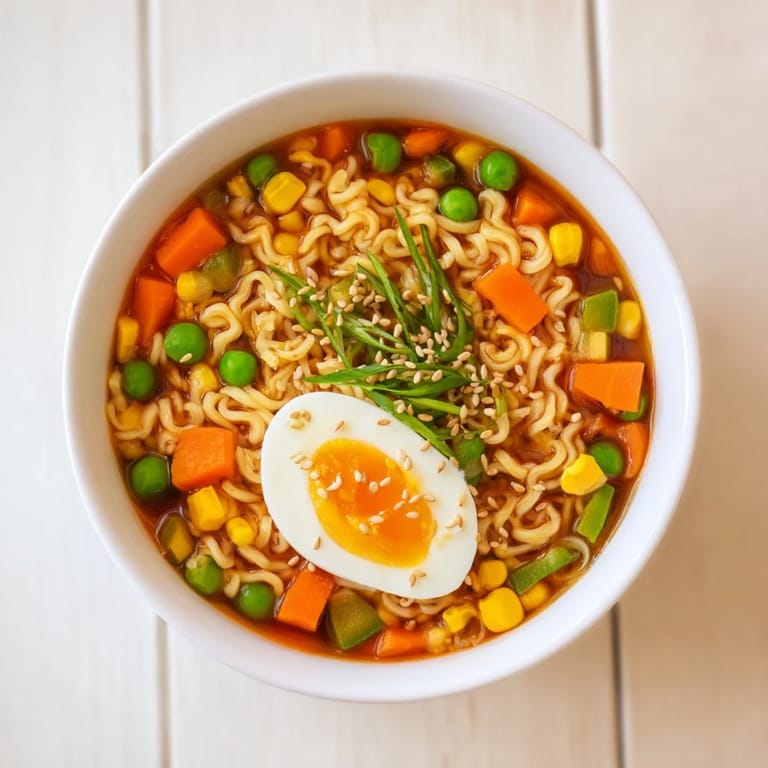
- Divide the ramen and vegetables between two bowls. Top with a soft boiled egg, remaining green onions, sesame seeds, and chili flakes or sriracha.
 Save
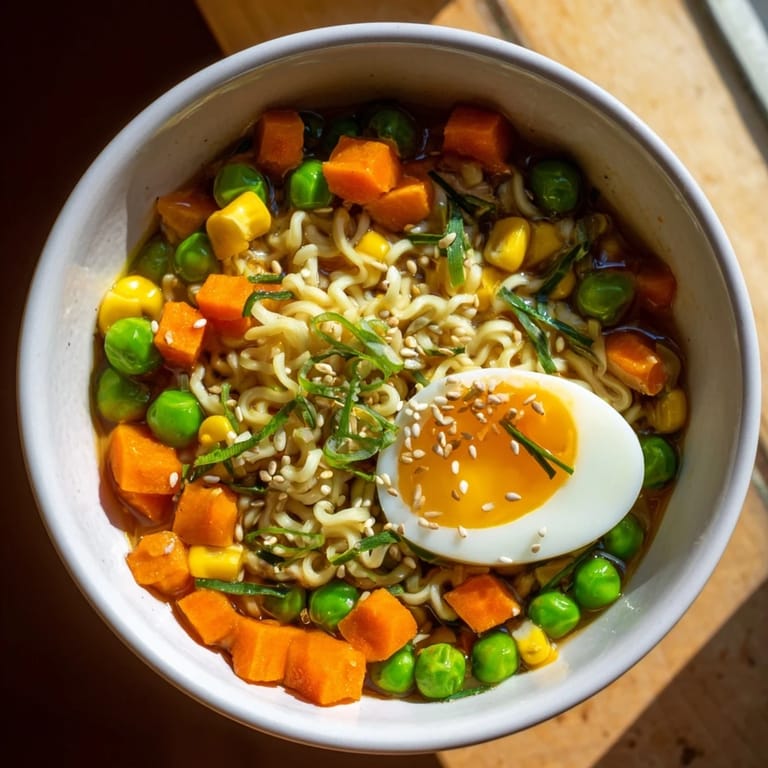
Save One night I made this after a frustrating day, and cracking the egg yolk into the broth felt like the only thing that went right. It sounds small, but that golden spill turning the soup creamy made me slow down and actually enjoy something. Food like this doesn't fix anything, but it does remind you that tiny pleasures still count. Sometimes that's enough to reset the rest of the evening.
How to Customize It
If you want more protein, add cubed tofu, shredded rotisserie chicken, or a handful of edamame. Swap the peas for baby spinach if you want greens that wilt right into the broth. You can also use rice noodles or udon instead of ramen if that's what's in the pantry. The beauty of this recipe is that it bends to whatever you have on hand without losing its shape.
Best Toppings to Elevate It
A soft boiled egg with a jammy yolk is the move, but a fried egg with crispy edges works too. Sesame seeds add crunch, and a drizzle of chili oil or a spoonful of miso paste stirred in at the end brings serious depth. Fresh cilantro, lime juice, or a few slices of radish can also brighten the whole bowl if you're feeling adventurous.
Storage and Reheating Tips
This is best eaten fresh because the noodles soak up the broth and get soggy if they sit too long. If you want to meal prep, store the cooked vegetables and broth separately from the noodles, then combine and reheat when you're ready to eat. You can also prep all your toppings in advance and just boil fresh noodles each time.
- Reheat gently on the stovetop, adding a splash of water or broth to loosen it up.
- Store leftovers in an airtight container in the fridge for up to two days.
- Don't add the egg until you're ready to serve, it doesn't reheat well.
 Save
Save This recipe proved to me that you don't need a full pantry or hours of free time to make something that feels nourishing and real. It's the kind of meal that meets you where you are and still manages to lift you up a little.
Kitchen Tips & Answers
- → Can I use fresh peas instead of frozen?
Yes, fresh peas work well and can be added slightly earlier to ensure they cook through with the other vegetables.
- → How do I make this dish vegan?
Simply omit the eggs and ensure the noodles and broth base are free from animal products.
- → What are some good protein additions?
Tofu cubes, shredded chicken, or boiled eggs complement the flavors and boost protein content effectively.
- → Can I adjust the spice level?
Yes, adding chili flakes or sriracha allows you to customize the heat to your preference.
- → Is there a gluten-free option?
Use gluten-free noodles and tamari instead of soy sauce to accommodate gluten sensitivities.