 Save
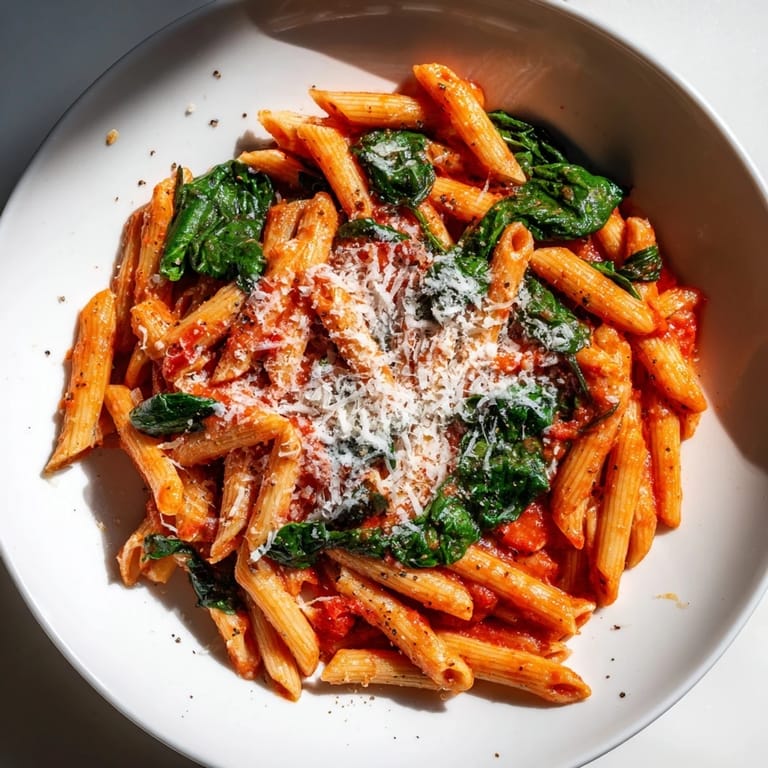
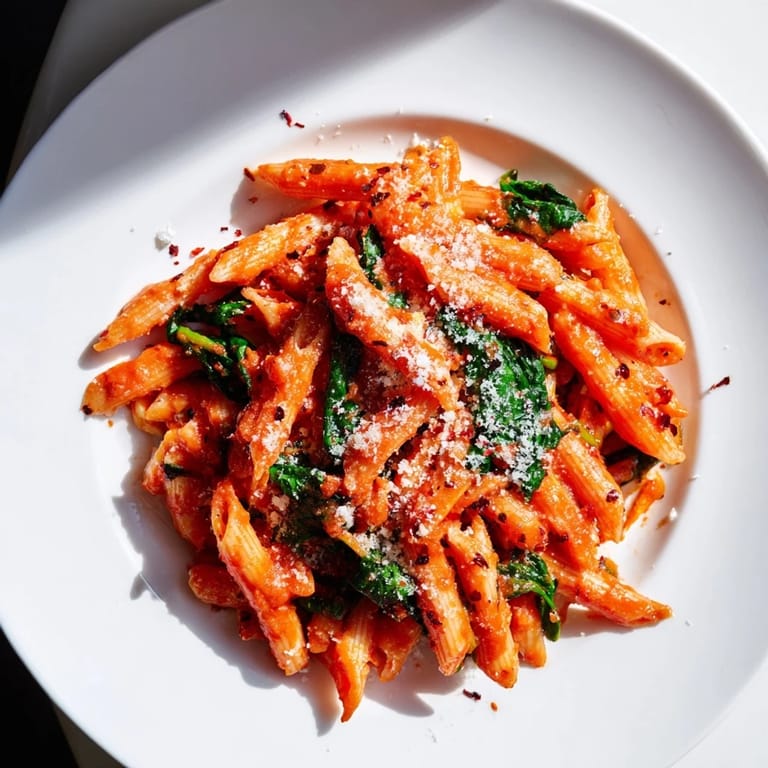
Save There's something magical about the nights when you realize you have exactly fifteen minutes to get dinner on the table. I was standing in front of my open pantry one Wednesday evening, mentally exhausted from back-to-back meetings, when I spotted a jar of marinara sauce nestled between some canned tomatoes. My hand drifted toward the pasta box, and suddenly the whole thing came together—no fancy technique required, just good timing and a few honest ingredients.
I made this for my roommate on a night when she came home discouraged from a job interview. We sat at the kitchen counter with our bowls, and she said the spinach made it feel intentional, like I'd actually cooked something instead of just heating things up. That's when I realized this dish has a quiet power—it tastes like you tried, even when you barely did.
Ingredients
- Dried spaghetti or penne, 12 oz: Choose whichever shape you naturally reach for; the sauce clings better to penne's ridges, but spaghetti twirls more elegantly.
- Salt for pasta water: Don't skip this—it seasons the pasta from inside out, not just on top.
- Olive oil, 2 tbsp: Use something you actually like tasting; cheap oil tastes cheap here.
- Garlic, 3 cloves minced: Fresh garlic matters more than you'd think; jarred garlic has a metallic edge.
- Jarred marinara sauce, 24 oz: Pick a brand without added sugar if you can; it lets the tomato flavor shine through.
- Fresh baby spinach, 5 oz: Buy it the day you plan to cook; wilted spinach tastes musty.
- Red pepper flakes, 1/2 tsp (optional): A tiny pinch brings warmth without announcing itself loudly.
- Freshly ground black pepper: The grinder makes a difference in how the pepper dissolves into the sauce.
- Grated Parmesan, 1/4 cup plus more for serving: Freshly grated is worth the extra thirty seconds; pre-grated tastes like cardboard.
- Fresh basil leaves (optional): Tear it by hand instead of cutting so it doesn't bruise and turn dark.
Tired of Takeout? 🥡
Get 10 meals you can make faster than delivery arrives. Seriously.
One email. No spam. Unsubscribe anytime.
Instructions
- Start the pasta:
- Fill a large pot with water, salt it generously, and get it to a rolling boil. Add the pasta and stir it once right away so nothing sticks together. While it cooks, you'll have time for everything else.
- Bloom the garlic:
- Heat olive oil in a large skillet over medium heat and let it warm for a few seconds. Add minced garlic and listen for that gentle sizzle—that's when you know it's happening, and it should smell almost immediately delicious.
- Build the sauce:
- Pour in the marinara and let it come to a gentle simmer, never a hard boil. If you're using red pepper flakes, add them now so they have time to infuse their warmth.
- Wilt the spinach:
- Dump in all the spinach at once—it looks like too much, but trust it. Stir continuously for two to three minutes until it's completely soft and has surrendered to the heat.
- Bring it together:
- Drain the pasta, reserving that water first. Toss the pasta into the sauce and coat everything evenly. If it feels thick, add a splash of pasta water—it sounds odd but it works beautifully.
- Finish with cheese and pepper:
- Stir in the Parmesan so it melts into the sauce, then crack fresh black pepper over everything. Taste it and adjust if it needs more salt or heat.
- Serve immediately:
- Divide into bowls while it's still hot and steaming. Add a handful of extra Parmesan and torn basil if you have them.
 Save
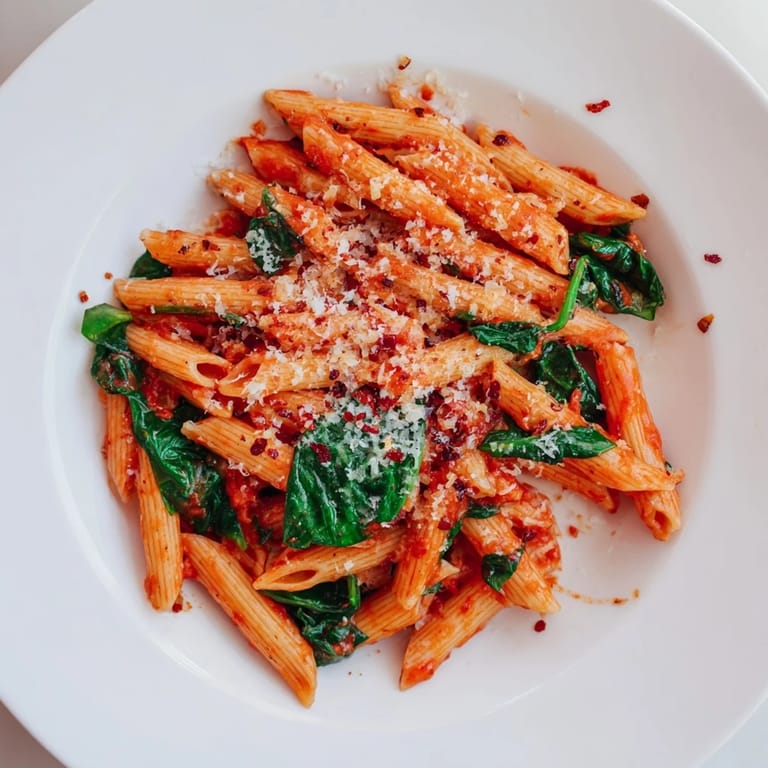
Save The first time I brought this to a potluck, I almost didn't—it seemed too simple to contribute. But three people came back asking for the recipe, and one woman told me it reminded her of what her mother made on nights when cooking felt joyful instead of like a chore.
Why Jarred Sauce Actually Works Here
There's no shame in jarred marinara; it's reliable and lets you focus on the parts that matter—the fresh spinach, the quality of your pasta, the way garlic transforms in olive oil. I used to feel like I should simmer tomatoes for hours, but then I realized that not everything demands that kind of commitment. Sometimes a well-made jar and a few fresh additions are exactly enough.
Making It Your Own
I've learned that this dish is a canvas. On nights when I have more time, I'll add sautéed mushrooms or white beans for protein and substance. On nights when I want something lighter, I'll just let the spinach be the story. You can add a pinch of nutmeg to the sauce if you want something more complex, or a splash of balsamic vinegar if you want deeper depth.
The Rhythm of a Weeknight Dinner
There's something about standing at the stove while water boils, smelling garlic and tomato sauce, knowing that in fifteen minutes you'll have something real to eat. It's the kind of cooking that doesn't demand your full attention but rewards you anyway. This is the dish I make when I want to eat well but not obsess, when I want to take care of myself without fuss.
- Set your timer for the pasta so you don't wander away and suddenly have mush.
- If spinach seems expensive, frozen spinach works just as well—thaw it first and squeeze out the excess water.
- Make extra so you have leftovers, though honestly this rarely happens.
 Save
Save This is the recipe I reach for when life is loud and my kitchen needs to be quiet and capable. It's taught me that dinner doesn't need to be complicated to be genuinely satisfying.
Kitchen Tips & Answers
- → Can I use fresh tomatoes instead of jarred marinara?
Yes, fresh tomatoes can be cooked down with garlic and herbs to create a homemade sauce, though it will require more preparation time.
- → What pasta types work best for this dish?
Spaghetti, penne, or any short pasta work well to hold the sauce and complement the spinach.
- → How do I prevent the spinach from becoming too watery?
Wilt the spinach briefly over medium heat just until soft, then stir promptly to avoid excess water release.
- → Can I make this dish vegan?
Yes, omit the Parmesan or substitute with a plant-based cheese alternative to keep it vegan-friendly.
- → What is the preferred way to reheat leftovers?
Reheat gently on the stovetop over low heat, adding a splash of pasta water to maintain sauce consistency.