 Save
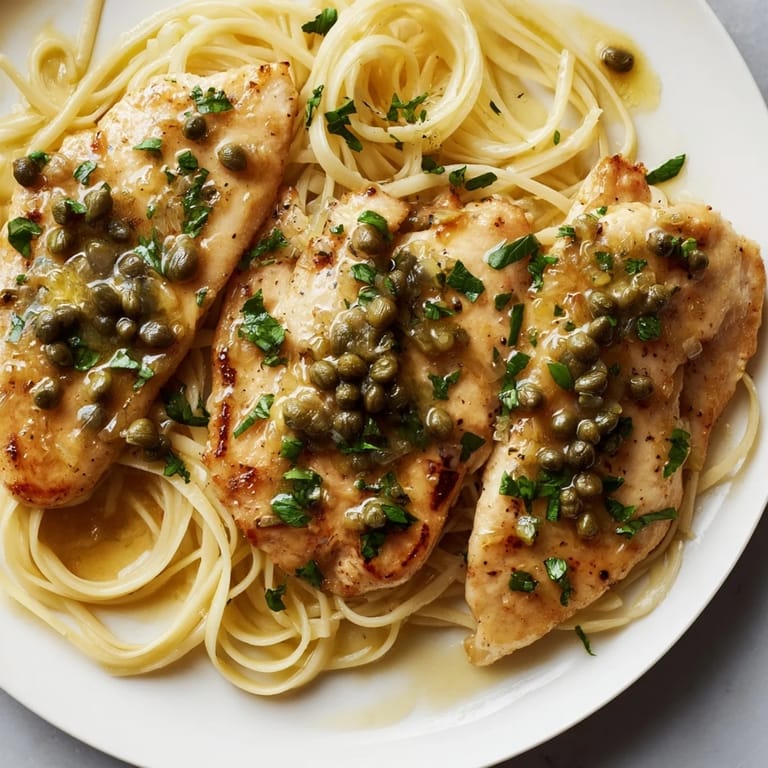
Save There's something about the way lemon and capers cut through rich butter that makes this dish feel less like weeknight cooking and more like a little celebration on a plate. I discovered chicken piccata years ago when a friend casually mentioned she could have it ready before her kids even finished their homework, and I was skeptical until I tried it myself. What struck me wasn't just how quick it came together, but how the sharp, briny capers and bright citrus made everything taste like it had been simmering for hours. Now it's my go-to when I want something that feels fancy without the fuss, and honestly, the kitchen smells incredible for those twenty minutes it's on the stove.
I made this for my partner on a random Tuesday when we were both exhausted, and watching their face when they tasted it made me realize sometimes the best meals aren't the ones that take hours—they're the ones that remind you why you love cooking in the first place. The moment I added that reserved pasta water and everything came together into this glossy, silky sauce, something just clicked. It became the recipe I reach for when I want to impress without the stress, or when I just want to feel like I did something kind for myself.
Ingredients
- Boneless, skinless chicken breasts (2 large): Pound them gently or slice horizontally to even thickness so they cook through without drying out—this is non-negotiable for tender, juicy results.
- All-purpose flour (½ cup): The thin coating creates just enough of a crust to catch the pan's heat while letting the capers stick, but don't overdo it or you'll have a heavy, floury taste.
- Olive oil (2 tablespoons) and unsalted butter (1 tablespoon for cooking): The combination of oil and butter gives you a higher smoke point while keeping that rich, buttery flavor in the pan.
- Dry white wine (½ cup): This deglazes the pan and adds a subtle complexity; chicken broth works if you want to skip the alcohol, but the wine's acidity really brightens everything.
- Fresh lemon juice (⅓ cup, about 2 lemons): Bottled lemon juice tastes sharp and flat by comparison; fresh juice is what makes this dish sing with that sunny, sophisticated piccata taste.
- Capers (¼ cup, drained and rinsed): Rinsing them removes excess salt and keeps them from overpowering the sauce—they should add brightness and a subtle brininess, not dominate.
- Low-sodium chicken broth (½ cup): This keeps the sauce from becoming too tangy while adding body and allowing you to adjust with reserved pasta water later.
- Unsalted butter (2 tablespoons for the sauce): Whisking this in at the end creates that luxurious, silky finish that makes people think you've been cooking professionally.
- Fresh parsley (2 tablespoons, finely chopped): Add it at the very end to keep its fresh flavor and bright green color—cooking it too long mutes everything you love about it.
- Spaghetti or linguine (12 ounces): Cook it to actual al dente; overcooked pasta will absorb the sauce and turn mushy, losing that satisfying texture contrast.
Tired of Takeout? 🥡
Get 10 meals you can make faster than delivery arrives. Seriously.
One email. No spam. Unsubscribe anytime.
Instructions
- Get the pasta going:
- Bring a large pot of generously salted water to a rolling boil and add your pasta, stirring occasionally so nothing sticks. Cook to al dente according to package instructions, then drain it in a colander while reserving at least half a cup of that starchy pasta water—you'll use it later to adjust your sauce's consistency.
- Butterfly and season the chicken:
- Lay each chicken breast on your cutting board and carefully slice it horizontally to create two thin cutlets from each breast, aiming for even thickness. Season both sides with salt and pepper, then dredge each piece lightly in flour, tapping off the excess so you get a delicate coating rather than a thick crust.
- Sear the chicken golden:
- Heat your large skillet over medium-high heat and add the olive oil and butter together, letting the butter foam slightly. Place your floured chicken cutlets in the hot pan and resist the urge to move them—let them sit for three to four minutes until the undersides turn golden and release easily, then flip and cook the other side until the chicken is cooked through.
- Build the sauce foundation:
- Remove the cooked chicken to a plate and tent it loosely with foil to keep it warm. In that same skillet with all the flavorful browned bits, add your minced garlic and let it sizzle for just thirty seconds until fragrant, then immediately pour in the white wine while scraping the bottom of the pan with a wooden spoon to release all those caramelized flavors.
- Bring the sauce together:
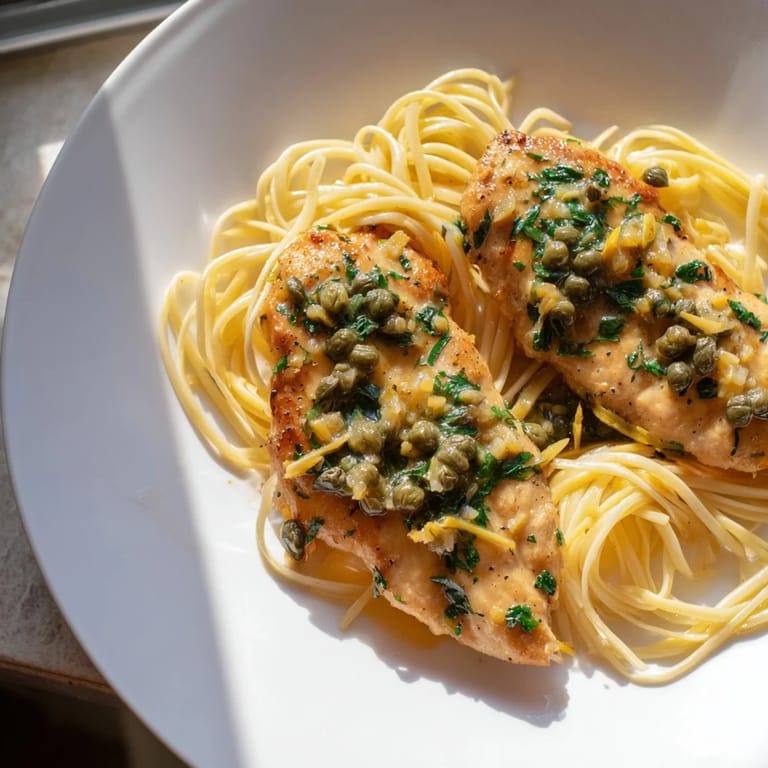
- Add your fresh lemon juice, drained capers, and chicken broth to the pan, then let everything simmer gently for two to three minutes until the liquid reduces slightly and the flavors meld. Lower the heat, add the two tablespoons of butter, and whisk until the sauce becomes glossy and silky, then return the chicken to the skillet and spoon some of that beautiful sauce over each piece.
- Marry everything together:
- Add your al dente pasta directly to the skillet with the chicken and sauce, gently tossing so every strand gets coated in that lemony, buttery goodness. If the sauce seems too thick, add a splash or two of your reserved pasta water until you get that silky, clinging consistency you're after.
- Plate and serve:
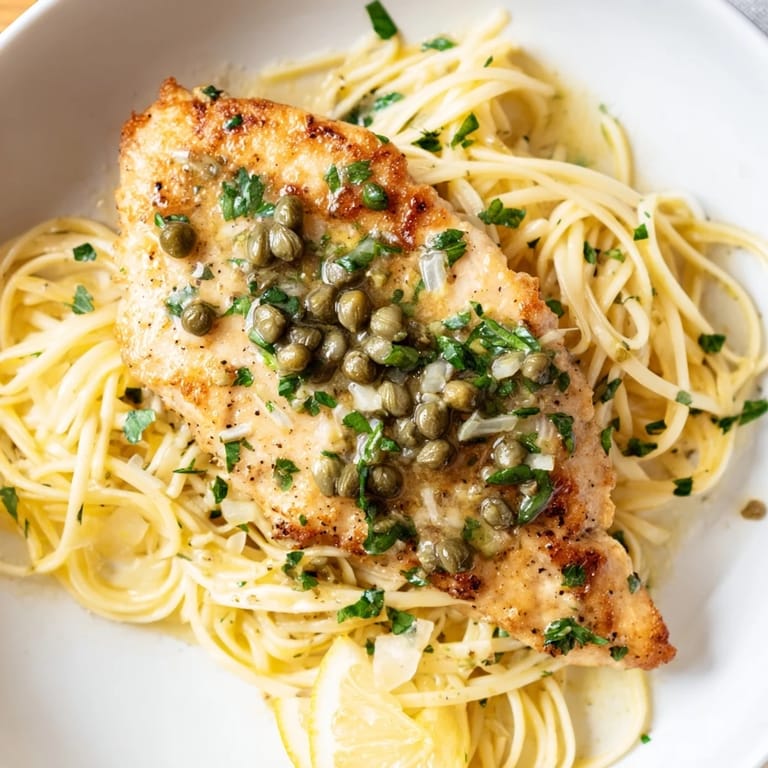
- Divide the pasta among your serving bowls or plates, top each portion with a piece of chicken, spoon extra sauce around everything, then finish with a sprinkle of fresh parsley and a few lemon slices for both flavor and beauty.
 Save
Save There was a night when my mother came over unexpectedly and I threw this together in the time it took her to pour a glass of wine, and watching her close her eyes after that first bite made me understand that good food doesn't require a recipe passed down through generations or hours of labor. This dish taught me that sometimes the simplest meals, made with intention and good ingredients, can feel like the most nourishing ones.
The Magic of Thin, Even Cutlets
The moment I started butterflying my chicken breasts instead of pounding them into submission, everything changed about this dish. Pounding creates uneven thickness and toughens the meat, but a careful horizontal slice gives you those thin, delicate cutlets that cook through in minutes while staying impossibly tender. You're not fighting the chicken; you're working with its natural shape to create something that cooks quickly and evenly, which is the whole reason this meal comes together so fast.
Why Fresh Lemon Juice Matters More Than You'd Think
I learned this the hard way when I was lazy and used bottled juice during a dinner party, and the sauce tasted oddly flat and chemical despite everything else being perfect. Fresh lemon juice has this bright, complex acidity that bottled juice simply doesn't capture, even the kind that claims to be freshly squeezed. The difference seems small until you taste it, and then it becomes obvious that this one ingredient is what transforms the sauce from serviceable to genuinely crave-worthy.
Building Layers of Flavor in One Pan
The genius of this recipe is that your skillet becomes a flavor-building machine—first you sear the chicken and develop fond, then you deglaze with wine and scrape up all those browned bits, then you add bright citrus and briny capers that cut through the richness. It's like conducting an orchestra in a single pan, where each ingredient arrives at exactly the right moment to build on what came before. This is also why you don't wash your skillet between steps; that accumulated flavor is what makes the sauce taste like you actually know what you're doing.
- Don't be afraid to let the chicken get a deep golden color—that's flavor developing, not burning.
- If you're nervous about the wine, remember that cooking burns off the alcohol and leaves only the flavor behind.
- The pasta water is your secret weapon; start with a little and add more if needed, because you can always thin a sauce but you can't thicken it without ruining the texture.
 Save
Save This recipe gave me permission to stop overthinking weeknight dinners and start trusting that good ingredients and simple technique can create something genuinely delicious in half an hour. It's become my reminder that cooking doesn't have to be complicated to be satisfying.
Kitchen Tips & Answers
- → What type of pasta works best for this dish?
Spaghetti or linguine are ideal for coating with the lemon-caper sauce, but angel hair can be used for a lighter texture.
- → Can white wine be substituted in the sauce?
Yes, chicken broth can replace white wine to maintain depth without alcohol.
- → How is the chicken prepared for even cooking?
Chicken breasts are sliced horizontally into thin cutlets to cook quickly and evenly.
- → What gives the sauce its glossy finish?
Whisking in unsalted butter at the end creates a silky, shiny texture.
- → How can I adjust the sauce consistency?
Reserved pasta water can be added to loosen the sauce to your preferred thickness.
- → Are there suitable modifications for dietary needs?
Use gluten-free flour and pasta for a gluten-free version; ingredients and garnishes can be adjusted accordingly.