 Save
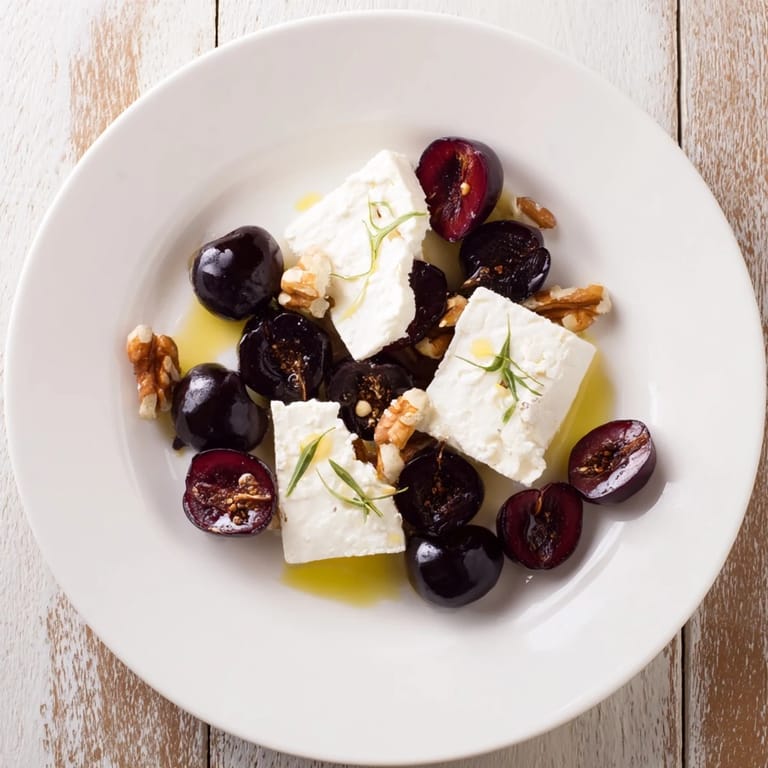
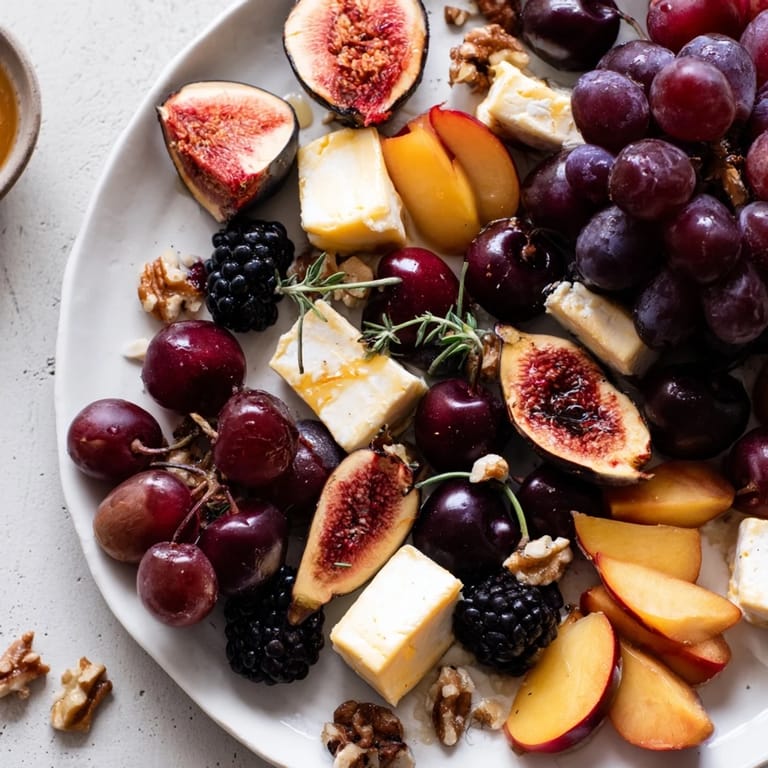
Save There's something about arranging a cheese board late at night that feels like creating a small edible landscape. I discovered this platter one evening when I had friends coming over unexpectedly, and I wanted something elegant but effortless—no cooking, just the right elements in conversation with each other. The dark cherries against that dramatic black ash coating on the goat cheese struck me immediately, and I realized this wasn't just about feeding people; it was about setting a mood.
I remember my friend Sarah's reaction when she saw this spread—she literally paused mid-conversation and just looked at it. That's when I understood that a good platter isn't just food; it's permission to slow down and enjoy something beautiful. We sat on the porch with sparkling wine, picking at combinations, and nobody rushed.
Ingredients
- Dark cherries: These should be truly dark and juicy—the deeper the color, the more complex the flavor, and they'll look stunning against the pale fruit around them.
- Ripe plums: Look for ones that yield slightly to gentle pressure; they should smell fragrant and sweet without any bruising.
- Purple grapes: The halving is optional but creates a more refined look and makes them easier to pair with cheese.
- Black-ashed goat cheese: This is the star—creamy, tangy, and visually striking with that elegant charcoal coating that hints at something mysterious.
- Toasted walnuts: They add a welcome crunch and nutty warmth that bridges the fruit and cheese beautifully.
- Honey: Just a drizzle catches the light and adds another layer of sweetness that ties everything together.
- Fresh thyme: Don't skip this; those tiny green leaves against the dark fruit and pale cheese are what make it feel intentional rather than thrown together.
Tired of Takeout? 🥡
Get 10 meals you can make faster than delivery arrives. Seriously.
One email. No spam. Unsubscribe anytime.
Instructions
- Pit and halve your cherries:
- Use a cherry pitter if you have one—it's genuinely a game-changer—and work over a bowl to catch the juice. If you don't have a pitter, a small sharp knife and a bit of patience work fine, though your fingers might get a little stained.
- Slice the plums into wedges:
- Cut them lengthwise around the pit, then slice each piece into thin wedges about the width of your pinky finger. They should look delicate but still hold their shape.
- Halve the grapes:
- This step is purely for aesthetics, but it creates a more polished presentation and actually makes them easier to eat alongside the cheese.
- Arrange with intention:
- Don't scatter randomly; group each fruit type together in little clusters around your platter, leaving negative space between them. This isn't about filling every inch—it's about creating a visual rhythm.
- Position the cheese thoughtfully:
- Break the goat cheese into irregular pieces and nestle them into the spaces between the fruit clusters. The contrast between the creamy cheese and the jewel-toned fruit is what makes this work.
- Add the finishing touches:
- Scatter the walnuts, drizzle honey in thin threads across the platter (less is more here), and tuck thyme sprigs into the arrangement like you're tucking in sleeping children.
- Serve fresh and without hesitation:
- This is best enjoyed within an hour of assembly, while the fruit is still at its peak and everything feels just-made.
 Save
Save My favorite moment came when everyone stopped talking and just ate. No phones, no performance, just the small clink of cheese against the plate and the quiet satisfaction of finding the perfect bite. That's when I knew this simple arrangement had done something right.
The Art of the Pairing
Pairing this platter with the right drink transforms it into something almost ceremonial. A dry sparkling wine or a light-bodied red creates a conversation between sweet and tart that feels almost planned. I've found that the wine doesn't need to be expensive—it just needs to be something you actually enjoy drinking.
Building Your Own Combinations
The beauty of this platter is that there's no wrong way to eat it. Some people like the sharpness of cheese followed by the sweetness of grapes; others layer everything together with a walnut for texture. I started thinking of it less like a recipe and more like a vocabulary where everyone gets to write their own sentence.
Variations and Substitutions
If black-ashed goat cheese isn't available, a regular aged goat cheese works beautifully, though you'll lose that dramatic visual element. You can also swap the fruit based on what's at peak season—late summer blackberries, figs, or even thinly sliced pears all play well here. The ingredient list is really just a starting point.
- For a vegan version, seek out plant-based ash-coated cheeses—some are genuinely excellent and nobody will notice the difference.
- Add thin slices of toasted baguette or gluten-free crackers if you want more structure and substance to the eating experience.
- A light sprinkle of fleur de sel over everything adds a whisper of sophistication that almost nobody consciously notices but everyone feels.
 Save
Save This platter is proof that sometimes the most elegant meals require no cooking at all. Let it be a moment of pause in your day, a chance to offer your people something that tastes as good as it looks.
Kitchen Tips & Answers
- → What fruits are featured in the platter?
The platter includes dark cherries, ripe plums, and purple grapes, all prepared to enhance flavor and presentation.
- → Can the cheese be replaced for a vegan option?
Yes, a plant-based ash-coated cheese can be substituted to accommodate vegan preferences without sacrificing flavor.
- → Are there any suggested pairings with this dish?
This fruit and cheese combination pairs excellently with dry sparkling wines or light-bodied reds, enhancing the tasting experience.
- → How are the garnishes used?
Toasted walnuts add crunch, honey provides a touch of sweetness, and fresh thyme sprigs lend aromatic freshness to the platter.
- → Is any cooking required for this preparation?
No cooking is necessary; the platter is assembled by arranging prepped fruits and cheese along with optional garnishes.