 Save
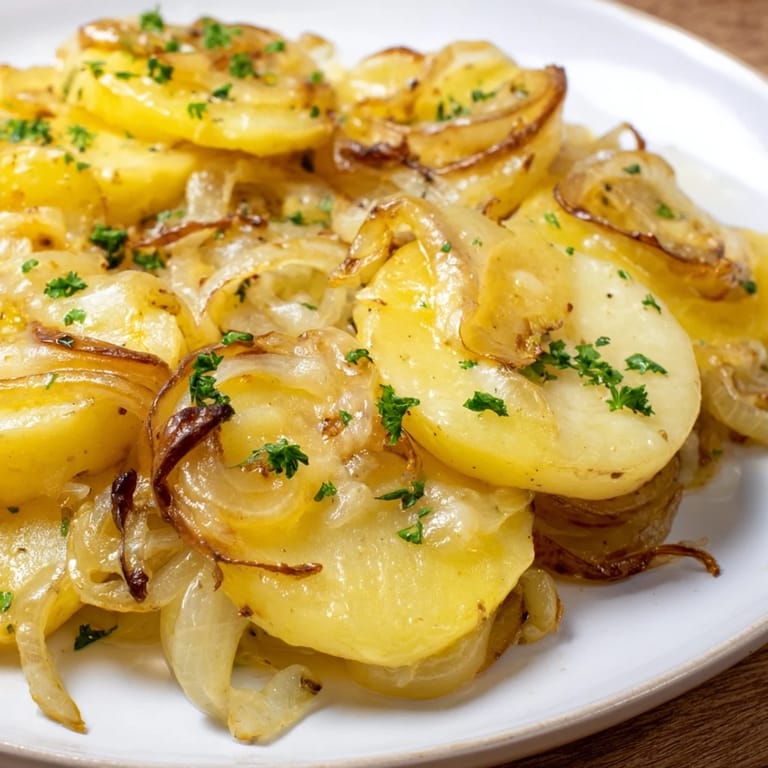
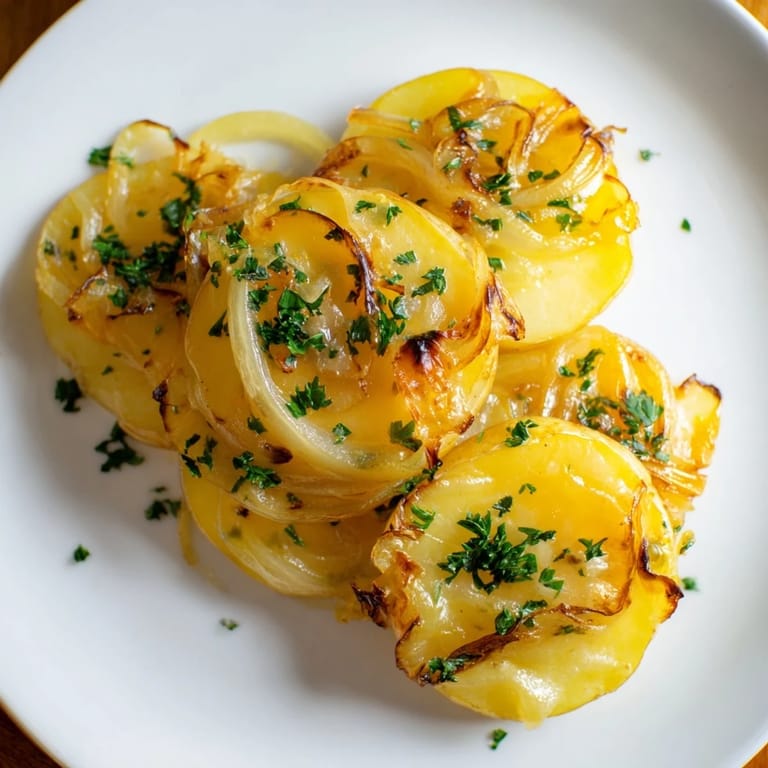
Save There's something magical about the moment when a pile of sliced potatoes meets caramelized onions and melted cheese in a hot oven. I discovered this dish on a quiet Sunday afternoon, craving something warm and comforting that didn't require me to stand over a pot of soup for hours. The combination felt like taking the best parts of French onion soup and making them simpler, more grounded, more edible with your hands. What emerged was pure golden comfort on a plate.
I made this for my parents one winter evening when they showed up hungry and unannounced, and I had nothing but potatoes and onions in my kitchen. Watching them both go quiet after the first bite, then reaching for seconds before even finishing their first serving, told me everything I needed to know. It became my go-to when I wanted to prove that simple ingredients, treated with care, could be just as impressive as anything complicated.
Ingredients
- Yukon Gold potatoes: Their natural buttery flavor means you're not fighting against the potato itself; they meld perfectly with caramelized onions and cheese without disappearing.
- Unsalted butter: For the onions specifically, because it browns beautifully and carries more flavor than oil alone.
- Large yellow onions: The sweeter cousins of white onions, they develop a deeper, more complex sweetness when given time and heat.
- Gruyère cheese: It melts into silky strands and has a subtle nuttiness that pairs with caramelized onions better than cheddar ever could.
- Balsamic vinegar: Just a teaspoon, but it adds a whisper of sweetness and acidity that makes your brain say yes to another bite.
- Fresh thyme: If you only have dried, use half the amount; fresh adds a brightness that dried thyme can't quite match.
Tired of Takeout? 🥡
Get 10 meals you can make faster than delivery arrives. Seriously.
One email. No spam. Unsubscribe anytime.
Instructions
- Prep your potatoes:
- Slice them thin but not paper-thin, about the thickness of a coin. Toss with oil, salt, and pepper, then spread them out so they're not crowded on your sheet.
- Roast the potatoes:
- Watch for the edges to turn golden and slightly crispy while the centers stay tender. You'll know they're done when a fork slides through easily and the undersides are bronze.
- Start the onions:
- While potatoes roast, let the butter and oil get hot, then add onions with a pinch of salt. This salt draws out their moisture so they can actually caramelize instead of steam.
- Low and slow for the onions:
- Stir them every few minutes, scraping up any brown bits stuck to the bottom of the pan. After about 25 minutes, they'll turn a deep mahogany color and smell almost sweet, like autumn on a plate.
- Finish the onions:
- Add thyme and balsamic vinegar in the last minute, letting the vinegar cook off slightly so it becomes part of the flavor instead of tasting sharp.
- Layer and bake:
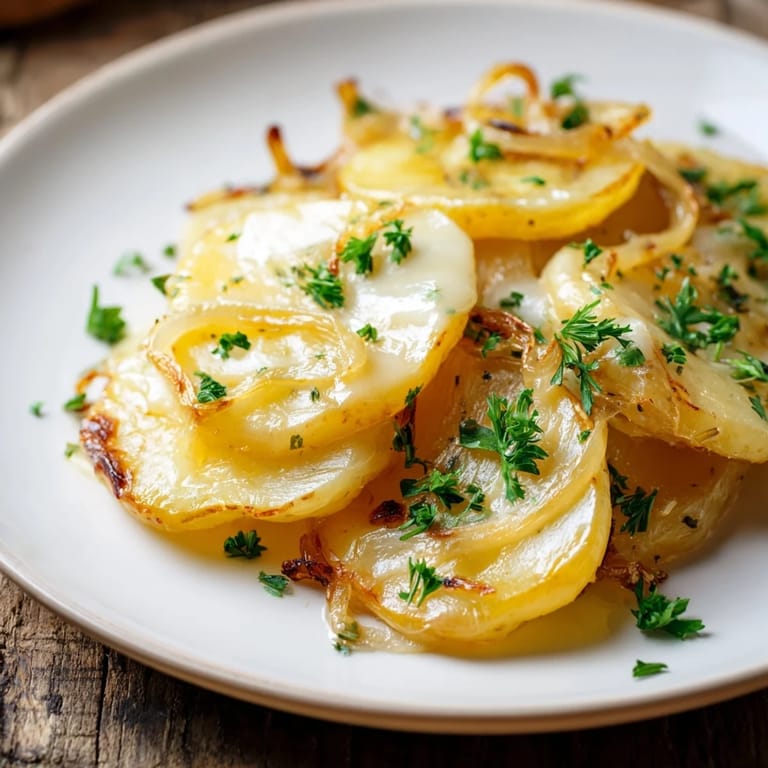
- Arrange potatoes slightly overlapping in a baking dish like you're building something intentional, then scatter the onions across the top and blanket everything with cheese.
- Final bake:
- Watch the cheese bubble and turn light golden at the edges. This happens fast, around 10 to 15 minutes, so don't wander too far from the oven.
 Save
Save This dish became special to me not because it's complicated, but because it taught me that some of the best moments in the kitchen come from working with what you have on hand and letting technique do the heavy lifting. There's honesty in a potato and an onion, and respect in treating them well.
The Magic of Caramelization
Caramelizing onions isn't a race, and that's the secret that nobody tells you when they're writing fast recipes. The onions are transforming slowly, their natural sugars breaking down and developing into something deeper and more complex than anything you could achieve with heat and speed. Some people add a pinch of sugar to hurry the process, but I've found that patience and a low flame produce a flavor that tastes earned rather than forced.
Choosing Your Potatoes Wisely
Yukon Golds are my first choice because they hold their shape while roasting and have enough natural starch to help everything bind together. Russets work too, but they can become a bit mealy if you're not careful with your oven temperature. Waxy potatoes like fingerlings will stay too firm and crispy, which changes the whole texture of the dish in a way that fights against the creamy cheese and soft onions.
Variations and Why They Matter
I've made this dish a dozen different ways, learning something new each time I change a variable. A splash of white wine stirred into the onions adds a subtle acidity that makes them taste more complex, and if you can't find Gruyère, Swiss cheese works beautifully for almost the same effect. Some people finish it with crispy sage leaves or a drizzle of truffle oil, but I prefer to let the core flavors speak for themselves.
- A small handful of caramelized garlic cloves stirred in with the onions adds another layer of sweetness if you're feeling adventurous.
- Fresh rosemary can replace thyme if that's what you have growing in your garden or sitting in your fridge.
- Parmesan isn't necessary, but its sharp bite underneath the creamy Gruyère creates a flavor balance that feels complete.
 Save
Save This is the kind of dish that makes sense on a winter night, alongside a simple roasted chicken or grilled steak, and it's equally at home as the main course when you pair it with a good salad. It taught me that elegant cooking doesn't always mean long ingredient lists or complicated techniques.
Kitchen Tips & Answers
- → What type of potatoes work best for this dish?
Yukon Gold or russet potatoes are ideal due to their size and texture, allowing for even roasting and tenderness.
- → How are the onions prepared to achieve caramelization?
Onions are slowly cooked in butter and olive oil with salt and thyme over medium-low heat until deeply golden and sweet.
- → Can I substitute the Gruyère cheese?
Swiss cheese works well as a substitute, offering a similar melting quality and mild nutty flavor.
- → Is this dish suitable for gluten-free diets?
Yes, provided all ingredients such as cheese are certified gluten-free, this dish is naturally gluten-free.
- → What extra touches enhance the flavor of the onions?
A splash of dry white wine added during caramelization adds depth and balance to the onions.