 Save
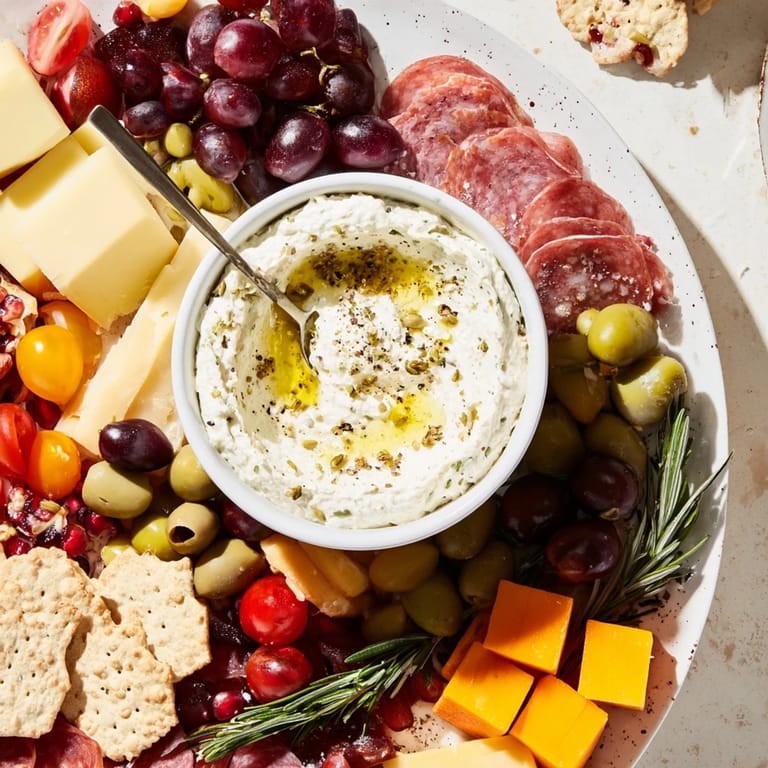
Save I'll never forget the year my sister arrived at our holiday dinner a day early, catching me mid-panic in the kitchen. Rather than stress over a traditional plated appetizer, I raided the cheese drawer, grabbed some fresh herbs from the garden, and started arranging everything in a spiral on our grandmother's old wooden board. By the time guests arrived, that improvised wreath had become the star of the evening—people didn't just eat from it, they gathered around it like it was a centerpiece, a conversation starter, a reason to linger before the main course.
What surprised me most was watching my nephew—who usually picks apart appetizers—become fascinated by the arrangement itself. He started pointing out the 'trees' (rosemary sprigs) and 'berries' (pomegranate arils), turning the board into an edible landscape. That's when I realized this wasn't just food; it was an experience, a reason for people to slow down and really taste things together.
Ingredients
- Brie cheese, sliced into wedges (100 g): This is your creamy anchor—it melts slightly at room temperature and adds elegance. Slice it just before serving so it stays pristine and doesn't brown at the edges.
- Aged cheddar, cubed (100 g): The sharpness here balances all the sweetness from the fruits and cranberries. Don't use mild cheddar; you want that aged bite that makes people pause and savor.
- Goat cheese, cut into rounds (100 g): This is your tangy surprise. A round shape adds visual rhythm to the board and gives people a different flavor journey than the other cheeses.
- Prosciutto, folded (80 g): Paper-thin and salty, this is optional but it's the ingredient that makes people say 'wow.' Buy it sliced, not pre-packaged, and fold it just before arranging.
- Salami, sliced (80 g): Any good quality will do, but look for something with visible pepper or herbs—it adds visual interest and a subtle smokiness.
- Red and green grapes, halved (2 cups total): Halving them keeps them from rolling away and makes them feel more intentional. The contrast between colors is half the magic of this board.
- Pomegranate arils (1/2 cup): These are your jewels. Yes, they're a bit of work to extract, but they catch the light and taste like little bursts of holiday.
- Cherry tomatoes (1 cup): Choose ones that are still slightly firm. Halving some and leaving others whole adds visual texture and makes them easier to eat standing up.
- Mini cucumbers, sliced (1/2 cup): These add a cool, crisp element. Slice them on the diagonal just before serving so they don't weep into the board.
- Roasted almonds (1/2 cup): Their earthy crunch is essential. If you can find ones with a light salt, all the better.
- Mixed olives—green and black (1/2 cup): Look for pitted ones if you're serving to people who might not want to spit out pits at a party. The contrast between colors is visually striking.
- Dried cranberries (1/4 cup): These are your confetti. They add sweetness, color, and a slight tartness that keeps the board from feeling too rich.
- Fresh rosemary sprigs (6-8): These should be fragrant and vibrant green. They're not just decoration—people will nibble them, so make sure they're pesticide-free and look beautiful.
- Olive branches, edible varieties (a few small sprigs): Thoroughly wash these and verify they're food-safe. They add an authentic wreath shape and a Mediterranean whisper to the whole thing.
- Whipped feta dip (1 cup): This is your anchor flavor. Make it yourself or buy quality—it should be creamy enough to dip into but textured enough to feel homemade. Hummus works beautifully for vegetarian versions.
- Olive oil for drizzling (1 tablespoon): Use good oil here. It's one of the few things people see, so let it be something you'd actually taste.
- Freshly cracked pepper (1/2 teaspoon): Crack it right over the dip just before serving. Fresh pepper looks more intentional than pre-ground.
Tired of Takeout? 🥡
Get 10 meals you can make faster than delivery arrives. Seriously.
One email. No spam. Unsubscribe anytime.
Instructions
- Anchor the dip:
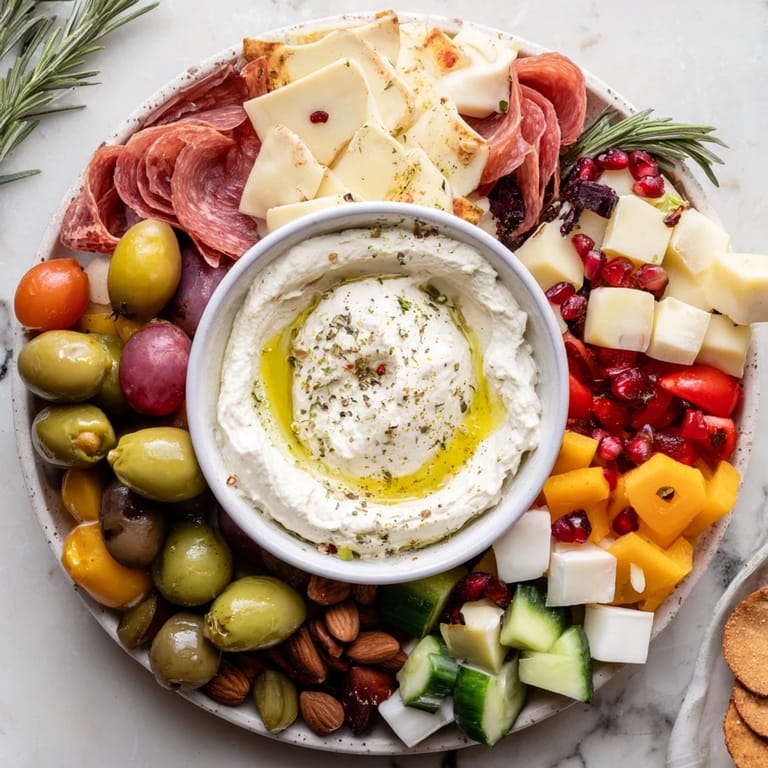
- Place your small bowl dead center on the largest board you have—preferably round. This is the heart of everything. Fill it with your whipped feta (or hummus), then drizzle that good olive oil in a thin spiral over the top, finishing with those freshly cracked pepper flakes. Step back and look at it. This dip is your anchor, your promise of creaminess, your reason people will keep coming back to the center.
- Create the wreath frame:
- Now arrange your rosemary sprigs and olive branches in a circle around that center bowl, like you're creating an edible wreath. Don't make it too perfect—a little organic, a little wild, is more beautiful. These branches should be about 2-3 inches from the bowl's edge, creating a clear 'base' that everything else will layer on top of.
- Build your cheese foundation:
- Start laying down your cheeses—wedges of Brie, cubes of aged cheddar, rounds of goat cheese—spacing them evenly around the wreath. Alternate the types as you go around so no two of the same kind sit next to each other. This is like painting; you're thinking about color and texture as you work.
- Tuck in the meats:
- Fold or loosely roll your prosciutto and salami, then nestle them between the cheese pieces. These should look organic, like they were placed with intention but not perfection. They'll add salty notes and visual depth.
- Add the garden:
- Now comes the fun part. Scatter your halved grapes, cherry tomato halves, and cucumber slices among the cheeses and meats. You're filling in gaps, adding color, creating visual rhythm. Don't arrange these in lines; instead, think in clusters. A small group of red grapes here, cucumber slices there, tomato there.
- Scatter your jewels:
- Sprinkle pomegranate arils, almonds, olives, and dried cranberries across the whole board like you're finishing a painting. These are your highlights, your moments of surprise. They should feel generous but not chaotic.
- Balance and adjust:
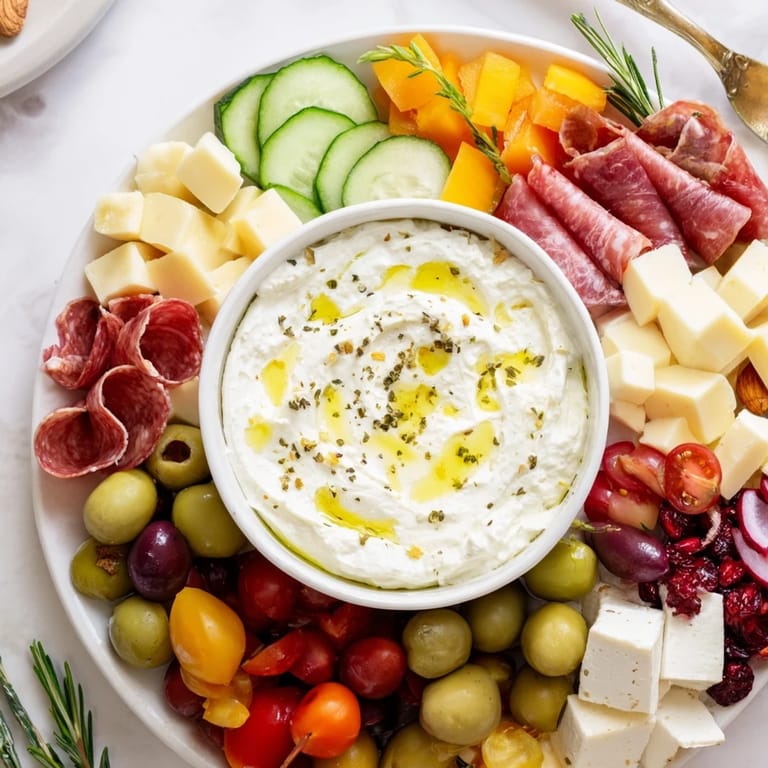
- Step back and look. Is the wreath still visible? Is there too much of one color in one spot? Adjust gently, moving things around until it feels balanced and circular. This is the moment where it stops being ingredients and becomes a board—something people will actually photograph.
- Serve with intention:
- Bring it out just before people arrive, with crackers or good bread on the side. Watch how people approach it. They'll circle it like they're discovering something beautiful. Serve immediately so everything is fresh, crisp, and speaks to the care you took.
 Save
Save The real magic happened after dinner when everyone was lingering, and my mother said, 'You know, I think this board brought us closer than any meal ever could.' We were all picking at the same thing, sharing bites, debating which cheese was best, feeding each other little discoveries. It became less about sustenance and more about connection—and isn't that what holiday entertaining is really about?
Board Aesthetics That Actually Matter
What I've learned is that a beautiful board isn't about perfection; it's about intention. Use a board that has character—wood with grain, marble with veining, something that feels like it has a story. The background matters because it's the canvas everything else sits on. If your board is light, lean toward deeper cheeses and darker meats. If it's dark, let the bright fruits shine. And those rosemary branches aren't just decoration—they're your way of saying 'this is seasonal, this is special, I thought about how this would feel when you walked in.'
Flavor Layering That Makes People Pause
Here's what took me years to understand: a great board is about the journey of flavors as people eat. Start with something creamy (the dip and soft cheeses), move through something salty and rich (the cured meats and aged cheddar), then finish with something bright and surprising (the pomegranate arils and cranberries). When you arrange things thoughtfully, you're guiding people through a flavor arc without them even knowing it. The crunch of almonds next to creamy Brie, the tart punch of cranberries after a salty slice of prosciutto—these pairings aren't accidents. They're small moments of delight you're building into the board itself.
Making It Yours (And Feeding Everyone at Your Table)
The beauty of this board is that it adapts to whoever you're feeding. Have someone vegan in the group? Build half the board without dairy or meat, keep the center dip as hummus. Serving people who don't eat nuts? Skip the almonds, add more pomegranate arils. Have a friend with a specific craving? Add gouda, add fresh figs, add candied pecans—whatever makes this board speak to your specific gathering. A board is a conversation, and it should reflect the people around your table.
- Always include at least one ingredient that surprises people—maybe edible flowers, candied citrus peel, or a spicy salami they've never tried
- Keep the dip fresh and bright by whisking in fresh lemon juice or fresh herbs just before serving
- If you're making this ahead, prep everything but don't assemble until guests are about to arrive—this is your moment to create something that feels alive and fresh
 Save
Save When you bring this board to the table, you're not just serving food—you're creating a moment where people slow down and really taste things together. That's worth the thirty minutes of your time.
Kitchen Tips & Answers
- → What cheeses work best for the wreath board?
Soft and semi-hard cheeses like Brie, aged cheddar, and goat cheese provide a variety of textures and flavors that complement the other ingredients beautifully.
- → Can the cured meats be omitted?
Yes, the meats are optional and can be left out for a vegetarian-friendly option without compromising on taste or visual appeal.
- → How can I keep the wreath fresh before serving?
Arrange the ingredients shortly before serving and keep the board refrigerated if preparing ahead to maintain freshness, especially for the cheeses and fresh fruits.
- → What alternatives can be used for the dip in the center?
Whipped feta dip is traditional here, but hummus or vegan dips provide tasty alternatives for varied dietary preferences.
- → How do the rosemary and olive branches enhance the presentation?
They add a fragrant, evergreen decorative element that evokes a festive holiday spirit while being completely edible.
- → What pairings complement this wreath board?
This board pairs wonderfully with Sauvignon Blanc, Pinot Noir, or sparkling wines to enhance the layered flavors of the spread.