 Save
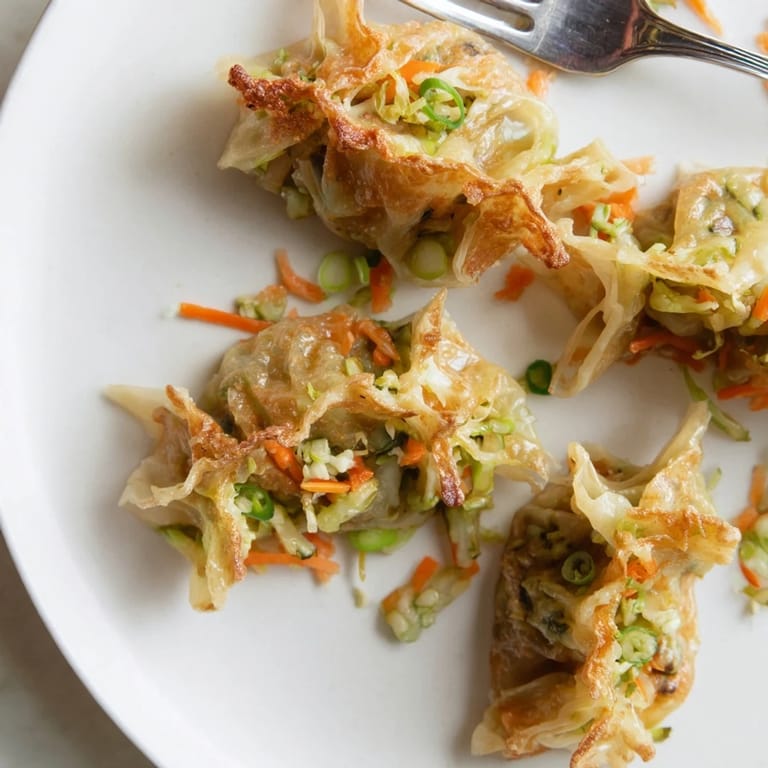
Save The first time I made these rice paper dumplings, I was standing in my kitchen at midnight, scrolling through videos on my phone, when one of them stopped me cold. Those golden, shattering-crispy parcels looked impossibly delicate yet sturdy, and I had to know if I could actually pull it off. Turns out, the trick isn't magic—it's just understanding how water and heat transform a fragile sheet into something gloriously crunchy. Now these are the snack I make when I want to impress someone without spending hours in the kitchen.
I served these to my roommate on a random Tuesday when she came home stressed about work, and watching her face light up when she bit into one—that little moment of pure joy—reminded me why I love cooking. She asked for the recipe immediately, and I knew right then these dumplings were keeper material.
Ingredients
- Green cabbage: Shredded thin and raw, it stays crisp inside the dumpling and adds a fresh bite that balances the umami of the soy sauce.
- Carrot: Grated finely so it softens quickly when sautéed and adds natural sweetness and a touch of color.
- Shiitake mushrooms: These are the secret flavor builder—they're meaty and savory, giving the filling real depth instead of tasting empty.
- Green onions: Sliced thin so they cook evenly and release their bright, oniony flavor throughout the filling.
- Garlic and ginger: Minced small, they create the aromatic backbone that makes people ask what you did to make it taste so good.
- Soy sauce and sesame oil: These are where the umami lives; use tamari if gluten is a concern, and don't skip the sesame oil or you'll lose half the flavor.
- Rice paper: The thinner sheets (22 cm round) crisp up better than thick ones; I've learned this through trial and many soggy dumplings.
- Neutral oil for frying: Avocado or canola oil has a higher smoke point than olive oil, so your kitchen won't smell like burnt garlic.
Tired of Takeout? 🥡
Get 10 meals you can make faster than delivery arrives. Seriously.
One email. No spam. Unsubscribe anytime.
Instructions
- Build your filling base:
- Combine all the raw vegetables, garlic, and ginger in a bowl—the kitchen will smell amazing at this point. This is your chance to taste and adjust seasonings before cooking, so go ahead and sneak a bite.
- Sauté until just softened:
- Heat oil in your skillet and cook the filling for 3 to 4 minutes, stirring often; you want the vegetables tender but not mushy, still with a little texture. Let it cool slightly so the rice paper doesn't tear when you fill it.
- Master the water bath:
- Fill a shallow dish with warm (not hot) water and dip each rice paper sheet for just 5 to 10 seconds—this is the move that separates crispy from rubbery. Under-soaked rice paper tears; over-soaked becomes gluey, so listen to your gut on timing.
- Wrap with intention:
- Place the damp sheet on a kitchen towel, add 2 tablespoons of filling in the center, fold in the sides first, then roll tightly like you're wrapping a burrito. Tight rolls stay together during frying and fry more evenly than loose ones.
- Fry until golden and shattering:
- Place dumplings seam side down in hot oil and cook 2 to 3 minutes per side until they're deep golden and crispy all over. Flip gently with tongs to avoid splitting them open.
- Make the dipping sauce:
- Whisk soy sauce, rice vinegar, a touch of sweetness, and chili flakes if you want heat; taste it and adjust the balance to your preference.
 Save
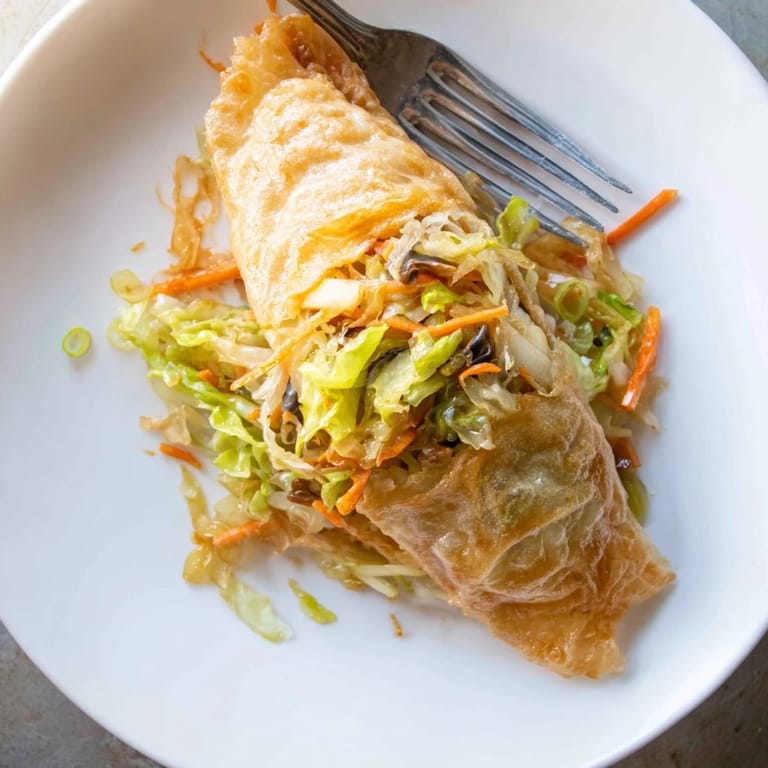
Save There's something almost meditative about the assembly process—the rhythm of dipping, laying, filling, folding. My mom once sat at my kitchen counter watching me work, and halfway through a batch, she asked if I was making these the way I'd imagined them when I first saw that video. I realized I'd learned enough by then to adjust without thinking, adding a little extra sesame oil here, cooking the filling slightly less there. That's when a recipe stops being instructions and becomes something that's actually yours.
The Art of Crispy Rice Paper
Rice paper is temperamental in a way I've learned to love rather than fight. The secret is understanding that it's just rice starch and water, and water is both its savior and its enemy. Too little and it shatters before you can fill it; too much and it becomes a sticky, crispy-proof disaster. I've found that keeping a damp towel nearby and working quickly makes all the difference—treat it like you're handling something precious but not fragile, confident and swift.
Filling Flavor Combinations
Once you nail the base technique, these dumplings become a canvas for whatever you have in your fridge. I've added finely diced tofu for protein, sometimes crispy cooked chicken, even a handful of finely chopped mint for brightness. The soy sauce and sesame oil are flexible too—if you lean into spice, add chili paste to the filling itself; if you want brightness, a squeeze of lime zest changes everything. The confidence to play with a recipe comes from making it exactly as written first, so you know what you're changing and why.
Why These Become Everyone's Favorite
These dumplings feel fancy but come together on a random weeknight, which is why people ask me to bring them everywhere. They're gluten-free without tasting like a compromise, vegan without a single moment of missing traditional dumpling texture, and they're so visually golden and appetizing that people eat them faster than you can fry them. The real magic is how something so simple—vegetables, a thin wrapper, hot oil—turns into something so crave-able.
- Serve them immediately while the crispy shell is still shattering, because five minutes in a covered bowl and they'll start to soften.
- Make the filling ahead and store it in the fridge, then assemble and fry fresh when you're ready, so you're not rushing through everything at once.
- Double-wrap any dumpling that tears during assembly; it looks rustic and tastes just as good.
 Save
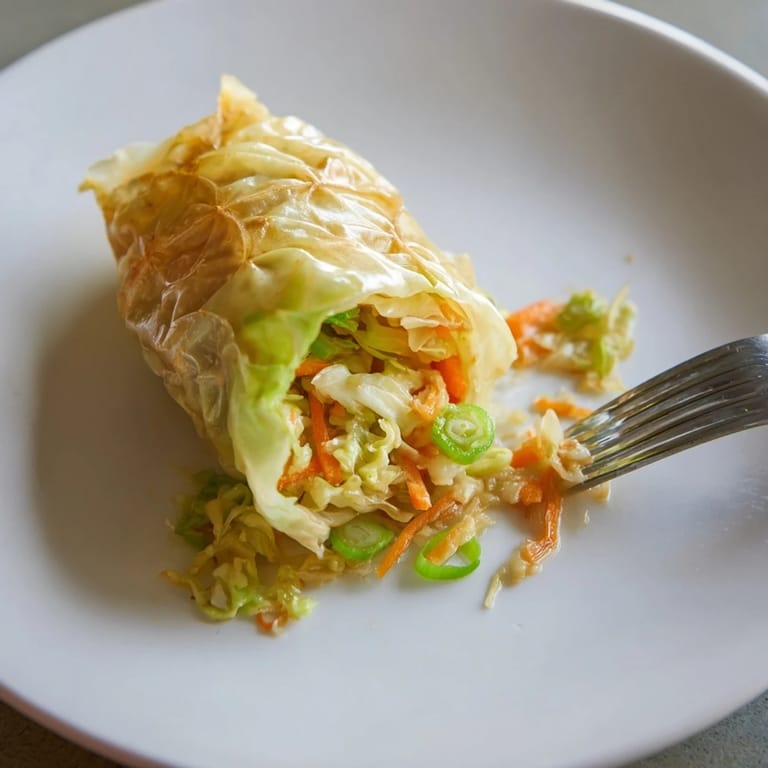
Save These dumplings remind me that the best recipes are the ones that make you look forward to cooking, not dread it. Every time I make them, I think about that midnight scroll that led me here, and how a random video turned into something I now make for the people I care about.
Kitchen Tips & Answers
- → How do I achieve the perfect crispiness on dumplings?
Use a nonstick skillet with moderate heat and enough oil to coat the bottom. Cook each side for 2-3 minutes until golden and crunchy, flipping gently.
- → Can I substitute ingredients in the filling?
Yes, tofu or cooked chicken can be added for extra protein. You may also vary the veggies based on preference while keeping the sauté step.
- → What’s the best way to soften rice paper without tearing?
Dip rice paper briefly (5-10 seconds) in warm water just until pliable, then place on a damp towel to prevent sticking and tearing during assembly.
- → Is double wrapping rice paper beneficial?
Yes, wrapping dumplings in two sheets creates extra crunch and durability, especially if fillings are moist or when frying longer.
- → How can I make a complementary dipping sauce?
A simple dipping sauce combines soy sauce or tamari, rice vinegar, a bit of maple syrup or honey, and chili flakes for a sweet and tangy balance.