 Save
Save There's something almost magical about the moment broccoli transforms from raw florets into silky soup. I discovered this particular recipe on a cold Tuesday when my neighbor appeared at my door with an armful of broccoli from her garden, insisting I do something wonderful with it. What started as a simple favor became my go-to comfort when the weather turns grey and my kitchen needs filling with warmth.
My daughter once asked why restaurant broccoli soup always tastes better, and I realized it was the cream making the difference. I made this version for her lunch box the next day, and she actually finished it without complaint, which is its own kind of magic. That's when I stopped second-guessing the cream and just leaned into what makes this soup so genuinely crave-worthy.
Ingredients
- 1 large head broccoli (about 500 g), chopped into florets: Fresh broccoli is non-negotiable here, as it's the star and deserves respect; cut florets roughly the same size so they cook evenly.
- 1 medium onion, diced: The aromatic base that builds depth without demanding attention, best diced small so it melts into the broth.
- 1 medium carrot, peeled and diced: Adds natural sweetness and body that rounds out the earthiness of broccoli beautifully.
- 2 cloves garlic, minced: A whisper of garlic, not a shout, minced fine so it distributes evenly and cooks into the background.
- 1 liter (4 cups) vegetable broth: The liquid backbone, and honestly, a good quality broth makes the difference between flat and full-bodied soup.
- 120 ml (½ cup) heavy cream: This is where the magic lives, creating that restaurant-quality richness that makes you want another spoonful.
- 2 tablespoons unsalted butter: Builds a flavor foundation with the oil and carries the aromatics beautifully.
- 1 tablespoon olive oil: Prevents the butter from browning too quickly and adds a subtle depth.
- ½ teaspoon salt, or to taste: Added at the end after blending, when you can actually taste what you're seasoning.
- ¼ teaspoon ground black pepper, or to taste: Freshly ground makes all the difference in the final bite.
- Pinch of ground nutmeg (optional): A secret ingredient that elevates the whole thing without revealing itself, like a whisper.
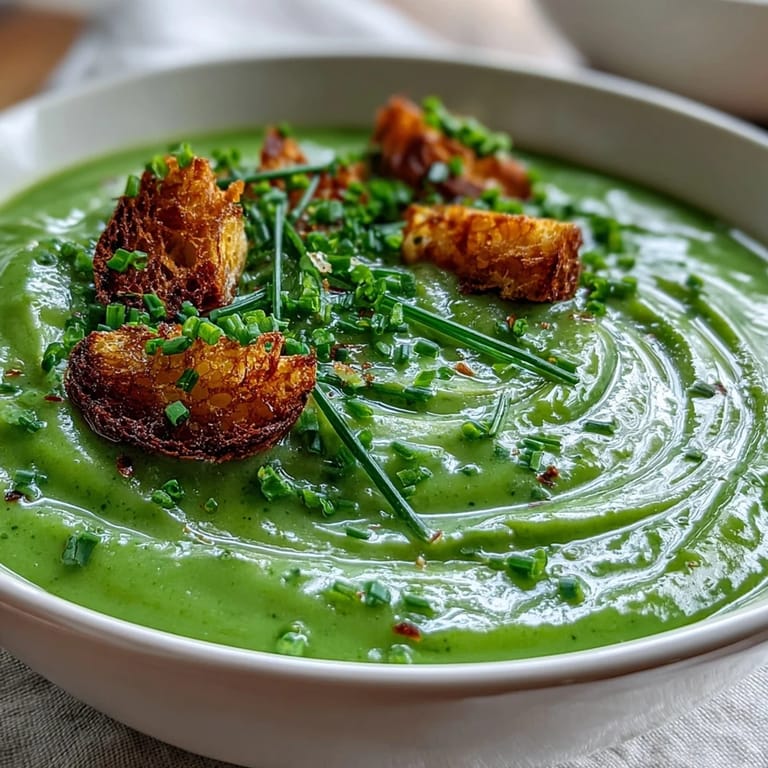
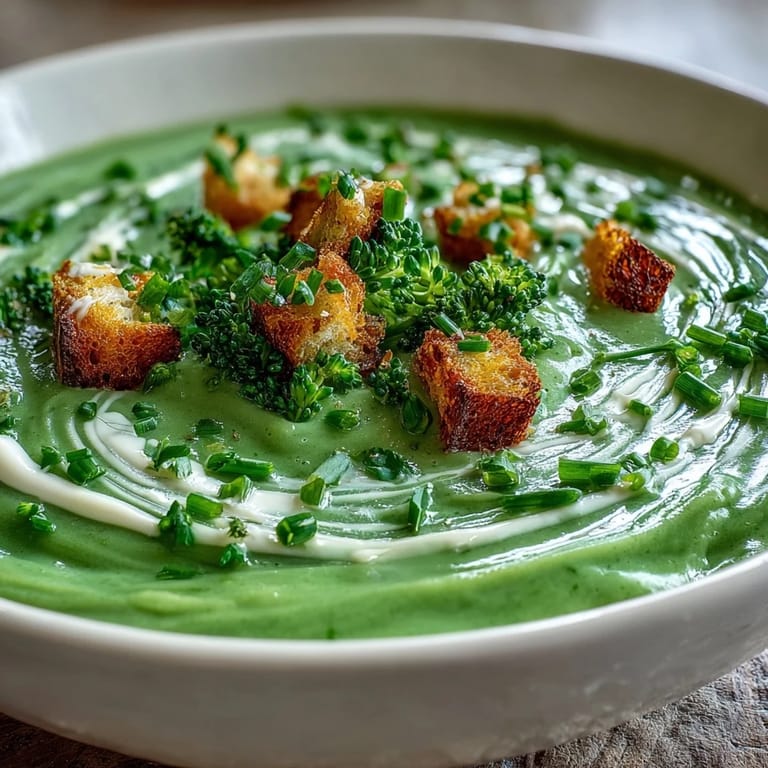
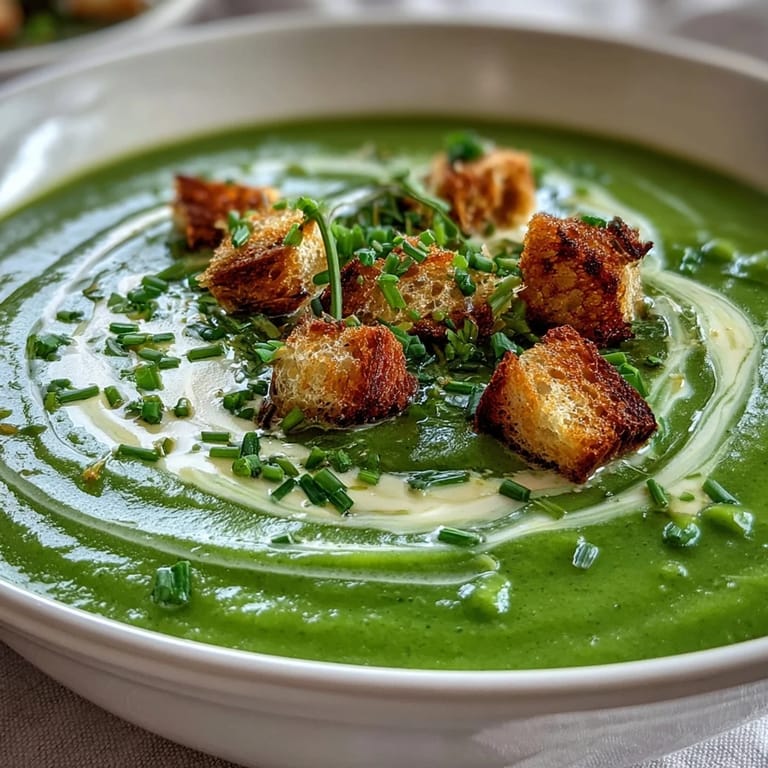
- Fresh chives and croutons for garnish: The finishing touches that add texture and color to each spoonful.
Tired of Takeout? 🥡
Get 10 meals you can make faster than delivery arrives. Seriously.
One email. No spam. Unsubscribe anytime.
Instructions
- Build Your Flavor Base:
- Heat butter and olive oil in a large pot over medium heat until the butter foams gently. Add diced onion, carrot, and minced garlic, stirring occasionally, letting them soften and fill your kitchen with that sweet, savory smell that signals something good is coming.
- Introduce the Broccoli:
- Toss in your broccoli florets, stirring to coat them in the buttery mixture, and let them cook for a couple of minutes until they're heated through and slightly fragrant. You'll notice the color intensifying as the heat works its magic.
- Simmer Until Tender:
- Pour in the vegetable broth, bring everything to a boil, then lower the heat and cover. Simmer for 15 to 18 minutes until the broccoli is absolutely tender, almost falling apart when you poke it with a spoon.
- Blend to Silky Perfection:
- Remove from heat and use an immersion blender right in the pot, working slowly and steadily until you reach your desired smoothness, or carefully transfer batches to a countertop blender. The sound of the blender and the way the soup transforms is oddly satisfying.
- Finish with Cream:
- Stir in the heavy cream and a tiny pinch of nutmeg if you're feeling adventurous. Taste for seasoning and adjust salt and pepper until it sings, then gently reheat if needed, keeping the heat low so the cream doesn't break.
- Serve with Care:
- Ladle into bowls and crown each one with a drizzle of cream, a scatter of fresh chives, or a handful of croutons for texture. Serve while it's hot and the steam is still rising.
 Save
Save I learned the importance of proper blending the hard way when I rushed through it and ended up with chunky soup that just wouldn't smooth out. The difference between a rustic soup and a velvety one is taking your time with the blender and not skipping that crucial finishing step. Now when I make it, I almost meditate over the blending process, knowing it's what transforms good ingredients into something genuinely special.
Lighter and Heavier Variations
If cream feels too heavy for you, swap it for half-and-half or even whole milk, which still tastes lovely without the richness. For an even lighter version, you can skip the cream entirely and just add a splash of milk at the end, letting the natural creaminess of blended broccoli carry most of the weight. I've done both, and they work beautifully depending on what your body needs that day.
Making It Heartier
When I want this soup to feel more like a meal, I add a peeled, diced potato with the broccoli, which adds substance and makes the soup feel more complete. The potato also helps thicken things naturally without extra cream, so you get richness from texture rather than pure dairy. It's a small addition that changes the entire character of the dish.
Storage and Serving Wisdom
This soup keeps beautifully in the refrigerator for up to three days, and reheats gently over low heat with a splash of broth to loosen it back up. The flavors actually deepen after a day, as if the ingredients finally stopped shouting and started having a real conversation. Just remember that garnishes should always be added fresh, right before serving, so they stay crisp and vibrant.
- Make a double batch and freeze half in individual containers for lazy future dinners.
- Add the cream only to the portions you're eating, leaving the base plain for freezing since dairy doesn't always freeze perfectly.
- Leftover soup is perfect for lunch boxes in a thermos, keeping you warm from the inside out.
 Save
Save This soup has become my answer to almost everything: a grey day, a sudden guest, a moment when the kitchen needs to feel like home again. There's real comfort in knowing something so simple can taste so completely satisfying.
Kitchen Tips & Answers
- → Can I make this soup ahead of time?
Yes, prepare the soup up to 2 days in advance and refrigerate. Reheat gently over low heat, avoiding boiling to prevent cream separation. The flavors often develop better overnight.
- → How do I achieve the smoothest texture?
Blend thoroughly using an immersion blender directly in the pot, or use a countertop blender in batches. For ultra-smooth results, strain through a fine-mesh sieve after blending.
- → What can I substitute for heavy cream?
Use half-and-half for a lighter version, coconut milk for dairy-free richness, or evaporated milk for reduced fat. Each alters the final texture slightly but maintains creaminess.
- → Why does my soup sometimes separate after adding cream?
Boiling after adding cream causes separation. Always stir in cream off the heat, then reheat gently just until warm. Keep temperature below a simmer to maintain smooth consistency.
- → Can I freeze this soup?
Freeze before adding cream for best results. Thaw overnight in the refrigerator, reheat, then stir in fresh cream. Dairy-based soups can sometimes separate when frozen and reheated.
- → How can I make this soup thicker?
Add a peeled, diced potato during simmering for natural thickness. Alternatively, reduce broth amount slightly or blend in some cooked cauliflower for body without altering flavor.