 Save
Save The first time I attempted étouffée, I stood over that roux for twenty minutes, arm aching, convinced Id ruined it when the flour turned from peanut butter brown to something resembling dark chocolate. My grandmother called from across the country just as I was about to dump the pot. She told me that's exactly how it should look. That phone call saved what became one of the most deeply flavored dishes I've ever made, and now I can't imagine rushing the process.
I made this for a Mardi Gras party last winter, watching snow fall outside while the kitchen filled with the smell of slowly browning flour and Cajun spices. My friends who'd never had Louisiana cuisine went back for third helpings, and someone actually licked the bowl. There's something about that dark, velvety sauce that makes people feel instantly at home, like they've stumbled into a kitchen in the French Quarter.
Ingredients
- Vegetable oil: A neutral oil is essential here since you'll be cooking it for a long time
- All purpose flour: This forms the foundation of your roux and thickens the entire dish
- Onion, bell pepper, and celery: The holy trinity of Cajun cooking that builds the aromatic base
- Garlic: Fresh minced garlic adds that sharp bite that cuts through the rich roux
- Shrimp or crawfish: Shrimp is easier to find but crawfish gives it that authentic Louisiana taste
- Seafood stock: Homemade stock would be ideal but a good quality store bought works perfectly
- Worcestershire sauce: Don't skip this, it adds that deep umami note that makes the sauce sing
- Cajun seasoning: Adjust this to your heat tolerance, remembering you can always add more
- Cayenne pepper: This provides the background heat, not the forefront burn
- Bay leaf: One leaf adds that subtle herbal note that rounds out all the flavors
- Salt and black pepper: Season generously but taste at the end since the roux concentrates flavors
- White rice: Long grain white rice is traditional and absorbs that sauce beautifully
- Green onions and parsley: Fresh garnishes add color and a bright finish to each bowl
Tired of Takeout? 🥡
Get 10 meals you can make faster than delivery arrives. Seriously.
One email. No spam. Unsubscribe anytime.
Instructions
- Make your roux:
- Heat the oil in a heavy pot over medium heat, then gradually whisk in the flour until smooth. Cook this mixture, stirring constantly, until it reaches a deep chocolate brown color, about 15 to 20 minutes. The roux will thin as it darkens, and that's exactly what you want.
- Add the holy trinity:
- Toss in your onion, bell pepper, and celery once the roux reaches that perfect brown color. Cook for 5 to 7 minutes until the vegetables soften and start to become translucent. Stir constantly to prevent any sticking or burning.
- Wake up the garlic:
- Stir in the minced garlic and cook for just 1 minute until fragrant. You'll smell that sharp garlicky aroma bloom in the pot.
- Build the sauce:
- Pour in the seafood stock gradually while whisking to prevent any lumps from forming. The mixture will thicken dramatically at first, then smooth out as you incorporate all the liquid.
- Add everything else:
- Toss in the shrimp, Worcestershire sauce, Cajun seasoning, cayenne pepper, bay leaf, salt, and black pepper. Give it a good stir to distribute all those spices evenly throughout the sauce.
- Let it simmer:
- Bring everything to a bubble, then reduce heat to low and let it cook uncovered for 20 to 30 minutes. The sauce should thicken nicely and coat the back of your spoon.
- Finish and serve:
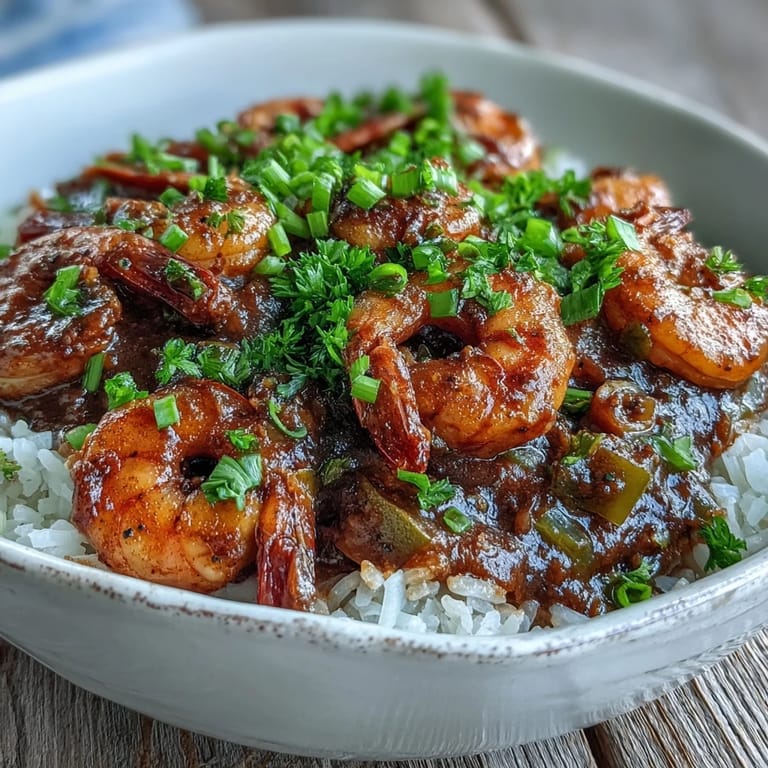
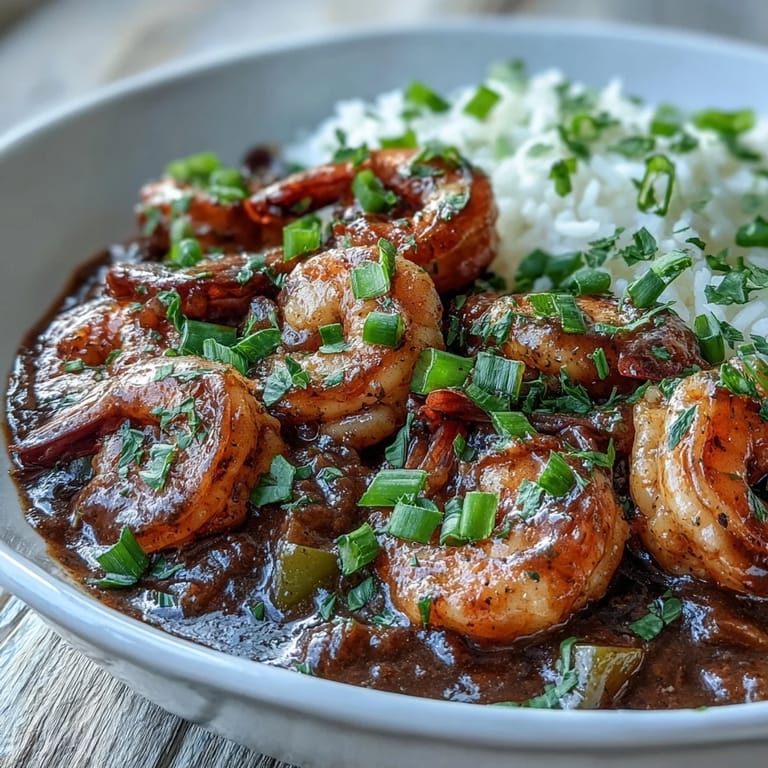
- Taste and adjust your seasonings, then fish out that bay leaf. Spoon the étouffée over mounds of hot rice and scatter green onions and parsley over the top.
 Save
Save My neighbor knocked on my door the day after I made this, asking what smelled so incredible the night before. I sent her home with a container of leftovers, and she texted me an hour later saying it was better than anything she'd had in New Orleans. That's the thing about étouffée, it somehow manages to taste even more complex and rich after a night in the refrigerator.
Mastering the Roux
The roux is everything in this dish. I've learned to have all my ingredients prepped and ready before I even start, because once that flour hits the hot oil, you're committed. Some days I put on music and stir in rhythm, other days I call my mom and catch up while my arm gets its workout. The transformation from pale paste to dark mahogany never stops feeling like kitchen magic.
Choosing Your Seafood
Shrimp is accessible and always delicious, but if you can find crawfish tails, they add an authentic sweetness that's unmistakably Louisiana. During crawfish season, I'll splurge on fresh tails, but frozen ones work beautifully too. Either way, don't overcook them, they just need to curl and turn pink.
Perfect Pairings
A crusty baguette for sopping up that sauce isn't optional, it's essential. I like to serve a simple green salad dressed with lemon vinaigrette on the side. Something about the acidity cuts through all that richness and makes each bite of étouffée taste even better.
- Cold beer is the traditional beverage, but a crisp white wine works beautifully too
- Cornbread or French bread both earn their place on the table
- A dash of hot sauce at the table lets everyone customize their heat level
 Save
Save There's something deeply satisfying about serving a bowl of étouffée, watching people's eyes light up at that first taste. It's comfort food that feels special, a humble dish that's somehow elegant.
Kitchen Tips & Answers
- → How do I make a good roux for étouffée?
Start by heating vegetable oil in a heavy pot, then gradually whisk in all-purpose flour. Continuously stir this mixture over medium heat for 15-20 minutes until it reaches a deep golden brown, resembling the color of chocolate. Patience is key to developing its rich flavor and ensuring it doesn't burn.
- → Can I substitute the shrimp in this dish?
Absolutely! While shrimp is traditional, you can easily substitute crawfish for an even more authentic experience. For other variations, consider using chicken, sausage, or even mushrooms for a vegetarian-friendly option. Adjust cooking times as needed for different proteins.
- → How can I make this étouffée gluten-free?
To make this dish gluten-free, substitute the all-purpose flour with a certified gluten-free flour blend when preparing the roux. Additionally, ensure that your seafood or chicken stock is also certified gluten-free. These simple changes will allow you to enjoy the étouffée without gluten.
- → What's the best way to serve this dish?
This étouffée is traditionally served over hot, fluffy white rice. Garnish with fresh chopped green onions and parsley for added freshness and color. For a complete meal, consider serving it with warm, crusty French bread to soak up the delicious sauce, or alongside a simple side salad.
- → Why does étouffée taste better the next day?
Like many stews and braises, étouffée benefits significantly from resting. Overnight, the various spices, herbs, and savory ingredients have more time to fully meld and deepen in flavor. This allows the complex profile to harmonize, resulting in a richer, more integrated taste experience.
- → How can I adjust the spice level?
The spice level can be easily adjusted to your preference. For a milder dish, reduce or completely omit the cayenne pepper. If you enjoy more heat, you can add an extra pinch of cayenne or a dash of hot sauce when seasoning the étouffée to taste.