 Save
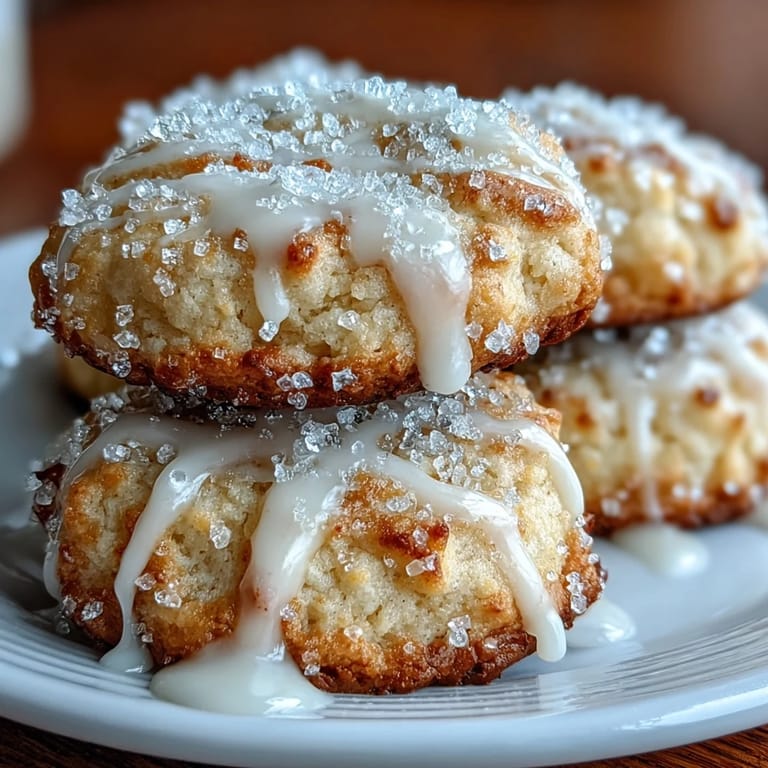
Save My friend Sarah showed up one afternoon with a container of cottage cheese she'd accidentally bought in bulk, looking genuinely panicked about how to use it all. I'd never thought to put cottage cheese in cookies before, but something about her desperation and the sunny day made me curious. We spent the next hour experimenting, and when these lemon cookies came out of the oven with that perfect golden edge and impossibly soft center, we both just stood there, forks in hand, wondering why nobody had told us about this combination sooner.
These cookies ended up as my contribution to a potluck where I didn't know many people, and I watched this quiet moment happen when someone tried one and actually closed their eyes. That's when I realized these aren't just cookies—they're the kind of thing that makes someone ask for the recipe within thirty seconds of tasting them.
Ingredients
- All-purpose flour (2 1/4 cups): The foundation that keeps these tender rather than cake-like, so don't skip the measuring cup for accuracy.
- Baking soda and baking powder (1/2 teaspoon each): This small amount creates lift without making them cakey or puffy.
- Salt (1/4 teaspoon): Brings out the lemon and balances the sweetness in ways you won't notice until it's missing.
- Unsalted butter, softened (1/2 cup): Let it sit on the counter for 15 minutes so it creams properly without being greasy.
- Granulated sugar (1 cup): Creaming this with butter traps air that keeps the cookies tender.
- Cottage cheese, full-fat and well-drained (1 cup): The secret ingredient that adds moisture and tang; drain it well or your dough gets wet and unpredictable.
- Large egg: Binds everything together and adds richness you can taste in every bite.
- Lemon zest (1 tablespoon): The oils in the zest deliver brightness that juice alone can't match.
- Fresh lemon juice (2 tablespoons): Use real lemons, not the bottled kind, which tastes muted and flat.
- Vanilla extract (1 teaspoon): Deepens the flavor profile without announcing itself.
- Granulated sugar for rolling (1/4 cup): Adds sparkle and texture that makes people notice the cookies are homemade.
- Powdered sugar for glaze (1 cup, sifted): Sifting removes lumps that catch on your lips when you take a bite.
- Fresh lemon juice for glaze (2 tablespoons): This is what transforms plain cookies into something memorable.
Tired of Takeout? 🥡
Get 10 meals you can make faster than delivery arrives. Seriously.
One email. No spam. Unsubscribe anytime.
Instructions
- Get your oven ready:
- Preheat to 350°F and line two baking sheets with parchment paper; this keeps cleanup minimal and prevents the bottoms from browning too fast.
- Combine dry ingredients:
- Whisk flour, baking soda, baking powder, and salt in a medium bowl until they're evenly distributed, breaking up any small lumps in the baking soda.
- Cream butter and sugar:
- Beat softened butter with granulated sugar for about two minutes until light and fluffy, which means the mixture has gone pale and airy. This step matters more than you'd think.
- Smooth in the cottage cheese:
- Add the drained cottage cheese and beat until you don't see any lumps, then mix in the egg, lemon zest, lemon juice, and vanilla until everything looks combined. The cottage cheese will break down into the batter and disappear.
- Bring it all together:
- Gradually add the dry mixture to the wet mixture, stirring just until you stop seeing white streaks of flour. Overmixing develops gluten and makes them tough.
- Shape and sugar your cookies:
- Scoop tablespoon-sized portions of dough, roll them into balls, then roll in granulated sugar and place them two inches apart on your baking sheets. The sugar coating is what makes them look bakery-quality.
- Bake until golden:
- Bake for 11 to 13 minutes until the edges are set but the centers still look slightly underbaked; they'll feel soft on the sheet but will firm up as they cool. This is where patience pays off—pulling them out one minute too early feels like a small miracle.
- Cool with intention:
- Let them sit on the baking sheet for five minutes to set slightly, then transfer to a wire rack so they cool completely and don't steam themselves into softness.
- Make the glaze:
- Whisk powdered sugar with fresh lemon juice and optional zest until you get a consistency that drizzles smoothly but doesn't run off the cookie. If it's too thick, add lemon juice one teaspoon at a time.
- Finish them:
- Drizzle glaze over each cooled cookie and let it set for 10 to 15 minutes before serving, which gives it that pretty matte finish.
 Save
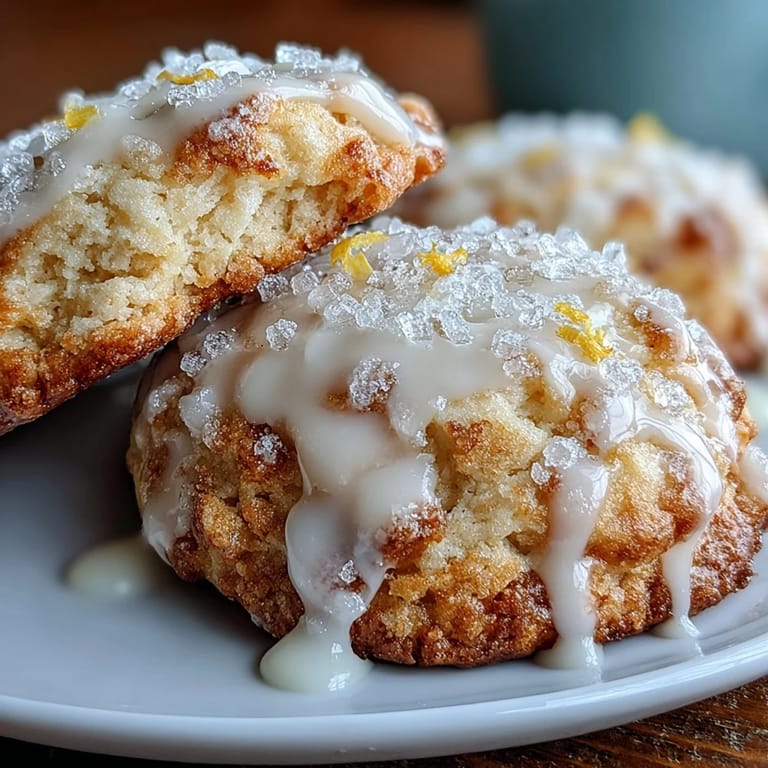
Save There's a particular kind of magic when you pull these out of the oven and the smell of lemon and butter fills your whole kitchen. It's one of those moments that makes you feel like you've discovered something instead of just following a recipe.
The Cottage Cheese Secret
Most people think cottage cheese belongs in savory dishes, but it's actually one of the best-kept baking secrets because it adds moisture and tenderness without making cookies greasy or dense. The tang it brings is subtle enough that nobody will guess what's making these taste different, but once you know, you can't unsee how brilliant it is. Full-fat cottage cheese matters here—the low-fat version creates a different texture that doesn't work the same way.
Lemon Everything
These cookies are unapologetically lemony in a way that feels bright without being sour, which is the entire point of using both zest and juice. The zest gives you the aromatic oil that hits you first, while the juice adds a subtle tartness that keeps them from feeling one-dimensional. If you're someone who loves lemon desserts but finds most of them cloyingly sweet, this recipe is going to become your new favorite.
Making Them Your Own
Once you've made these once, you'll start imagining variations that feel natural to the recipe's spirit. The poppy seed addition mentioned in the notes actually changes the texture slightly, giving you a gentle crunch that pairs perfectly with the softness underneath. You could also add a pinch of cardamom for a slightly more sophisticated flavor, or even brush the cooled cookies with melted white chocolate before the glaze sets.
- Store these in an airtight container at room temperature for up to three days, where they actually taste better on day two as flavors meld.
- These freeze beautifully for up to a month, either glazed or unglazed, so you can make a double batch without feeling like you're overcommitting.
- If your lemon glaze is too runny, whisk in a bit more powdered sugar; if it's too thick, add lemon juice drop by drop.
 Save
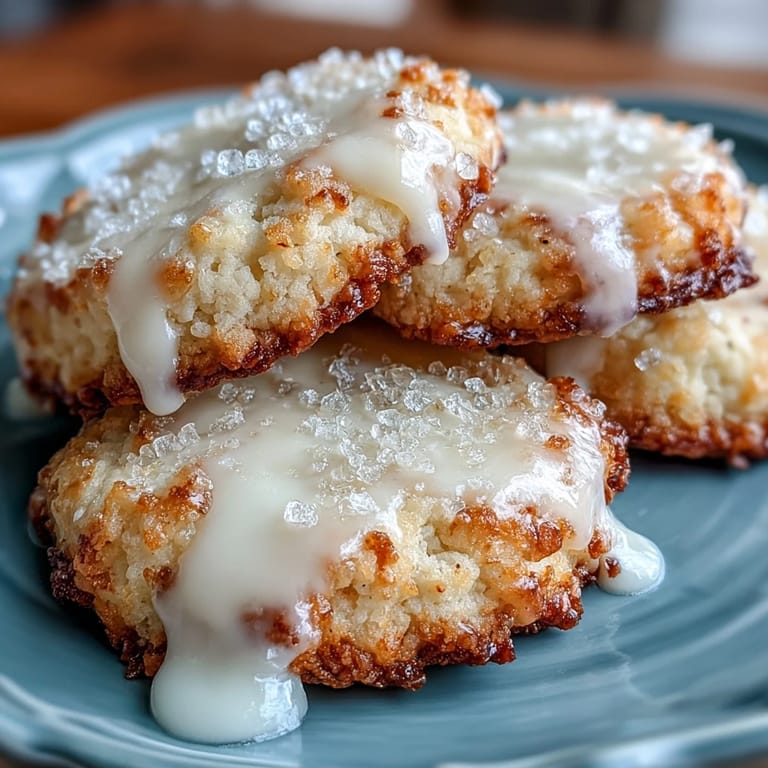
Save These cookies prove that sometimes the best kitchen discoveries come from someone else's cooking crisis and a willingness to experiment. Make a batch and watch what happens when you hand one to someone unsuspecting.
Kitchen Tips & Answers
- → How does cottage cheese affect the texture?
Cottage cheese adds moisture and richness, creating a soft, tender texture without heaviness.
- → Can I use low-fat cottage cheese?
While full-fat yields the best texture, low-fat can be used but may result in slightly drier cookies.
- → What purpose does rolling the dough in sugar serve?
Rolling dough balls in sugar creates a delicate, sweet crust that contrasts nicely with the soft interior.
- → How should the lemon glaze be applied?
Drizzle the glaze over fully cooled cookies and allow it to set to achieve a glossy, flavorful finish.
- → Can I add other flavor elements?
Optional ingredients like poppy seeds or extra lemon zest can enhance the flavor and provide textural variety.