 Save
Save My friend texted me a photo of a clock face made entirely from cheese and citrus at a gallery opening, asking if I could recreate it for her dinner party. I stared at that image for a solid minute, imagining the satisfying snap of a manchego slice and the bright tartness of grapefruit offsetting creamy goat cheese. What started as a wild request became an obsession—I had to figure out how to turn time itself into something edible and beautiful.
I remember standing in my kitchen at 6 PM, racing to finish this before guests arrived, when my roommate wandered in and stopped dead. He watched me place the last lemon slice and arrange the cheese hands pointing to seven, then said, 'That's too pretty to eat.' Fifteen minutes later, he was the one demolishing slices of aged cheddar with mint leaves.
Ingredients
- Large orange: The workhorse of your clock face—its warm, reliable sweetness anchors the whole arrangement.
- Blood orange: This one's the show-off; its jewel-red flesh makes people pause before they taste it.
- Grapefruit: Pick the pink variety if you can; it adds a subtle bitterness that keeps the board from feeling cloying.
- Clementines: Small and sweet, they fill the gaps and add pops of concentrated citrus flavor.
- Lemon and lime: These are your anchors of acidity—they don't look like much but they're doing the heavy lifting.
- Firm goat cheese or manchego: Goat cheese crumbles beautifully if you're clumsy with a knife; manchego holds its shape and has a nuttiness that plays well with honey.
- Aged cheddar or gouda: The secondary cheese brings depth and a slight sharpness that contrasts the bright citrus.
- Honey: The final flourish that makes everything taste like you spent hours planning this.
- Pistachios or walnuts: Toast them lightly before sprinkling if you have five minutes; they transform from decoration into texture.
- Fresh mint: A handful scattered at the end adds aroma and signals that you care about the details.
Tired of Takeout? 🥡
Get 10 meals you can make faster than delivery arrives. Seriously.
One email. No spam. Unsubscribe anytime.
Instructions
- Slice your citrus thin and true:
- Use a sharp knife and aim for consistency—thin enough to taste the fruit, thick enough they don't feel delicate. Work over a small bowl to catch any juice you'll want to taste later.
- Build your clock face:
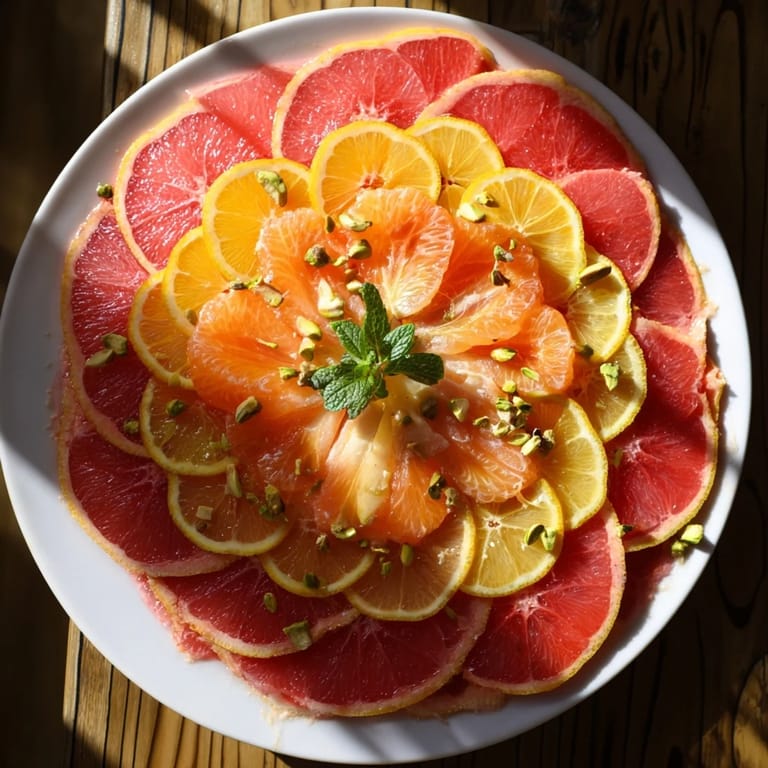
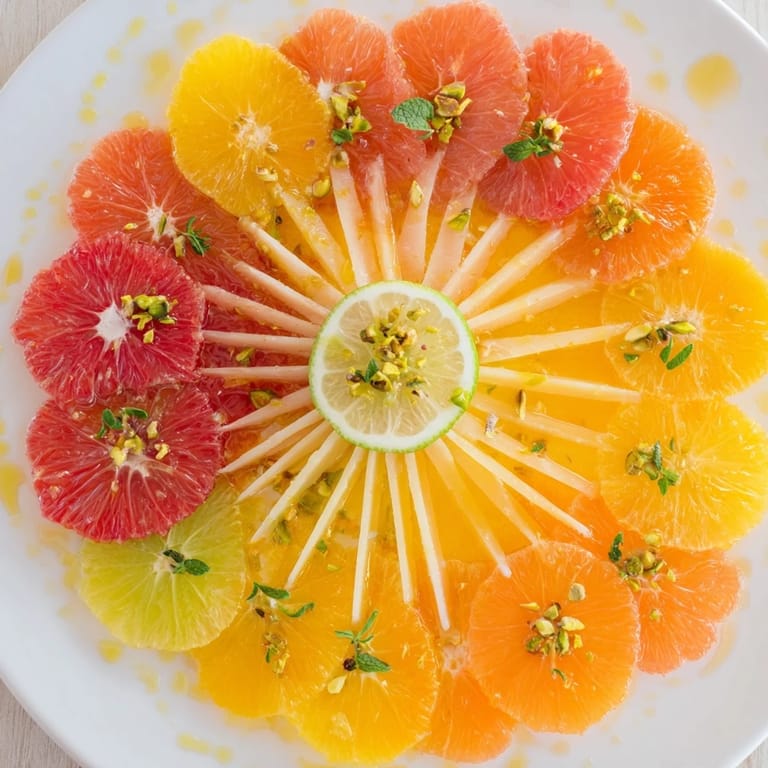
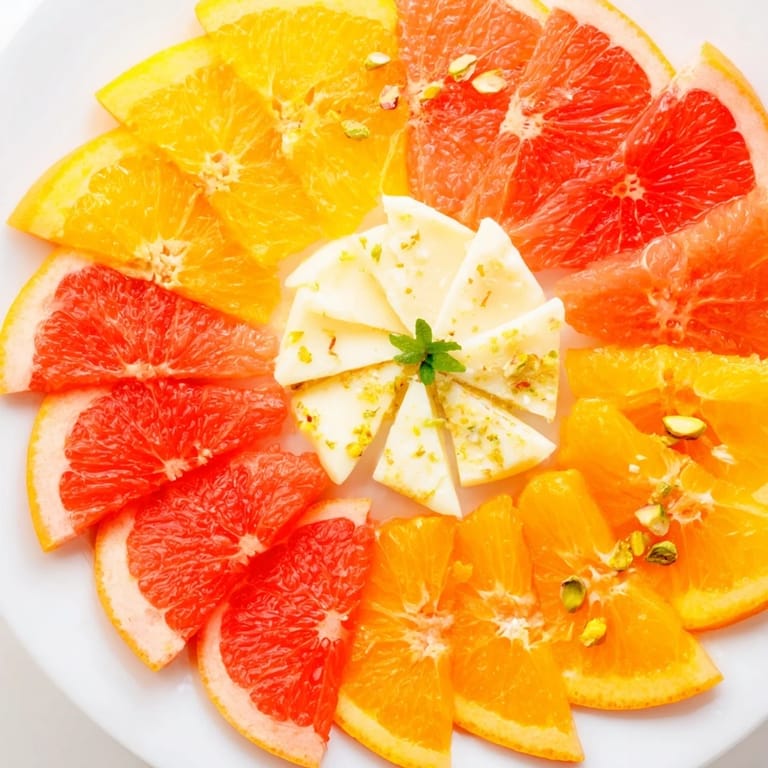
- Start at the top of your platter and work clockwise, alternating colors so no two identical citrus types sit beside each other. This isn't rigid—the imperfections are what make it feel handmade.
- Shape your cheese hands:
- Cut two thin strips of cheese and angle them to point to your chosen time. If they crack or bend slightly, that's honest; if they're perfect, you're showing off.
- Add the final touches:
- Drizzle honey directly over the center where the cheese hands meet, letting it pool slightly. Scatter pistachios and mint leaves around as if you're not thinking too hard about placement.
 Save
Save The moment a guest pointed to the clock and said, 'It's 7:15 and this is the most beautiful thing I've eaten all week,' I realized this wasn't just a pretty board—it was a conversation piece that actually tasted good. That's when I knew I'd be making this again and again.
Choosing Your Cheeses
The cheese is your anchor flavor, so choose based on what you love. Manchego brings a waxy, slightly salty character that aged cheddar's sharpness can't quite match. Goat cheese, softer and tangier, works beautifully but demands a sharp knife and a cold hand. I've found that mixing one firm cheese with one creamy option gives you textural variety without overthinking it.
The Citrus Selection Strategy
Don't feel locked into this exact lineup—think of it as a guide rather than a mandate. Tangerines work as well as clementines, and if blood oranges aren't in season, a standard orange doubled up covers the gap. What matters is the color contrast and flavor range; you want sweet, tart, and everything between. I once used pomelo slices instead of grapefruit and the experiment taught me that bigger fruits don't always translate to better looking arrangements.
Timing and Presentation
The beauty of this dish is that it doesn't demand perfection or precise execution. Arrange it while the energy of the moment carries you, not like you're following a diagram. I've found that setting the cheese hands five or ten minutes before guests arrive keeps them from drying out while still looking fresh. The honey should be drizzled just before serving so it catches the light.
- Serve this straight from the fridge; cold cheese and citrus taste sharper and more refreshing.
- Have crackers and bread nearby but don't push them—many people will skip them entirely.
- If you're serving wine, a crisp Prosecco or dry white makes the citrus taste even brighter.
 Save
Save This board is proof that the simplest ideas sometimes make the strongest impression. Make it when you want to feel a little clever without actually being complicated.
Kitchen Tips & Answers
- → What cheeses work best for this platter?
Firm goat cheese or manchego provide creamy texture, while aged cheddar or gouda add sharpness. Brie or blue cheese can also be used for varied flavors.
- → Can I prepare this ahead of time?
It's best served fresh to maintain citrus vibrancy and cheese texture, but you can slice fruits and cheese a few hours ahead and refrigerate separately before arranging.
- → What are good garnishes for this dish?
Honey drizzle enhances sweetness, while chopped pistachios or walnuts add crunch. Fresh mint leaves provide color and a refreshing aroma.
- → Is this suitable for gluten-free diets?
Yes, as long as gluten-free crackers or bread are used for serving.
- → How should I arrange the citrus slices?
Place thin citrus rounds in a circle on a large round platter, positioning a slice for each hour like a clock face and alternating colors for visual appeal.