 Save
Save I discovered the magic of a well-built snack board on a Tuesday afternoon when my schedule fell apart and I had thirty minutes to feed four hungry people. No time for cooking, so I raided the fridge and started arranging—a scatter of cheese here, a handful of vegetables there, a couple of dips in bowls. Within minutes, everyone was picking and chatting, completely unbothered that dinner wasn't a proper meal. That's when it clicked: sometimes the best food isn't about technique or time, it's about permission to graze and enjoy.
My friend Sarah brought this idea to a potluck, and I watched it become the thing people returned to between conversations. A woman I'd never met before spent twenty minutes talking to me about the combination of sharp cheddar with dried apricots, and suddenly we were making plans to cook together. A snack board doesn't just feed people; it gives them permission to linger and talk with their hands full.
Ingredients
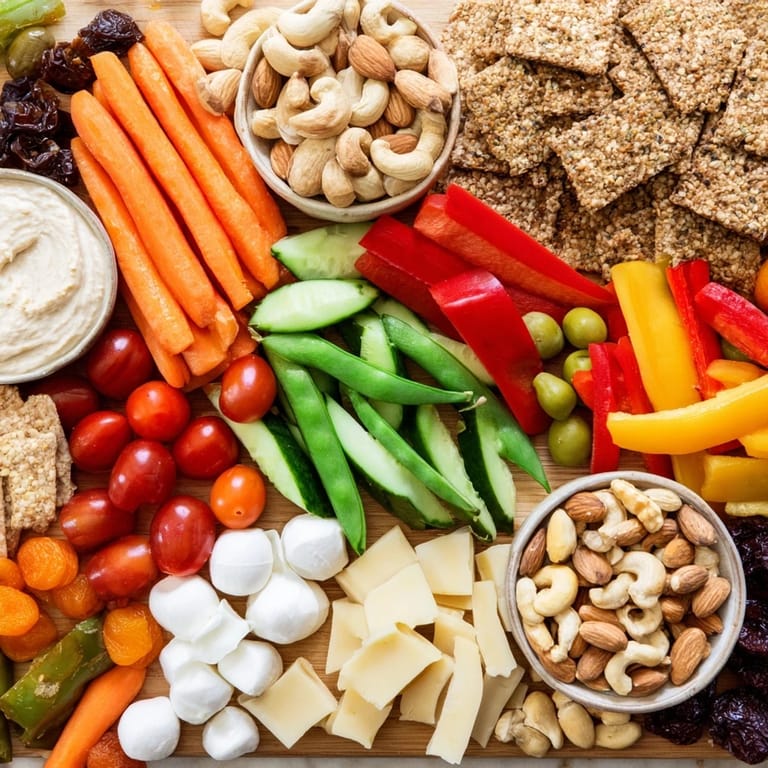
- Baby carrots: Sweet and naturally crunchy, they need no prep and stay fresh for days if you keep them in water.
- Cucumber slices: Cut them thick enough to hold a dip without falling apart, and eat them the same day for the best crunch.
- Cherry tomatoes: Leave some whole so they pop in your mouth; halve the larger ones so everything feels bite-sized.
- Bell pepper strips: Mix colors not just for beauty but because they taste subtly different—red is sweetest, yellow is mild, green has a little bite.
- Sugar snap peas: The secret luxury of this board; they're naturally sweet and so satisfying to bite through.
- Hummus: A creamy anchor that plays well with almost everything, and it fills space without adding much weight.
- Ranch or Greek yogurt dip: The familiar option that makes sure everyone finds something they want to dip into.
- Cheddar cheese, cubed: A sharp, reliable friend that tastes good with vegetables and dried fruit alike.
- Mozzarella balls: Soft and mild, they're the gentle contrast to everything else; buy them fresh if you can find them.
- Gouda or Swiss cheese, sliced: The fancy touch that makes people think you spent more time than you did.
- Whole grain crackers: Choose ones with actual texture so they don't disappear into nothing the moment you bite down.
- Roasted nuts: Toast your own if you have time, but honestly, good store-bought ones work fine and add necessary crunch.
- Olives: The slightly salty, briny thing that keeps people reaching back for more.
- Dried fruit: Apricots bring sweetness, cranberries bring tartness, figs bring a sophisticated note that surprises people.
Tired of Takeout? 🥡
Get 10 meals you can make faster than delivery arrives. Seriously.
One email. No spam. Unsubscribe anytime.
Instructions
- Prep your vegetables:
- Wash and dry everything thoroughly—wet vegetables slide around and look sad on the board. Pat them dry with a clean towel, then slice your cucumbers and peppers into pieces that feel good in your hand to grab.
- Start building:
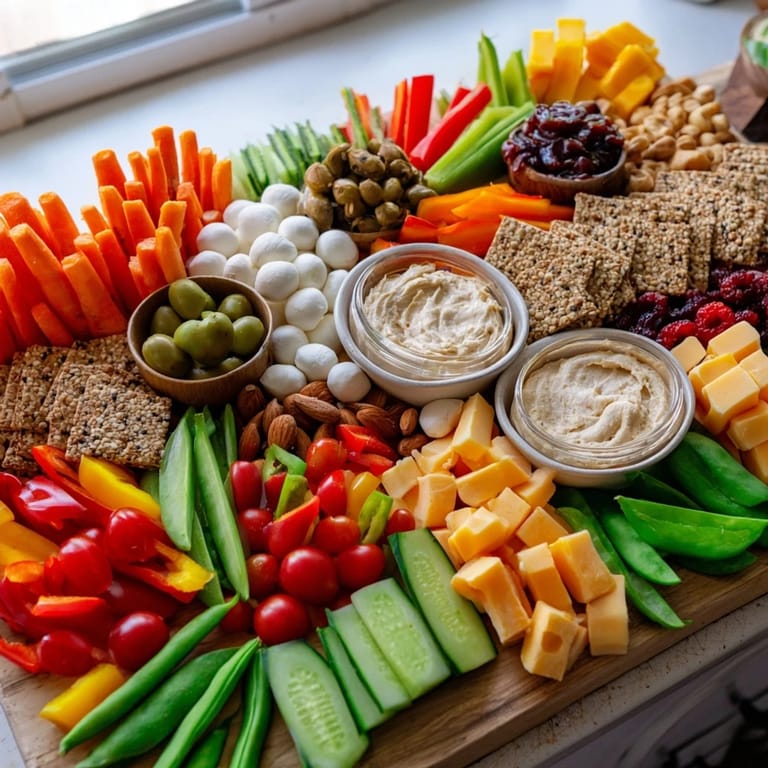
- Use your largest board or platter and start with vegetables arranged in loose sections, leaving gaps you'll fill later. Think of it like a puzzle where you're leaving room for everything else to nestle in naturally.
- Position the dips:
- Small bowls work best; they keep dips contained and make it clear where things go. Tuck them into a spot where they feel like they belong but don't crowd out the vegetables.
- Add the cheeses:
- Create little clusters of different types so people can see the variety at a glance. Cubes, balls, and slices all look different and invite different ways of eating them.
- Fill the spaces:
- Scatter crackers, nuts, olives, and dried fruit into the gaps with abandon. The board should feel abundant and inviting, not carefully calculated.
- Serve or chill:
- It's best fresh and room temperature, but you can cover it and refrigerate for a few hours if you need to prep ahead.
 Save
Save My kid called this "the choose-your-own-adventure dinner," and suddenly it wasn't just fuel but entertainment. When people have agency over what they eat, the whole experience feels less like obligation and more like play.
The Art of Board Balance
The secret to a board that people actually want to eat from is contrast—soft against crunchy, sharp against mild, colorful against neutral. I used to arrange everything perfectly symmetrical and it looked pretty in photos but people didn't actually know where to start eating. Now I build in rough sections with some overlap, and somehow people navigate it intuitively and end up with more interesting bites because flavors are mixing in unexpected ways.
Customization That Actually Works
This board thrives on flexibility, but there's a framework worth understanding. You need something soft for dipping, something crunchy to eat on its own, something creamy, something with umami, and something sweet. As long as you have those bases covered, you can swap ingredients based on what's in your fridge or what you love. Hard-boiled eggs add richness, deli meats add smokiness, and fresh berries add brightness if you want to lean sweet instead of savory.
Timing and Temperature Matters
Room temperature vegetables taste better than cold ones, and everything tastes fresher if you assemble it within a couple of hours of eating. Cold boards are sad boards because the flavors flatten out and people lose interest faster. If you need to prep ahead, wash and cut the vegetables, but wait to arrange them until thirty minutes before people arrive, and your board will taste noticeably better. Keep these last-minute thoughts close: toast your nuts if you have ten extra minutes, slice your cheese as late as possible so it doesn't dry out, and always taste your dips to see if they need a pinch of salt.
- Room temperature vegetables taste fuller and more alive than cold ones.
- Assemble no more than two hours before serving for the best crunch and flavor.
- A sprinkle of fleur de sel on the vegetables right before serving elevates everything.
 Save
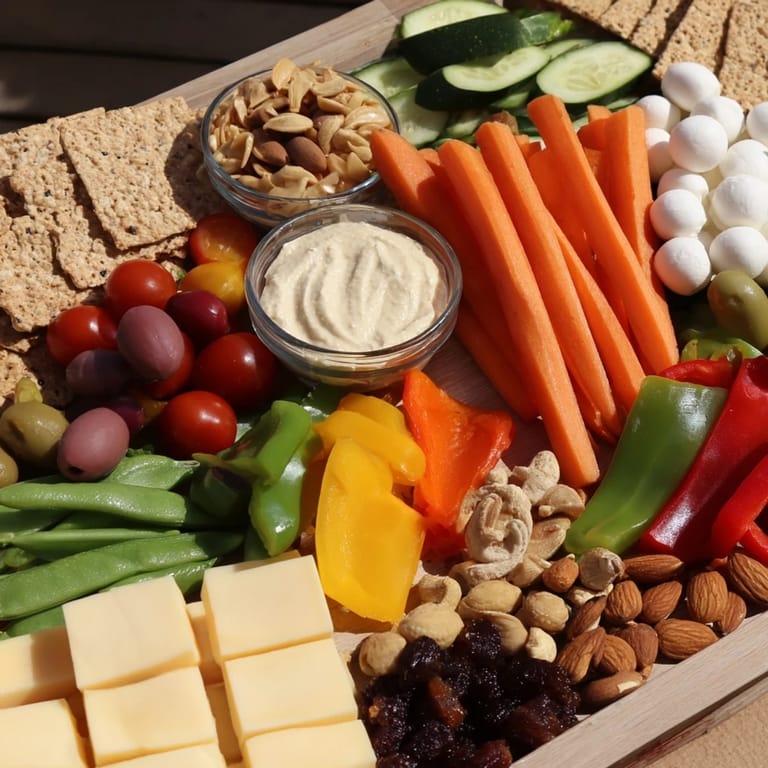
Save A snack board is an act of generosity that requires almost no skill and creates conversation. Make one whenever you need an excuse to gather people.
Kitchen Tips & Answers
- → What vegetables work best on this snack board?
Fresh, crisp vegetables like baby carrots, cherry tomatoes, cucumber slices, bell pepper strips, and sugar snap peas provide vibrant color and crunch.
- → Which cheeses complement the veggie selection?
Cheddar cubes, mozzarella balls (bocconcini), and sliced gouda or Swiss offer creamy, mild, and slightly nutty flavors that pair well with fresh vegetables.
- → What dips can be paired with this board?
Hummus and ranch or Greek yogurt-based dips add richness and tang that enhance the crispness of the veggies and balance the textures.
- → How can I add crunch to the board?
Whole grain crackers and roasted nuts such as almonds, cashews, or walnuts add satisfying crunch and depth to the platter.
- → Can this board be customized for dietary needs?
Absolutely. Use gluten-free crackers for gluten sensitivity, swap to dairy-free cheeses and plant-based dips for vegan options, and add protein with hard-boiled eggs or sliced deli meats if desired.
- → How should the board be served and stored?
Serve immediately for best freshness, or cover and refrigerate until ready to eat, keeping dips and crackers separate if possible to maintain texture.