 Save
Save There's something about the way mushrooms soften in hot oil that stopped me mid-chop one autumn afternoon—earthy, almost meaty, nothing like I'd expected. I was standing in my kitchen after a long walk, thinking about what would warm me from the inside out, and this soup just happened. The barley grains tumbling into the pot felt like a small act of care, each one promising something substantial and real.
I made this for my neighbor last winter when she was recovering from surgery, and she told me weeks later that she'd been freezing portions and pulling them out whenever things felt overwhelming. That moment of her mentioning it casually at the mailbox—that's when I realized this soup does more than nourish your body.
Ingredients
- Pearl barley (3/4 cup, rinsed): This grain is your soup's backbone, absorbing flavor as it cooks and turning creamy without any cream at all—rinse it first to remove excess starch.
- Olive oil (2 tablespoons): Use decent oil here because it's one of the few fat sources and it sets the flavor tone for everything else.
- Yellow onion (1 large, diced): The aromatic base that makes your kitchen smell like something good is happening before you've even added the broth.
- Carrots and celery (2 medium carrots and 2 stalks): Together they form the classic trio with onion, and their natural sweetness balances the earthy mushrooms.
- Garlic (3 cloves, minced): Add this after the softer vegetables so it doesn't burn, releasing its warmth into everything.
- Cremini or white mushrooms (8 oz, sliced): They release moisture as they cook, creating an umami base that makes the broth taste rich and intentional.
- Potato (1 large, diced): This thickens the soup naturally as it breaks down, creating body without cream or roux.
- Zucchini (1, diced): It softens quickly and adds green, though it's delicate so don't add it too early or it'll disappear.
- Canned diced tomatoes (1 can, 14 oz with juice): The acidity brightens everything and the tomato solids add texture—never drain them away.
- Green beans (1 cup, trimmed): They stay slightly firm if you time it right, adding crunch against the soft barley.
- Vegetable broth (6 cups): This is where quality matters—a thin broth makes a thin soup, so taste yours before committing.
- Dried thyme and oregano (1 teaspoon each): Mediterranean herbs that whisper rather than shout, creating warmth you can't quite name.
- Bay leaf (1): Toss it in whole and remember to fish it out at the end, or it becomes a bitter surprise.
- Salt and black pepper (3/4 teaspoon salt, 1/2 teaspoon pepper): Season as you go, tasting at the end because salt brings all the flavors into focus.
- Fresh parsley (2 tablespoons, chopped): A bright, last-minute finish that reminds you this is alive and meant to be eaten soon.
Tired of Takeout? 🥡
Get 10 meals you can make faster than delivery arrives. Seriously.
One email. No spam. Unsubscribe anytime.
Instructions
- Warm the oil and begin with the holy trinity:
- Heat olive oil in your soup pot over medium heat until it shimmers, then add the diced onion, carrots, and celery all at once. Let them soften for about 5 minutes, stirring occasionally—you're building flavor, not rushing.
- Introduce the mushrooms and let them speak:
- Stir in the garlic and mushroom slices, cooking for another 5 minutes until they start to release their moisture and darken slightly. This is when your kitchen will smell like something worth remembering.
- Layer in the remaining vegetables:
- Add the diced potato, zucchini, green beans, and tomatoes with their juice, stirring to coat everything in the oil and aromatics. The mixture will look crowded but that's exactly right.
- Pour in the broth and grains:
- Add the vegetable broth to the pot, then sprinkle in the rinsed pearl barley along with the thyme, oregano, bay leaf, salt, and pepper. Stir well to distribute the barley evenly so nothing settles at the bottom.
- Bring to a boil, then settle into a simmer:
- Turn the heat up until the soup reaches a rolling boil, then immediately reduce to low, cover with a lid, and simmer for 40 to 45 minutes. Stir occasionally and listen for the gentle rhythm of the simmer—you'll know when the barley is tender by how easily it breaks between your teeth.
- Taste, adjust, and serve:
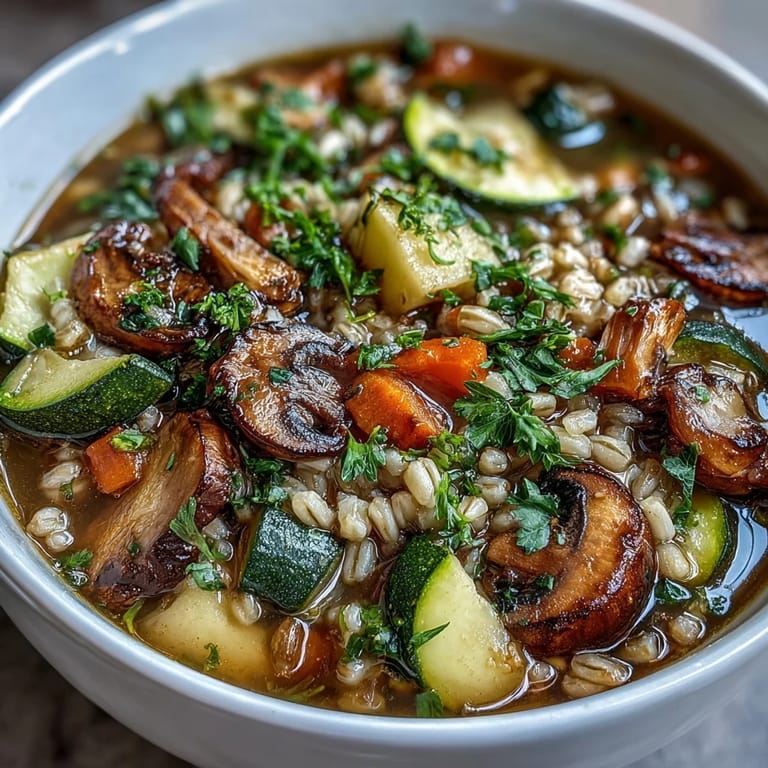
- Remove the bay leaf, taste the broth, and add more salt if needed—the seasoning should feel balanced, not flat or aggressive. Ladle into bowls and crown each one with fresh parsley, which adds brightness and color.
 Save
Save There's a moment when the soup has been simmering for about thirty minutes and you lift the lid to check on it—the steam rises and carries every herb, every vegetable, every choice you've made. That's when you know it's working.
Why Barley Makes This Soup Special
Barley isn't flashy, but it's patient and generous. As it cooks, each grain softens and releases starches that naturally thicken the broth without cream or flour, creating a soup that feels substantial and complete. It absorbs the flavors around it like a sponge, so every bite tastes like everything you've built.
The Mushroom Secret
Mushrooms add a savory depth that tricks your brain into thinking something rich and meaty is happening, which is why vegetarians and non-vegetarians alike find this soup genuinely satisfying. When they cook down and release their moisture, they're not disappearing—they're becoming part of the broth itself, seasoning it from within.
Storage, Freezing, and Variations
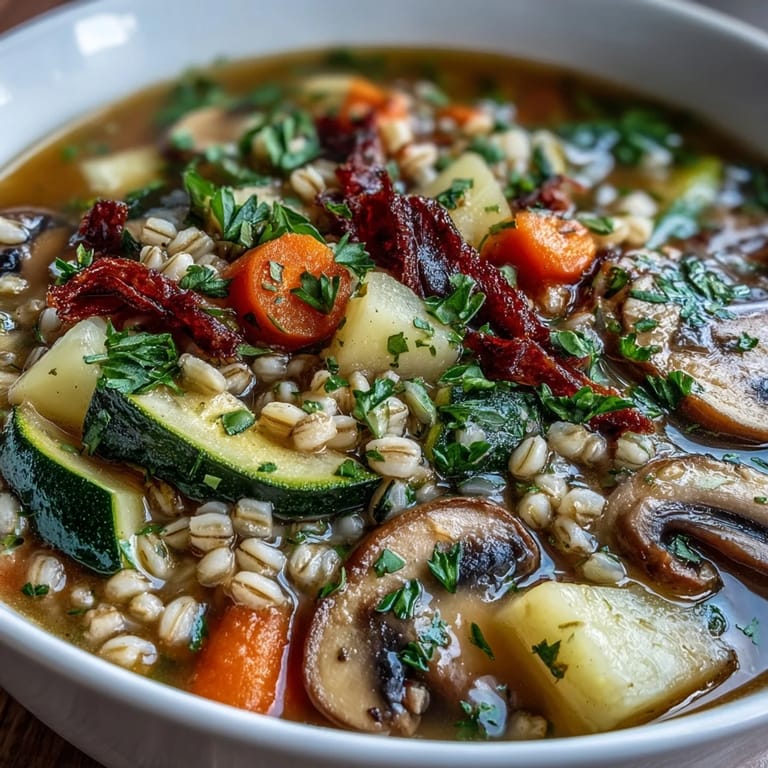
This soup keeps beautifully in the refrigerator for up to five days and freezes even better, developing more flavor as it sits. You can swap vegetables based on what you have—cauliflower works, sweet potatoes work, even kale stirred in at the end brings something new. For protein, a drained can of white beans or lentils transforms it into something that stands even more firmly as a complete meal, and if you need it gluten-free, brown rice or quinoa replace the barley with slightly adjusted cooking times.
- Always taste before freezing so you can adjust salt now rather than after thawing.
- Frozen soup thaws beautifully on the stovetop over low heat, stirring occasionally so nothing sticks.
- Fresh herbs added at the very end—parsley, dill, or chives—revive the flavors after freezing.
 Save
Save This soup is patient and kind, asking only that you show up with a pot, some vegetables, and the willingness to let time do the work. That's all it takes to create something that feels like home.
Kitchen Tips & Answers
- → What grains work best in this vegetable soup?
Pearl barley is traditional for its hearty texture, but brown rice or quinoa offer gluten-free alternatives with similar wholesomeness.
- → How do mushrooms enhance the flavor?
Mushrooms release moisture and develop umami richness when sautéed, deepening the savory profile of the vegetable broth base.
- → Can I add protein to this dish?
Yes, incorporating drained white beans during cooking adds a plant-based protein boost without altering the rustic taste.
- → What herbs complement the vegetables in this soup?
Dried thyme, oregano, and bay leaf offer aromatic warmth and a subtle earthiness that lifts the medley of vegetables and grains.
- → How should I adjust cooking for gluten-free versions?
Substitute barley with grains like quinoa or brown rice and adjust simmering time to ensure the grains cook through while maintaining texture.
- → What garnishes best enhance the finished dish?
Fresh chopped parsley adds a bright, herbaceous contrast that complements the soup’s earthy vegetables and grains.