 Save
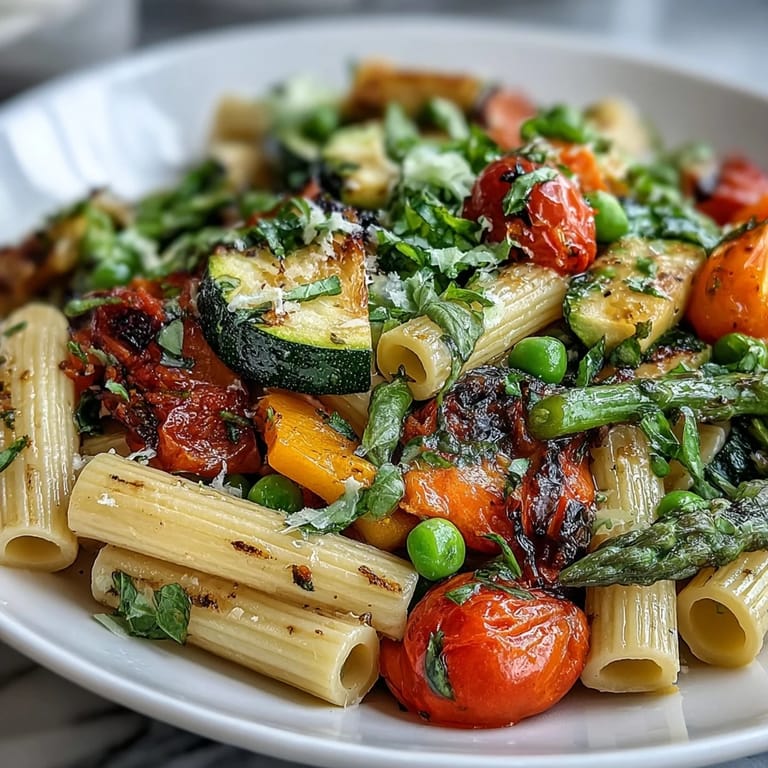
Save The spring morning light streamed through my kitchen window the first time I brought together this pasta primavera. I remember hearing the gentle hum from the street below as I chopped basil, the scent almost as cheerful as the sun itself. The choice of vegetables felt playful—whatever looked best piled up at the market, nothing too fussy. Mixing the lemon zest into the sauce always gave my fingers a fresh zing. Cooking it with a friend sparked lively conversation as we debated how much Parmesan was too much (never enough).
I once made this for my sister after she moved into her tiny apartment—her kitchen barely had room for us both, but we managed to squeeze in and laugh as slices of zucchini escaped off the cutting board. We ate it cross-legged on the balcony, letting the breeze cool the pasta and giggling about how fresh vegetables can turn a simple meal into a mini celebration.
Ingredients
- Pasta: Penne or farfalle hold the sauce and veggies just right, and I’ve found that al dente makes all the difference for texture.
- Zucchini: Slicing into half-moons helps them cook evenly; use the freshest you can find for a subtle sweetness.
- Yellow Squash: Adds creaminess and color, and I always pat it dry to keep the sauce from getting watery.
- Asparagus: Trimmed to tenderness, its grassy flavor is a quintessential sign of spring.
- Cherry Tomatoes: Halved for bursts of juiciness, they soften beautifully but don’t break apart.
- Red Bell Pepper: Thin slices sauté fast and bring a playful sweetness.
- Peas: Fresh are lovely—but frozen peas work in a pinch and keep their pop if not overdone.
- Garlic: Mincing it lets it infuse the olive oil with aroma right at the start.
- Shallot: Finely chopped, shallot offers a gentle backbone to the veggie medley.
- Basil & Parsley: Chop just before stirring in—the fragrance will fill the kitchen as you finish.
- Lemon Zest & Juice: Zest lifts everything, juice brightens the sauce; use a microplane for ease.
- Extra-Virgin Olive Oil: Drizzle the last tablespoon after tossing for a glossy finish.
- Parmesan Cheese: Freshly grated melts in, making the whole dish silky and savory.
- Salt & Pepper: Taste as you go—spring veggies need only a pinch for balance.
- Red Pepper Flakes: Adds a gentle tickle, best sprinkled just as you serve.
Tired of Takeout? 🥡
Get 10 meals you can make faster than delivery arrives. Seriously.
One email. No spam. Unsubscribe anytime.
Instructions
- Boil and Prep Pasta:
- Fill your biggest pot with water, salt generously, and tumble in pasta until al dente. Save half a cup of pasta water before draining; it’s liquid gold for a silky sauce.
- Sauté Aromatics:
- Heat olive oil in a wide skillet; add shallots and garlic, letting their fragrance bloom for a minute. You’ll feel the aroma drift through the kitchen, signaling it’s time for veggies.
- Cook Spring Vegetables:
- Toss in zucchini, yellow squash, asparagus, and bell pepper, stirring until they soften just at the edges. They should stay vibrant and a bit crisp.
- Add Tomatoes and Peas:
- Scatter in cherry tomatoes and peas, and let them warm and release juices gently. The tomatoes will look shiny and peas bright.
- Combine Pasta and Veggies:
- Fold cooked pasta into the skillet, using a wooden spoon to gently mix, as if hugging the veggies with noodles. Make sure everything gets coated evenly.
- Build the Sauce:
- Pour in reserved pasta water, lemon zest, juice, basil, and parsley, then drizzle remaining olive oil. Season with salt, pepper, and red pepper flakes as you stir until glossy and fragrant.
- Finish and Serve:
- Take off the heat, sprinkle in Parmesan, and toss until barely melted. Serve straight away with a little extra cheese and herbs for a burst of color.
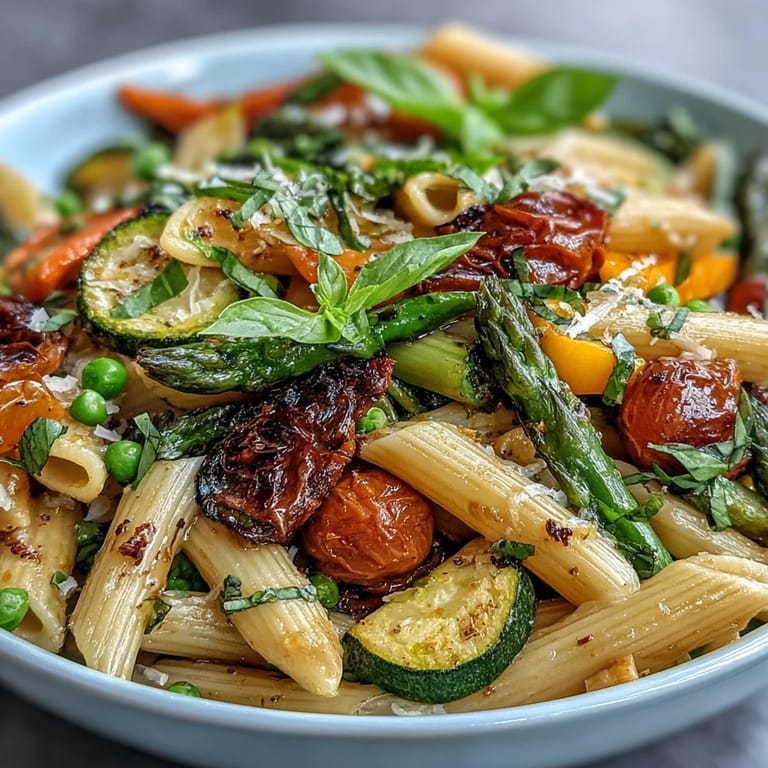 Save
Save Making this for friends became my sneaky way of introducing them to spring vegetables they’d never tried before; most memorable was seeing someone taste asparagus for the first time and grinning with surprise at how good it was. It’s the dish that turned routine dinners into little adventures for new flavors.
How to Make the Veggies Pop
I found that starting with the aromatics and adding veggies in stages keeps their colors vivid and textures pleasingly crisp. The kitchen fills with layers of enticing smells, and you feel a gentle mastery growing as you sauté.
Choosing Pasta Shapes
Different shapes grab sauce and veggies in their own unique ways—I favor farfalle for its nooks, but penne is easy for scooping. There’s always friendly debate over which shape brings the best mouthful, so feel free to experiment based on mood or what’s in the pantry.
Serving and Garnishes
A quick dusting of extra Parmesan and scattered basil leaves gives a restaurant-worthy finish, even on a casual Tuesday night. It’s fun to watch folks reach for second helpings when presented with a plate so fresh and inviting.
- If you want to add protein, toss in white beans or roasted chickpeas.
- Reserve a handful of basil leaves to sprinkle just before serving.
- Don’t forget a squeeze of lemon at the end—it wakes everything up.
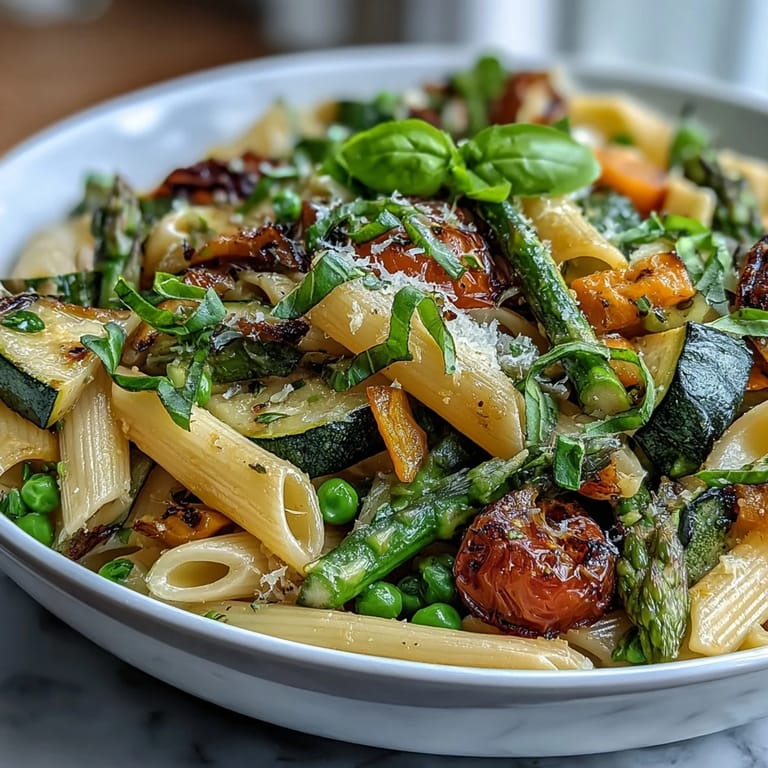 Save
Save Sharing this pasta primavera is like opening the kitchen doors to spring—every forkful is a celebration of green, gold, and good company. It’s a recipe that brings new flavors and easy smiles.
Kitchen Tips & Answers
- → What vegetables work best for this spring pasta?
Zucchini, yellow squash, asparagus, cherry tomatoes, bell pepper, and peas offer great texture and color. Other spring produce like snap peas or spinach can be added for variation.
- → How can I make this dish vegan?
Simply omit the Parmesan cheese or substitute with your favorite plant-based cheese alternative. The pasta will remain flavorful thanks to the fresh herbs and lemon zest.
- → What pasta types are recommended?
Penne and farfalle are ideal for holding the sauce and mixing with veggies, but other short pasta shapes like fusilli or rotini also work well.
- → How should leftovers be stored?
Store in an airtight container in the fridge for up to three days. Reheat gently with a splash of olive oil or water to restore texture.
- → Can I add protein to this spring pasta?
Yes, grilled chicken, shrimp, or tofu are excellent choices. Toss them in just before serving for a heartier meal.
- → What wines pair well with this dish?
Crisp white wines such as Pinot Grigio or Sauvignon Blanc complement the fresh flavors of the pasta and vegetables.