 Save
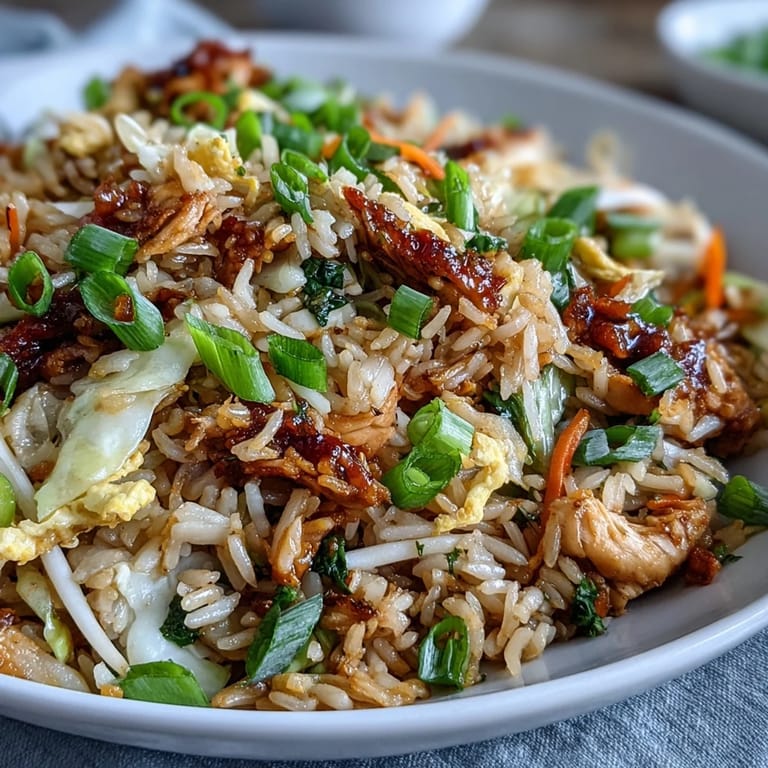
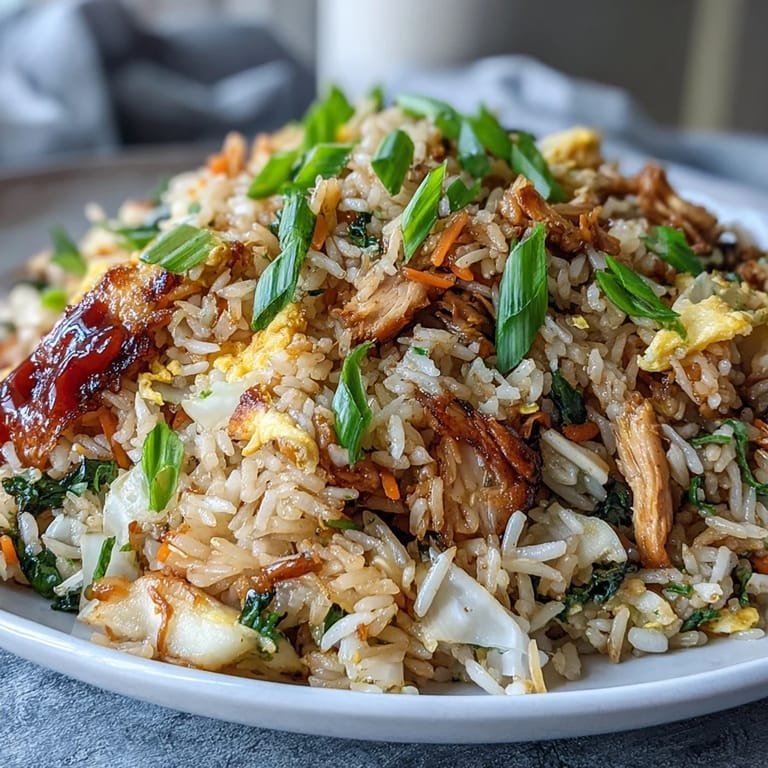
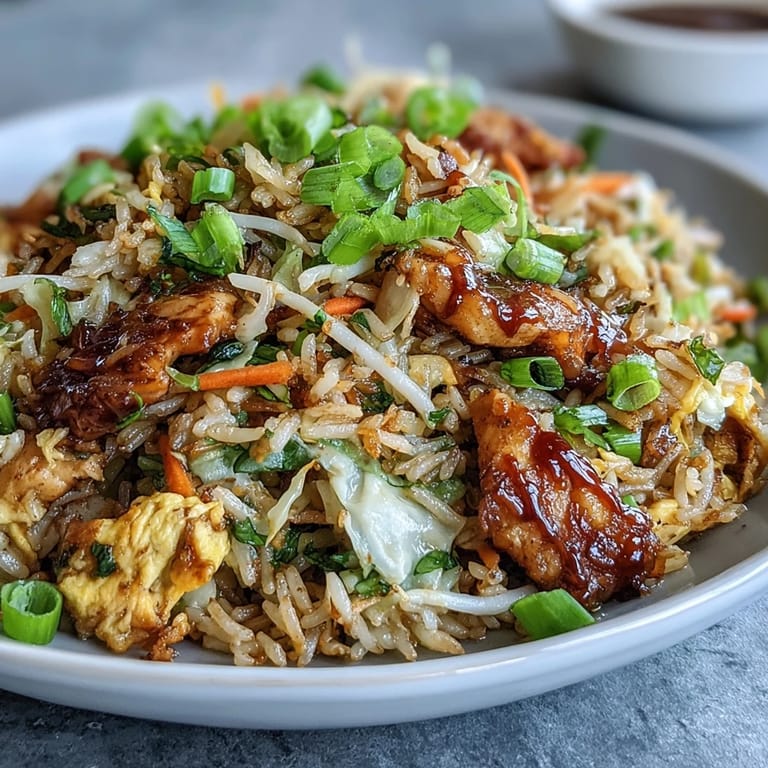
Save My kitchen smelled like a takeout restaurant the first time I made this, except better—because it was mine. I'd been craving egg rolls but wanted something I could throw together on a Tuesday night without the rolling and frying. So I threw the filling concept straight into fried rice with some shredded chicken, and suddenly I had this dish that tasted like a clever shortcut but felt intentional. The crispy cabbage, the eggs that scramble into golden ribbons, the way the soy sauce coats everything—it all came together in under 40 minutes.
I made this for my sister one evening when she stopped by unexpectedly hungry, and watching her eat it straight from the pan while standing at my counter made me realize how satisfying simple food can be. She asked for the recipe before she'd finished her plate, which is the highest compliment a cook can get.
Ingredients
- Cooked chicken breast, shredded or diced (2 cups): Use a rotisserie chicken if you're short on time, or poach and shred your own—either way, room temperature chicken integrates better than cold.
- Large eggs (2): Beat them gently with a fork and have them ready before you start cooking; scrambled eggs go from creamy to rubbery in seconds.
- Green cabbage, thinly sliced (2 cups): The thinner you slice it, the faster it wilts and the more it picks up flavor from the aromatics.
- Carrots, julienned or shredded (1 cup): Cut them roughly the same size as your cabbage so everything cooks evenly and looks intentional on the plate.
- Green onions, sliced (1/2 cup, plus extra for garnish): Split them into white and green parts—the white goes in early for depth, the green at the end for a fresh pop.
- Bean sprouts, optional (1/2 cup): These add a delicate crunch that feels authentic to the egg roll vibe; skip them if you can't find fresh ones.
- Cooked jasmine or long-grain rice, chilled (3 cups): Cold rice is crucial—warm rice clumps and turns mushy, which defeats the entire purpose of fried rice.
- Garlic, minced (3 cloves): Mince it fresh right before cooking so you catch those first 30 seconds of fragrance before it burns.
- Fresh ginger, minced (1 tablespoon): This is what separates homemade from sad, so don't skip it or use ground ginger as a stand-in.
- Low-sodium soy sauce (3 tablespoons): Low-sodium lets you taste the other flavors instead of just salt; adjust to your preference at the end.
- Oyster sauce, optional (1 tablespoon): It adds a subtle sweetness and depth that makes people wonder what your secret ingredient is.
- Toasted sesame oil (1 teaspoon): A little goes a long way—this is the finish line, not the foundation.
- White pepper (1/4 teaspoon): White pepper is milder and less aggressive than black, which is why it works better in lighter dishes like this.
- Vegetable oil (2 tablespoons): Use something neutral that can handle high heat without smoking up your kitchen.
Tired of Takeout? 🥡
Get 10 meals you can make faster than delivery arrives. Seriously.
One email. No spam. Unsubscribe anytime.
Instructions
- Get your mise en place ready:
- Slice and dice everything before you turn on the heat—fried rice moves fast, and there's no time to chop while things are cooking. Have your beaten eggs, cold rice, and sauces lined up where you can reach them without thinking.
- Bloom the aromatics:
- Heat 1 tablespoon oil in your wok or large skillet over medium-high heat until it shimmers, then add the garlic and ginger. That 30-second window when they start to smell incredible but haven't browned yet is when you move forward.
- Soften the vegetables:
- Toss in the cabbage and carrots and keep your spatula moving for 3 to 4 minutes—you want them to lose their raw edge but still have a little resistance when you bite into them. This is where the texture comes from.
- Scramble the eggs:
- Push the vegetables to the side, add the remaining oil, and pour in your beaten eggs. Let them sit for just a few seconds to set, then scramble them into soft, golden curds before mixing everything together.
- Bring it all together:
- Add the cooked chicken and bean sprouts, stir for a minute to warm them through, then add your cold rice, breaking up any clumps with your spatula as you go. This takes about 2 to 3 minutes.
- Season and finish:
- Drizzle in the soy sauce, oyster sauce if you're using it, and sesame oil, then grind in the white pepper. Toss everything until every grain of rice has picked up color and flavor, then taste and adjust—some people want more soy, some want more sesame.
- Garnish and serve:
- Toss in most of your reserved green onions, plate it up hot, and scatter the last bit of green onion on top for a little freshness and color.
 Save
Save 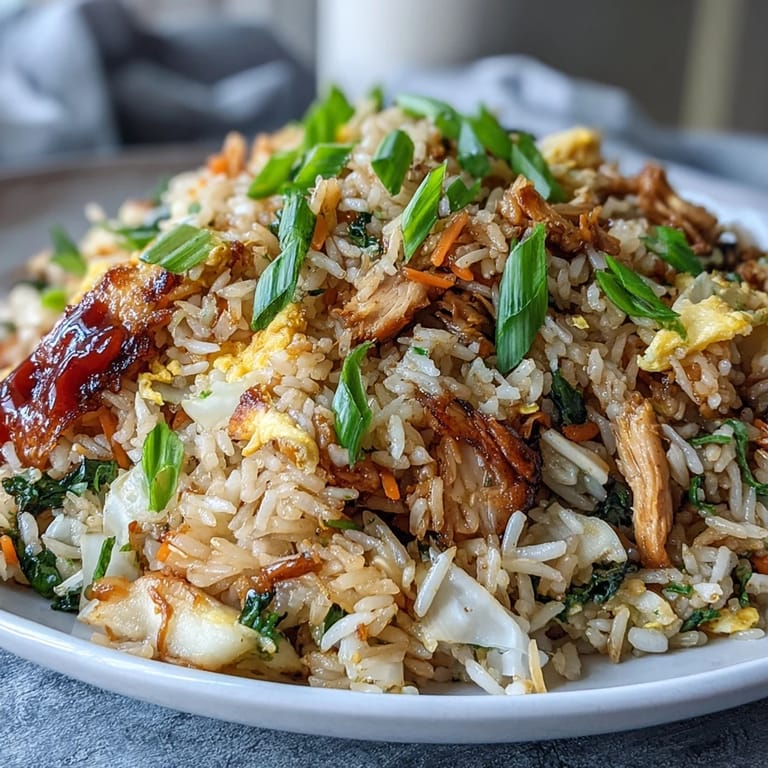 Save
Save There's something about fried rice that feels like magic the first time you nail it—rice that was destined for the bin becomes something better than what came before. This dish taught me that cooking isn't always about complicated techniques or fancy ingredients; sometimes it's just about respect for what you have and the confidence to move fast.
Why This Tastes Like Takeout (But Better)
The egg roll filling typically has cabbage, carrots, a bit of protein, and seasoning that leans heavily on soy and ginger. By mixing those elements straight into fried rice, you're getting that same savory, slightly sweet flavor profile without needing a deep fryer or the time to roll anything. The scrambled eggs add richness and texture, while the cold rice stays individually coated and slightly crispy instead of mushy. This is why people always ask for seconds—it's familiar enough to feel comforting but interesting enough to feel intentional.
Make It Your Own
The beauty of fried rice is that it's infinitely flexible. I've made this with shrimp instead of chicken on nights when I wanted something lighter, and it was equally good. Some people add a splash of soy sauce right to their beaten eggs before scrambling them, which is a trick that creates even more umami. The bean sprouts are optional, but if you can find them fresh, they add a delicate crunch that makes the dish feel more refined without adding much effort.
Storage and Reheating
This tastes best eaten right away while the rice still has some texture, but it reheats beautifully and actually makes for excellent next-day lunch. Store it in an airtight container in the fridge for up to three days, and when you're ready to eat it, reheat it gently in a wok or skillet over medium heat with a splash of water to loosen it up. Avoid the microwave if you can, since it tends to dry everything out and make the rice tough.
- Fresh green onions are your friend on reheating day—a handful of them tossed in at the end brings the dish back to life.
- If you're meal prepping, chop your garnishes fresh the day you eat, not the day you store, so they don't get soggy.
- This freezes reasonably well for up to a month, though the vegetables get softer on thaw, which is fine if you're eating it as-is rather than trying to impress someone.
 Save
Save 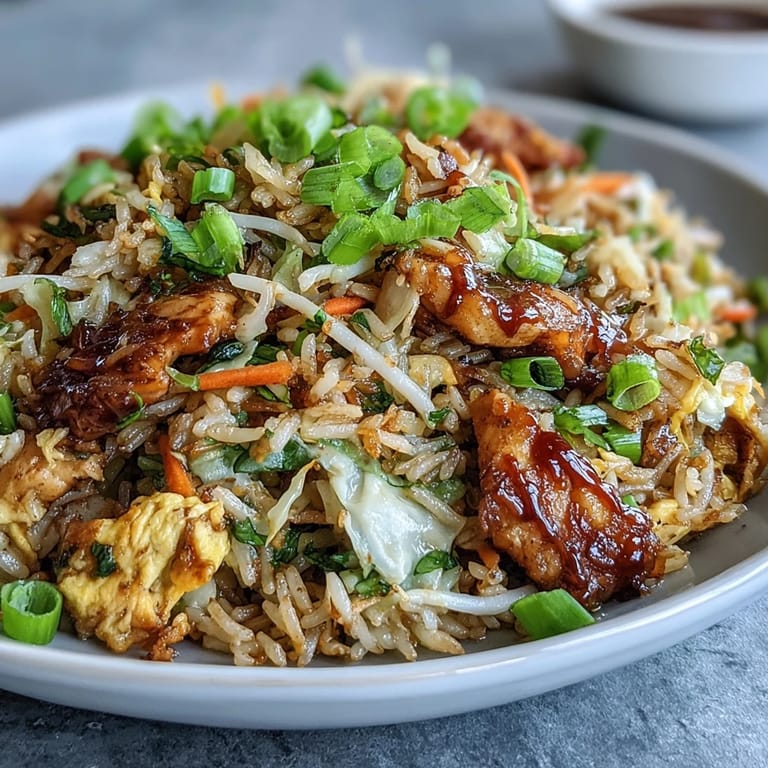 Save
Save This dish has become my go-to when I want something that feels like more than weeknight food without requiring a trip to town or hours in the kitchen. I hope it becomes that for you too.
Kitchen Tips & Answers
- → Can I use leftover rice for this dish?
Yes, leftover rice works perfectly. In fact, day-old chilled rice is ideal because it's drier and less sticky, resulting in better texture when stir-fried. Freshly cooked rice can become mushy.
- → What vegetables can I add or substitute?
Beyond cabbage and carrots, try adding snap peas, diced bell peppers, water chestnuts for crunch, or sliced mushrooms. Bok choy and broccoli also work well. Adjust cooking times accordingly.
- → How can I make this vegetarian?
Replace the chicken with firm tofu cubes, edamame, or additional vegetables. Use vegetarian oyster sauce or mushrooms to maintain that savory depth. Tamari works as a gluten-free soy sauce alternative.
- → What protein alternatives work well?
Pork, shrimp, beef, or diced turkey all substitute beautifully. For a lighter version, use more eggs or incorporate cashews and peanuts for plant-based protein with added crunch.
- → Why does the rice need to be chilled?
Chilled rice grains separate easily and don't clump together during high-heat stir-frying. This ensures each grain gets coated in sauce and maintains that signature fried rice texture.
- → Can I meal prep this dish?
Absolutely. Cook everything and store in airtight containers for up to 4 days. Reheat in a skillet over medium heat with a splash of water or oil to refresh the texture. The flavors often improve overnight.