 Save
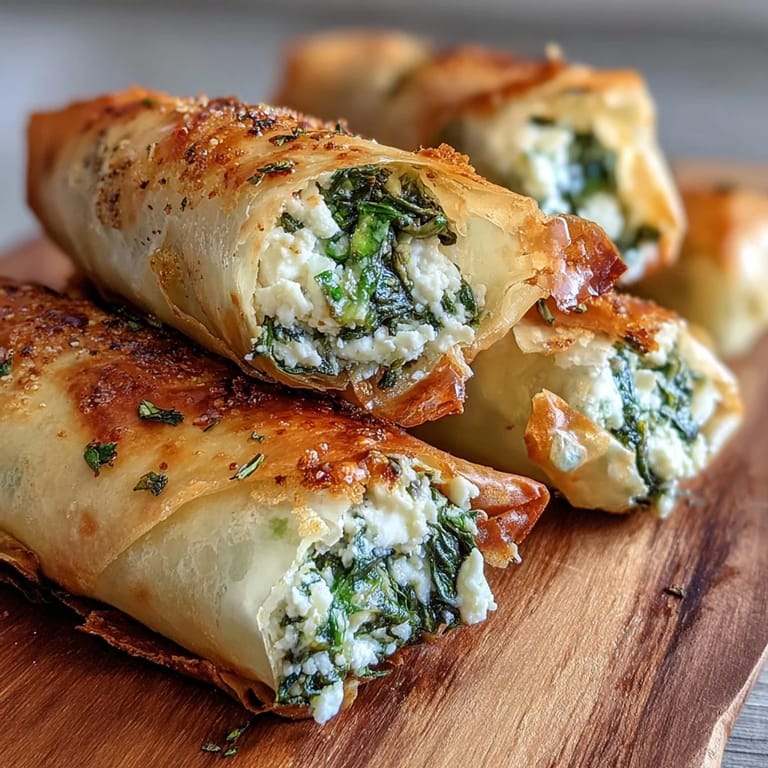
Save My neighbor Maria handed me a still-warm spanakopita triangle through her kitchen window one afternoon, and I bit into it expecting the usual phyllo pastry experience. Instead, the filling was loose, almost creamy, bound together with just enough egg and cheese to hold its shape. She laughed when I asked for the recipe, saying she'd simplified it into spring rolls for her daughter's lunch box. That's when I realized the magic wasn't in the layers or technique—it was in getting that spinach-feta balance just right, then wrapping it in something that could survive being tossed into a bag.
Last spring, I made a batch for a picnic and watched my friend bite into one cold from the container, expecting disappointment. Her eyes went wide—the cheese had set, the herbs were singing, and the wrapper still had enough snap to it that it felt intentional rather than stale. I've made them dozens of times since, always with that memory in mind: these aren't meant to be perfect restaurant food, they're meant to taste like someone who actually cares made them for you.
Ingredients
- Fresh spinach (300g) or frozen (200g thawed): Fresh is brilliant if you can find it, but frozen squeezed dry works just as well and honestly saves time on prep—the key is getting all that water out or your filling turns weeping and sad.
- Feta cheese (150g), crumbled: This is the backbone, salty and tangy; don't skimp or use mild feta or you'll lose all the personality the dish is built on.
- Ricotta cheese (100g): It softens the feta slightly and adds body without heaviness, making the filling creamy enough to hold together but not dense.
- Spring onions (2), finely chopped: The gentler cousin of regular onions, they give brightness without that harsh bite that would overpower the delicate herbs.
- Fresh dill (2 tbsp), chopped: This is non-negotiable for that Mediterranean whisper; dried dill tastes like sadness in comparison, so don't swap it out lightly.
- Fresh parsley (1 tbsp), chopped: It rounds out the herb profile and adds a fresh, almost peppery finish that keeps everything from tasting one-note.
- Large egg (1), lightly beaten: Your binding agent, the thing that holds the filling together without needing cream or mayo.
- Ground nutmeg (1/4 tsp): Just a whisper—this is the secret that makes people ask what they're tasting without being able to put their finger on it.
- Spring roll wrappers (12): Thin, delicate, and prone to tearing if you're rough with them; keep them covered while you work so they don't dry out and crack.
- Vegetable oil for frying: Keep it neutral so the flavors of the filling shine through, and make sure you have enough to maintain the temperature throughout frying.
Tired of Takeout? 🥡
Get 10 meals you can make faster than delivery arrives. Seriously.
One email. No spam. Unsubscribe anytime.
Instructions
- Wilt the spinach gently:
- Heat a large skillet over medium heat and add the spinach, letting it soften and release its moisture—you'll hear it sizzling and smell that earthy, mineral-rich aroma. If using frozen, make sure it's thawed and then squeezed dry in a clean kitchen towel, almost wringing it out like you mean it, then transfer to a bowl to cool completely before chopping coarsely.
- Build the filling base:
- Once the spinach is cool, combine it in a large bowl with the feta, ricotta, spring onions, dill, parsley, beaten egg, nutmeg, pepper, and salt, stirring until everything is evenly distributed and the mixture holds together. You want to see the herbs throughout, not clumpy or separated—this is where the flavor lives.
- Make your sealing paste:
- Whisk together the flour and water in a small bowl until you get a smooth paste with no lumps; this simple mixture will seal the rolls so they don't unravel during frying. Set it aside within arm's reach of where you'll be wrapping.
- Wrap with intention:
- Place a wrapper with one corner pointing toward you, add about 2 tablespoons of filling near the bottom corner (don't overstuff or it will burst), then fold that bottom corner over the filling and fold in the sides tightly before rolling upward. Brush the final exposed corner with the flour paste and press gently so it holds—you're creating a seal, not drowning it.
- Fry until golden:
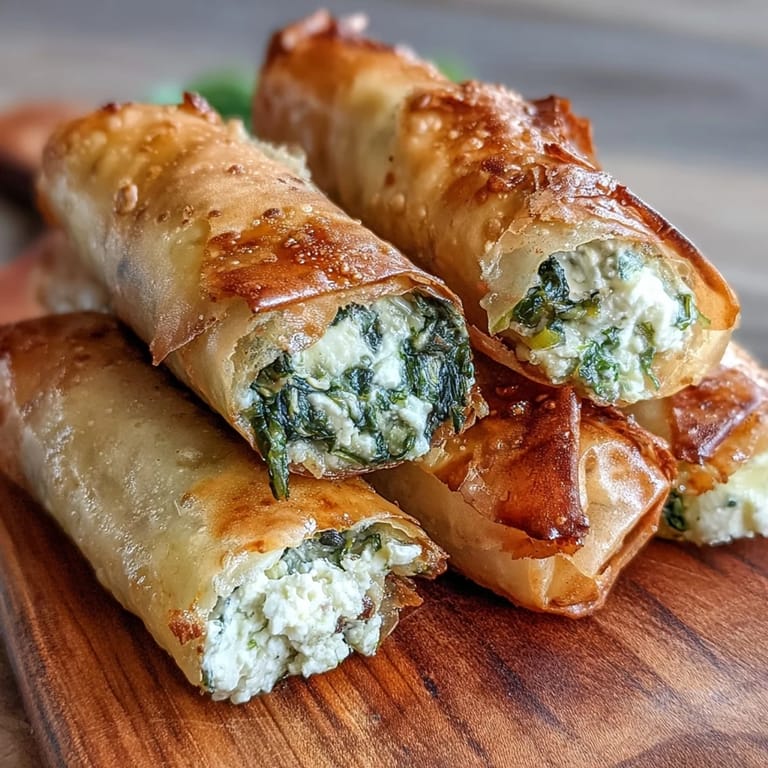
- Heat 4 to 5 centimeters of oil to 175°C (350°F) in a deep skillet, then carefully lower the rolls in (they should sizzle immediately but not violently). Fry for 2 to 3 minutes per side, turning once, until they're deep golden brown and crispy, then lift them out with a slotted spoon and drain on paper towels while they're still hot.
 Save
Save I once brought these to my partner's family dinner without warning, and his mother, who makes everything from scratch and has the standards to prove it, took one bite and asked for the recipe before even saying hello. That's the moment I stopped thinking of them as 'that thing I make sometimes' and started believing they belonged on an actual table.
The Baked Alternative
If you want to skip the oil entirely but keep the crispy finish, brush the wrapped rolls lightly with oil on all sides and arrange them on a parchment-lined baking sheet, then slide them into a 200°C (400°F) oven for 16 to 18 minutes, turning halfway through. They won't be quite as shatteringly crisp as the fried version, but they'll be golden and crunchy enough that you won't feel like you've sacrificed anything, and your kitchen won't smell like deep fryer for three days.
Flavor Variations Worth Trying
Once you've made these a few times and the technique is muscle memory, start playing with the herbs—fresh mint instead of dill brings a sweeter, almost dessert-like edge, while oregano leans into a more robust, almost Greek island vibe. I've even added a pinch of sumac to the filling on a whim, and it brought this bright, lemony note that didn't need any dipping sauce at all.
Serving and Storing
Serve these hot straight from the fryer or oven, when the wrapper still has that snap and the inside is warm enough that the cheese is almost melting. A dollop of tzatziki for cooling things down, a side of marinara for something richer, or a spicy harissa for heat—they're flexible enough to match whatever mood you're in.
- If you have leftovers (which is rare), store them in an airtight container in the fridge for up to three days and reheat in a 180°C (350°F) oven for about 8 minutes to bring back the crispiness.
- You can also make the filling a day ahead and store it covered in the fridge, then wrap and fry the rolls fresh whenever you need them.
- If you're meal prepping, fry them fully and freeze in a single layer, then reheat from frozen in the oven for about 10 minutes.
 Save
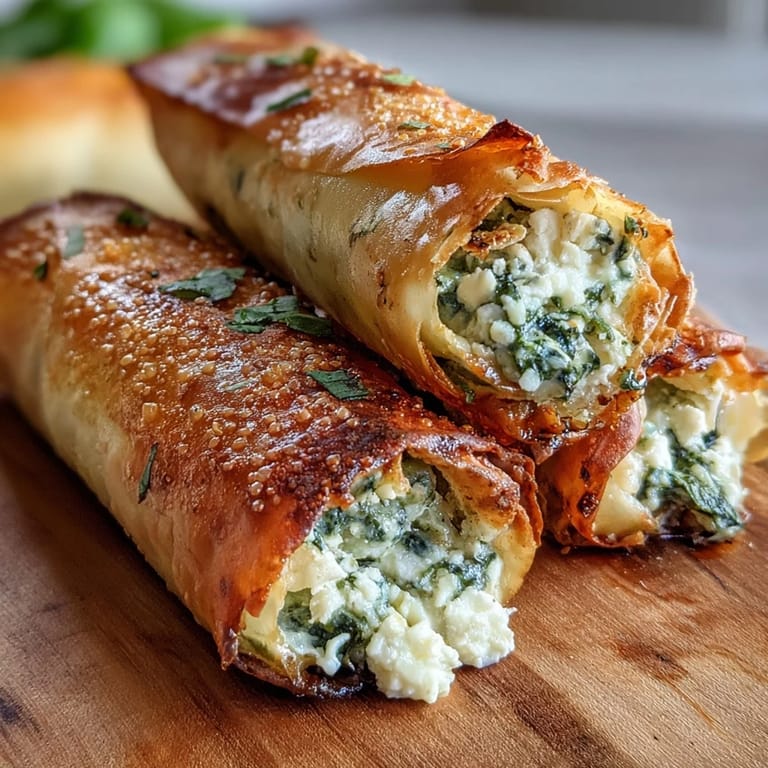
Save These rolls represent something simple and honest about cooking for people you care about—they're not intimidating, they don't require obscure ingredients, and they taste like you put thought into them without tasting like you spent all afternoon. That's the whole point.
Kitchen Tips & Answers
- → Can I bake these instead of frying?
Yes, you can bake them at 200°C (400°F) for 16–18 minutes, turning halfway through, until they're golden and crisp. This creates a lighter version with less oil.
- → Can I use frozen spinach?
Absolutely. Use 200g of frozen spinach, ensuring it's fully thawed and thoroughly squeezed dry to remove excess moisture before mixing with the other ingredients.
- → What can I substitute for feta cheese?
While feta provides authentic Mediterranean flavor, you can use goat cheese or a firm white cheese. Keep in mind this will alter the traditional taste profile.
- → How do I prevent the rolls from opening during frying?
Make sure to seal the edges tightly with the flour paste and roll them snugly. Ensure the oil is at the correct temperature (175°C/350°F) before frying to set the wrapper quickly.
- → Can I prepare these ahead of time?
Yes, you can assemble the rolls and refrigerate them for up to 24 hours before frying. You can also freeze uncooked rolls for up to 3 months and fry directly from frozen, adding a few extra minutes to the cooking time.
- → What herbs can I use instead of dill?
Fresh mint or oregano work beautifully as substitutes and will give the filling a different but equally delicious Mediterranean flavor. You can also combine multiple herbs to suit your taste.