 Save
Save There's something almost magical about the way a kitchen fills with warmth when tomatoes hit a hot oven. I discovered this soup on a September afternoon when my farmer's market haul was overflowing with tomatoes at peak ripeness, and I was determined not to let a single one go to waste. The roasting transforms them entirely—what starts as bright and tart becomes deep, almost honeyed, with edges that catch the heat just right. It's the kind of dish that tastes like it took hours, but really just demands patience and good ingredients.
I made this for my partner on a cold evening when they came home exhausted, and watching their face soften as they tasted it reminded me why home cooking matters. They scraped the bowl clean and asked if I could make it again the following week. Now it's become our go-to when we need something nourishing but not heavy, elegant but unpretentious.
Ingredients
- Ripe tomatoes (1.5 kg / 3.3 lbs), halved: Use the best tomatoes you can find—this is where quality truly shines since tomatoes are the star, not a supporting player.
- Yellow onion (1 large), quartered: The sweetness develops beautifully when roasted, balancing any acidity the tomatoes might carry.
- Garlic cloves (6), peeled: Roasting mellows garlic's sharpness into something gentle and almost creamy.
- Extra-virgin olive oil (2 tbsp): Don't skip quality here; it coats the vegetables and becomes part of the soup's soul.
- Kosher salt (1 tsp) and black pepper (1/2 tsp): Applied before roasting, these help draw out moisture and deepen flavor.
- Vegetable broth (2 cups / 480 ml), low sodium: Low sodium lets the roasted vegetables shine rather than getting buried under salt.
- Fresh basil leaves (1/2 cup / 15 g), packed: Added at the end to preserve its bright, peppery notes that heat would destroy.
- Unsalted butter (1 tbsp, optional): A small amount adds silkiness and rounds out the flavors beautifully without being obvious.
- Sugar (1 tsp, optional): Just a pinch balances acidity if your tomatoes lean tart—taste first, add only if needed.
- Heavy cream or crème fraîche (1/4 cup / 60 ml, optional): A swirl adds luxury and cools the heat slightly for contrast.
- Fresh basil leaves and croutons for garnish: These final touches add texture and a reminder that the soup is alive and just made.
Tired of Takeout? 🥡
Get 10 meals you can make faster than delivery arrives. Seriously.
One email. No spam. Unsubscribe anytime.
Instructions
- Heat your oven and prep:
- Preheat to 220°C (425°F) and line a baking sheet with parchment paper so cleanup later is effortless. Everything tastes better when you're not dreading the dishwashing.
- Arrange and season the vegetables:
- Place halved tomatoes cut-side down, onion quarters, and garlic cloves on the sheet. Drizzle generously with olive oil and season with salt and pepper, tossing until everything is coated evenly—this is where the flavor journey truly begins.
- Roast until caramelized:
- Let them roast for 35 to 40 minutes, until the tomato edges have darkened and the onions collapse into tenderness. Your kitchen will smell almost impossibly good.
- Combine in the pot:
- Scrape everything into a large pot, including all the precious juices clinging to the pan. Add vegetable broth and bring to a gentle simmer over medium heat.
- Add basil and seasonings:
- Stir in fresh basil, butter if using, and a pinch of sugar to taste. Let it simmer for 5 minutes so the flavors get acquainted.
- Blend until silky:
- Use an immersion blender to puree directly in the pot, or work in batches with a countertop blender before returning to heat. The immersion blender is faster and means fewer dishes.
- Taste and adjust:
- This is where you become the cook rather than following instructions. Add more salt, a crack of pepper, or a tiny splash of balsamic vinegar if it needs deepening.
- Serve with intention:
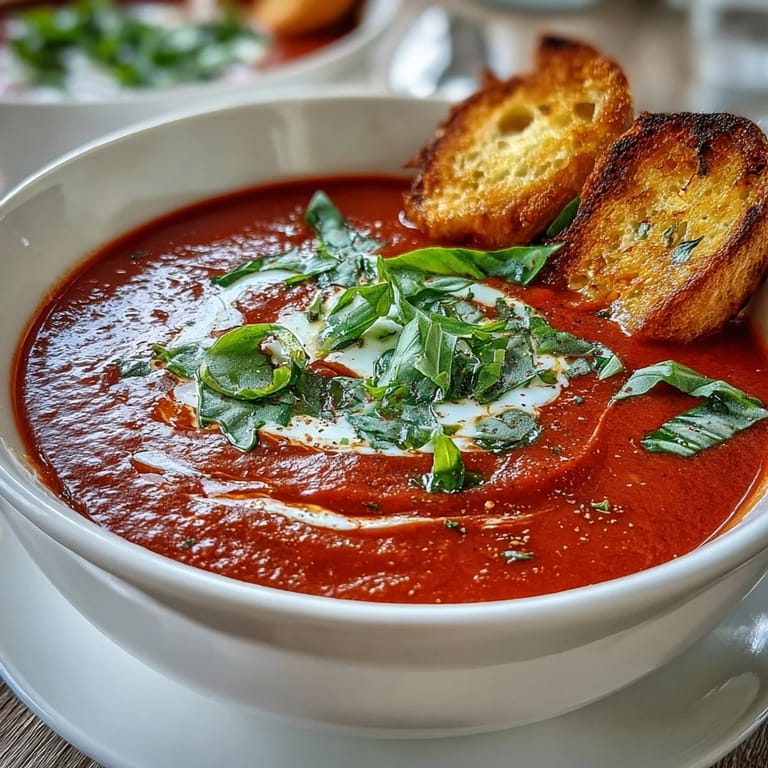
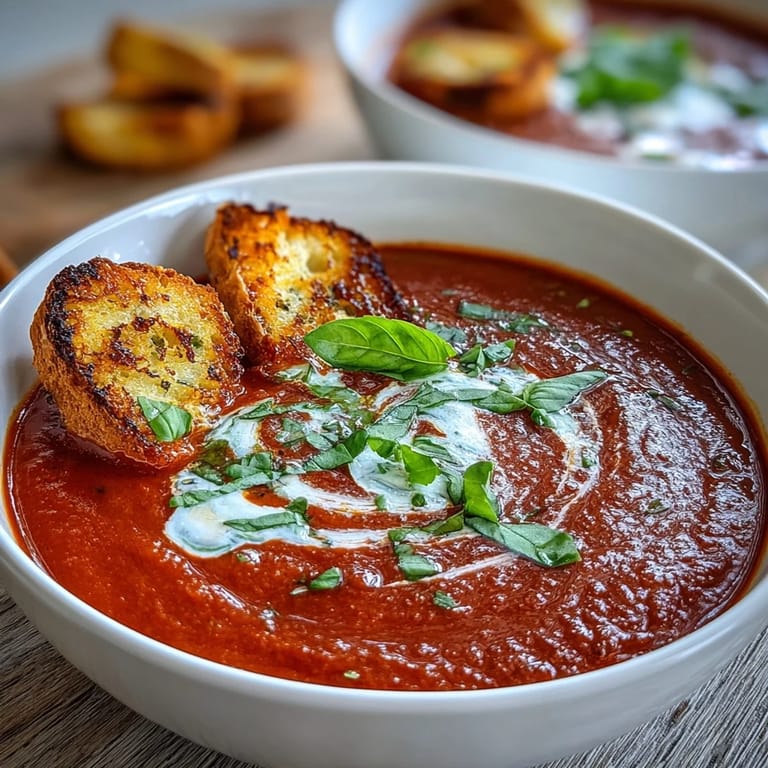
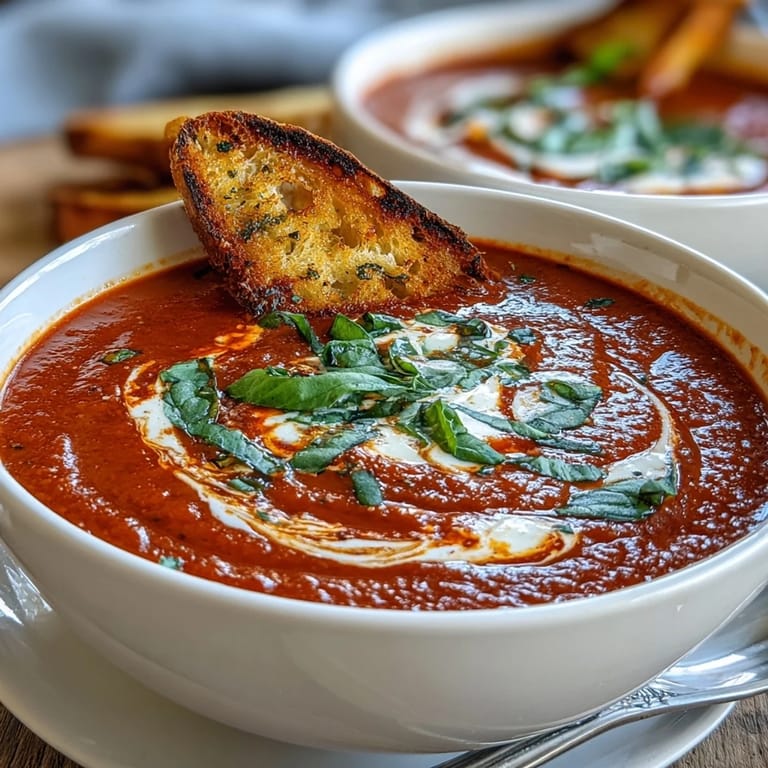
- Ladle into warm bowls, drizzle with cream, and top with fresh basil and croutons if you like. Every garnish should feel purposeful.
 Save
Save There was a moment during that first evening when I ladled the soup into bowls and caught my reflection in the steam rising up—I looked like I knew what I was doing in the kitchen, which was honestly a new feeling. That confidence, borrowed from making something simple taste deliberate and complete, stuck with me long after the soup was finished.
When to Make This Soup
Peak tomato season runs from late summer through early fall, which is when this soup truly sings. But honestly, I've made it in winter with decent hothouse tomatoes and canned San Marzano varieties, and it still delivers comfort and warmth when you need it most. Choose your moment based on mood rather than calendar—some people make this when they need to impress, others when they simply need to feel held by a bowl of something warm.
Making It Your Own
This soup is more forgiving than it appears, which is why it's become a kitchen workhorse for me. Add a splash of balsamic vinegar for earthiness, a teaspoon of tomato paste for depth, or red pepper flakes if you want heat that builds slowly. Some evenings I've swirled in cream, other nights I've kept it vegan and the results have been equally satisfying each time.
Storage and Serving Secrets
This soup keeps beautifully for three to four days in the refrigerator, and it actually tastes better the next day when flavors have settled and deepened. Freeze it without the cream, adding that swirl when you reheat, which keeps the texture from becoming grainy. It reheats gently on the stovetop over low heat, never a violent boil that breaks it apart.
- Pair it with crusty bread, a simple salad, or grilled cheese if you want lunch that feels like celebration rather than obligation.
- A crisp white wine like Sauvignon Blanc or even a light rosé complements it perfectly without competing for attention.
- Make a double batch and freeze half for those eventual mornings when you need comfort but have no time to cook.
 Save
Save This soup has become the answer to the question I ask myself most evenings: what can I make that feels both simple and complete? It's the kind of recipe that teaches you to trust roasting, trust good ingredients, and trust that sometimes the best meals are the ones where you do very little and let heat and time do the work.
Kitchen Tips & Answers
- → Can I make this soup ahead of time?
Absolutely. This soup actually improves overnight as flavors meld. Store in an airtight container in the refrigerator for up to 4 days. Reheat gently over medium-low heat, stirring occasionally. Add a splash of broth if it thickens too much upon standing.
- → What type of tomatoes work best?
Roma or plum tomatoes are ideal for their lower water content and concentrated flavor. However, any ripe, in-season tomatoes will yield excellent results. Avoid underripe tomatoes as they won't develop the same sweetness during roasting.
- → Can I freeze this soup?
Yes, freeze for up to 3 months in freezer-safe containers. Cool completely before freezing. Thaw overnight in the refrigerator, then reheat slowly. The texture may separate slightly but will come together beautifully when blended again.
- → How do I make it vegan?
Simply omit the optional butter and cream garnish. The soup is naturally rich from the roasted vegetables and olive oil. For extra creaminess without dairy, blend in a handful of soaked cashews or coconut cream.
- → Why roast the vegetables first?
Roasting caramelizes the natural sugars in tomatoes and onions, creating deep, complex flavor that simmering alone cannot achieve. The high-heat oven also concentrates the tomato flavor and removes excess water for a thicker, more luxurious texture.
- → Do I need to peel the tomatoes?
No. The skins will break down during roasting and become undetectable after blending. They also add valuable fiber. However, if you prefer an ultra-smooth texture, peel after roasting when the skins slip off easily.