 Save
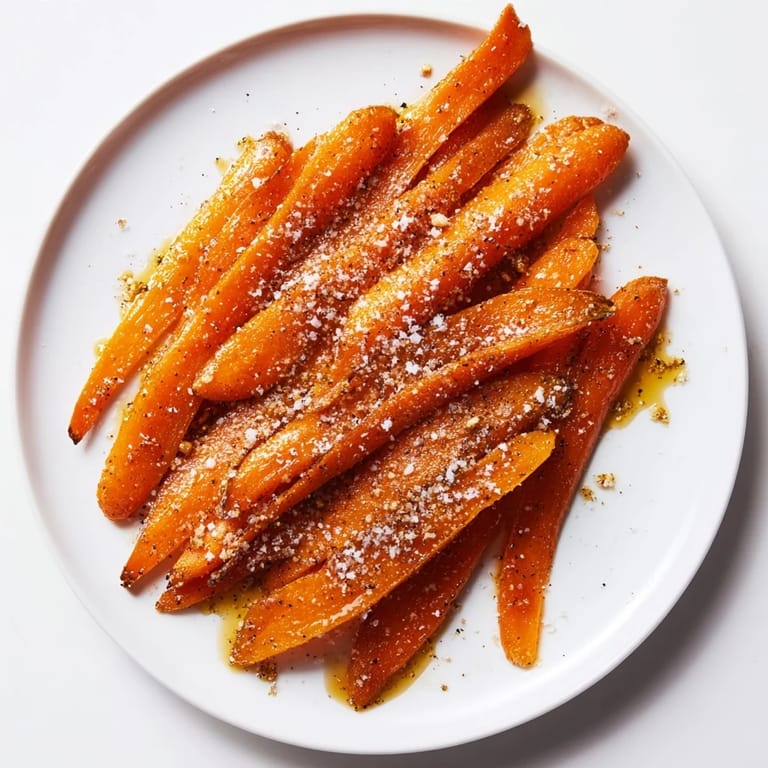
Save There's a moment that happens in every kitchen when you're standing at the sink, rinsing vegetables for dinner, and you notice something you'd overlooked before. That's when I discovered these carrots—those impossibly tender baby ones that somehow taste more alive than their larger cousins. I'd been making the same roasted vegetable sides for years, but something about the way the honey and Parmesan would catch the heat, creating these tiny, golden, crispy edges, made me stop and actually taste what I was eating. It became the kind of side dish people ask for by name.
I made these for a dinner party once when a friend mentioned she was tired of the same sad roasted vegetables everyone brings to potlucks. Watching people grab a second handful straight from the serving platter before they'd even sat down told me everything I needed to know. Even the people who usually push vegetables to the side of their plate were reaching back for more, and I realized it wasn't complicated cooking that impressed people—it was paying attention to the small details, like letting them cool just enough to get truly crispy.
Ingredients
- Baby carrots (500 g / 1 lb): Choose ones that are roughly the same size so they roast evenly; thinner carrots will crisp up faster, while thicker ones stay tender longer.
- Olive oil (2 tbsp): This is your foundation for both flavor and that golden exterior, so don't skip it or substitute with anything neutral that won't add richness.
- Honey (1 tbsp): Provides the caramelization that makes these taste less like a vegetable and more like a treat; it's the secret ingredient no one expects.
- Sea salt (½ tsp) and freshly ground black pepper (¼ tsp): Freshly ground pepper makes a real difference here, adding a subtle warmth that enhances the sweetness.
- Garlic powder (½ tsp, optional): I skip it sometimes, but when I add it, the savory depth brings everything together.
- Freshly grated Parmesan cheese (40 g / ½ cup): The word fresh matters here—pre-grated cheese has anti-caking agents that prevent it from getting truly crispy and golden.
Tired of Takeout? 🥡
Get 10 meals you can make faster than delivery arrives. Seriously.
One email. No spam. Unsubscribe anytime.
Instructions
- Get your oven ready:
- Preheat to 220°C (425°F) and line a large baking sheet with parchment paper. The high heat is what creates those caramelized edges, so don't be tempted to lower the temperature.
- Coat the carrots:
- In a large bowl, toss baby carrots with olive oil, honey, salt, pepper, and garlic powder until everything is evenly distributed. You want every carrot glistening, not some dry spots hiding at the bottom.
- First roast:
- Spread carrots in a single layer on the prepared baking sheet—don't crowd them or they'll steam instead of roast. After 15 minutes, stir them around so they brown evenly on all sides.
- Add the Parmesan:
- Remove from the oven and sprinkle grated Parmesan evenly over the hot carrots, then toss gently to coat. The residual heat will start to toast the cheese immediately.
- Final roast:
- Return to the oven for another 8–10 minutes, watching closely so the Parmesan turns golden and crispy without burning. You'll see the edges turn amber, and that's exactly what you want.
- Cool slightly:
- Let them sit for just a minute or two before serving so the Parmesan sets fully crispy. Patience here pays off in texture.
 Save
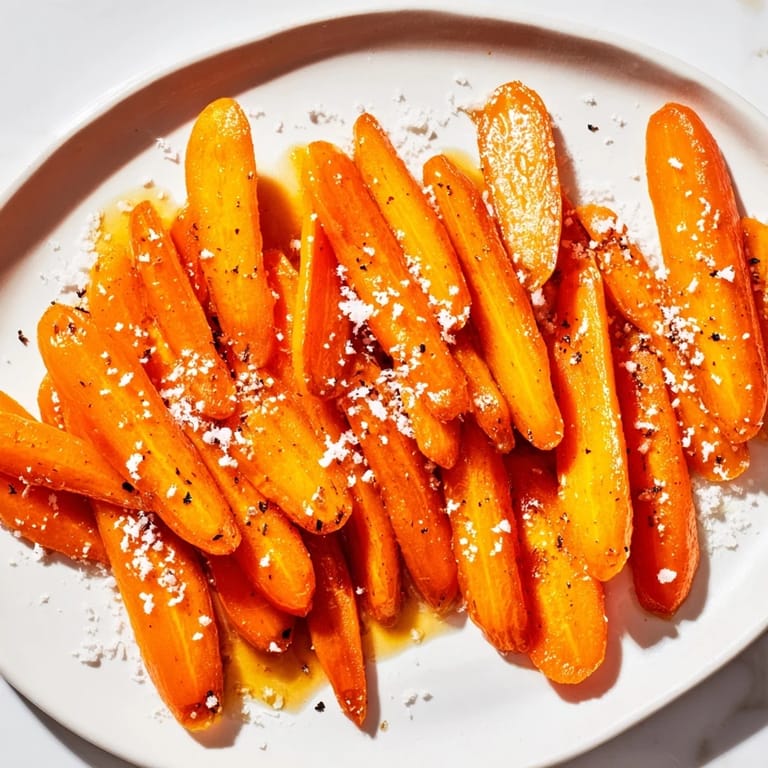
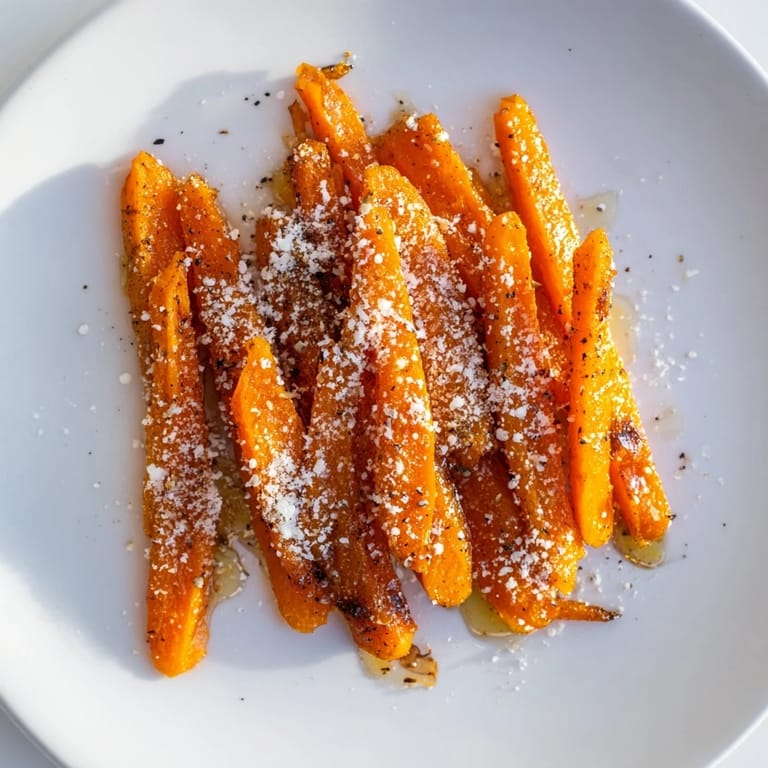
Save There's something almost meditative about standing in front of a hot oven, watching these small carrots transform from tender vegetables into something that catches the light with its golden, caramelized edges. It's one of those moments where you realize cooking isn't always about complicated techniques—sometimes it's just about respecting simple ingredients and giving them the right conditions to become something special.
Variations Worth Trying
Once you master the basic version, these carrots become a canvas for experimentation. I've tried swapping the Parmesan for Pecorino Romano when I want something sharper and more assertive, and the difference is immediately noticeable—it adds a bite that lingers. Another time, I tossed a pinch of smoked paprika into the coating and suddenly they felt like they belonged at a different dinner entirely. The beauty of this recipe is that the technique stays the same, but the personality can shift depending on what you're serving alongside it or what mood you're in.
Serving Suggestions
These work beautifully as a side dish with roasted chicken, but I've found they're just as happy sitting on a platter next to creamy dips as a snack. They're sturdy enough to hold up on a buffet table, and they stay crispy even as they cool—which is rare for roasted vegetables. I've also crumbled the leftovers over a salad the next day and discovered an entirely different purpose for them. The versatility is part of what makes them so useful to have in your cooking repertoire.
Storing and Reheating
Store any leftovers in an airtight container in the refrigerator for up to three days, though they're honestly best eaten the day they're made when the Parmesan is at its crispiest. If you need to reheat them, a quick 5–7 minutes in a 180°C (350°F) oven will restore some of that texture without drying them out completely.
- They're best served warm or at room temperature, never straight from the cold refrigerator.
- Double the recipe if you're feeding a crowd—they disappear faster than you'd expect.
- If making ahead, you can prepare everything up to step 4 and finish roasting just before serving.
 Save
Save These carrots remind me that the best recipes are often the simplest ones, where a few good ingredients and proper technique let each element shine. Once you've made them, they become one of those dishes that feels like your own, ready to pull out whenever you need something that feels both comforting and a little bit special.
Kitchen Tips & Answers
- → How do you achieve a crispy texture on the baby carrots?
Coating the carrots in olive oil and roasting them at a high temperature helps caramelize their natural sugars, creating a crispy exterior while keeping the inside tender.
- → Can Pecorino Romano be used instead of Parmesan?
Yes, substituting Pecorino Romano offers a sharper, saltier flavor that complements the sweetness of the carrots well.
- → Is it necessary to slice the carrots lengthwise for roasting?
Slicing lengthwise increases surface area, resulting in extra crunch, but whole baby carrots also roast well with a tender interior.
- → What is the role of honey in this dish?
Honey adds a natural sweetness that balances the savory notes of Parmesan and seasoning, enhancing the caramelization during roasting.
- → Can garlic powder be omitted or substituted?
Yes, garlic powder is optional and can be omitted or replaced with fresh minced garlic or other spices based on preference.