 Save
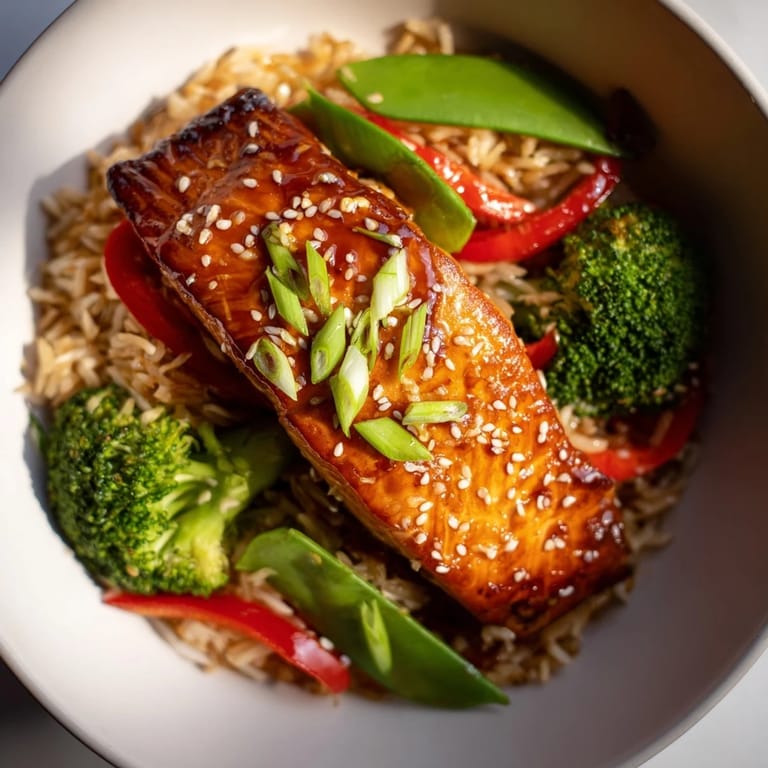
Save The first time I made this maple soy glazed salmon, my kitchen smelled incredible from the moment the garlic hit the pan. My roommate wandered in from her room asking what on earth I was cooking that smelled so amazing. We ended up eating straight from the pan, barely waiting to get everything on the table.
I made this for my parents last Tuesday night when they popped over unexpectedly. My dad kept asking what the secret ingredient was and seemed genuinely shocked when I told him it was just maple syrup and soy sauce. He asked for the recipe before he even finished his plate.
Ingredients
- 4 salmon fillets: I prefer center-cut pieces for even cooking, about 150 g each works perfectly
- Salt and black pepper: A light seasoning is all you need since the glaze provides so much flavor
- Pure maple syrup: The real stuff matters here—imitation syrup just does not caramelize the same way
- Low-sodium soy sauce: Regular soy sauce can make the glaze overwhelmingly salty
- Rice vinegar: Adds a subtle brightness that cuts through the sweetness
- Fresh lime juice: Use fresh, not bottled—the difference is night and day
- Sesame oil: Toasted sesame oil gives that deep, nutty aroma we associate with Asian flavors
- Fresh garlic and ginger: Grate the ginger on a microplane to avoid stringy bits in your glaze
- Jasmine or basmati rice: Jasmine rice cooks up fluffy and slightly fragrant, perfect for soaking up sauces
- Broccoli, snap peas, and red bell pepper: This trio gives you beautiful color and satisfying crunch
- Vegetable oil: Use a neutral oil with a high smoke point for searing the salmon
- Green onions, sesame seeds, and lime wedges: These garnishes make the dish look and taste complete
Tired of Takeout? 🥡
Get 10 meals you can make faster than delivery arrives. Seriously.
One email. No spam. Unsubscribe anytime.
Instructions
- Get your rice going first:
- Rinse the rice until the water runs clear, then combine it with 2 cups water in a medium saucepan. Bring to a boil, reduce to low, cover tightly, and simmer for 12 minutes. Turn off the heat and let it steam, covered, for another 5 minutes.
- Whisk together your glaze:
- In a small bowl, combine the maple syrup, soy sauce, rice vinegar, lime juice, sesame oil, minced garlic, and grated ginger. Whisk until the maple syrup is fully incorporated.
- Season the salmon:
- Pat the salmon fillets dry with paper towels, then season both sides lightly with salt and pepper.
- Sear the salmon:
- Heat the vegetable oil in a large nonstick skillet over medium-high heat until it shimmers. Add the salmon skin-side down and cook for 3 minutes until the skin is crispy and golden.
- Add the glaze:
- Carefully flip the salmon fillets and pour the maple soy glaze over them. Cook for 3 to 4 minutes, spooning the glaze over the fish repeatedly, until the salmon is cooked through and the glaze has thickened to a glossy consistency.
- Cook your vegetables:
- While the salmon finishes, steam or sauté the broccoli, snap peas, and bell pepper until crisp-tender, about 3 to 4 minutes. Season with just a pinch of salt.
- Assemble your bowls:
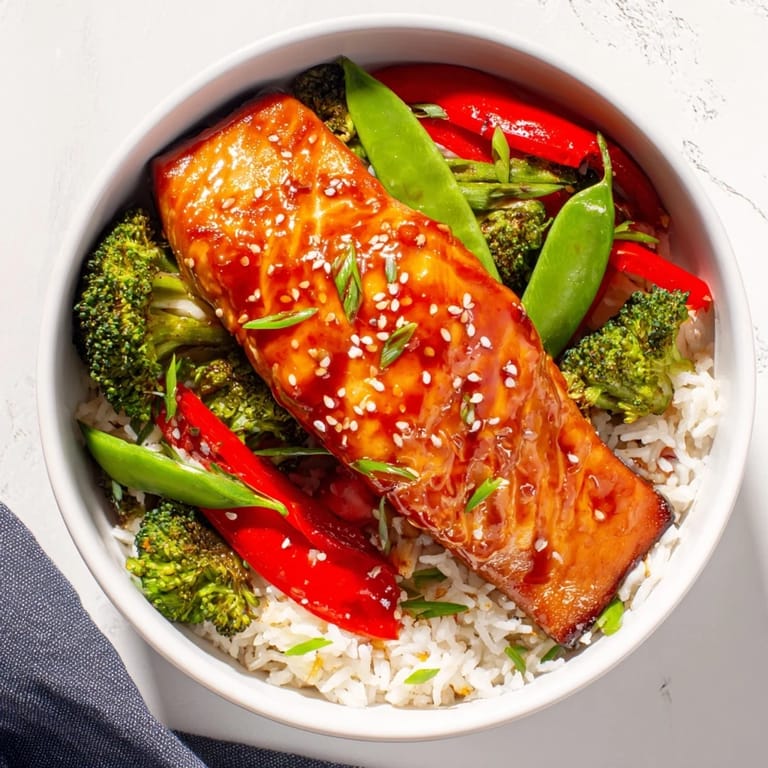
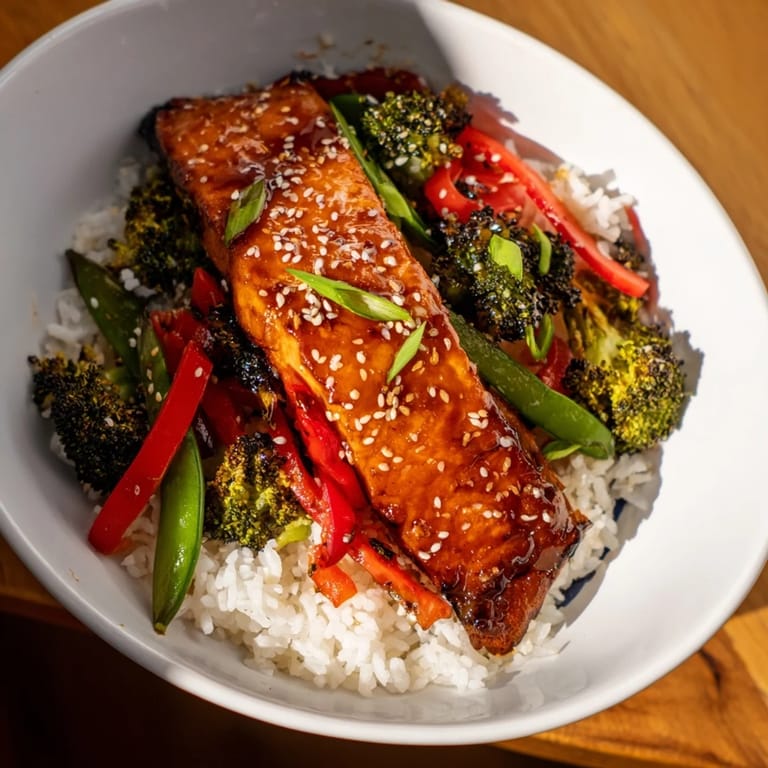
- Divide the rice among four bowls, arrange the vegetables alongside, and top with the glazed salmon. Spoon any remaining glaze from the pan over everything.
- Add the finishing touches:
- Sprinkle with sliced green onions and toasted sesame seeds, then serve with lime wedges on the side.
 Save
Save This recipe became my go-to for those nights when I want something impressive but do not have the energy for anything complicated. There is something so satisfying about pulling together a meal that looks like it came from a restaurant in less time than it takes to watch a sitcom episode.
Getting That Perfect Glaze Consistency
The glaze will seem thin when you first pour it over the salmon, but do not panic. As it bubbles away in the pan, the maple syrup reduces and the mixture becomes that beautiful, thick, lacquer-like coating that makes this dish so stunning. I learned to trust the process even when it looks too liquid at first.
Picking the Right Salmon
I have found that center-cut salmon fillets cook more evenly than tail pieces, which can end up overcooked at the thin end. Also, wild salmon tends to be leaner and cooks faster than farmed Atlantic salmon. Adjust your cooking time by a minute or two depending on the thickness of your fillets.
Making It Your Own
Once you have the basic technique down, this recipe is incredibly flexible. I have used honey instead of maple syrup, added a pinch of red pepper flakes for heat, and swapped in whatever vegetables I had in the crisper drawer. The method stays the same, but you can customize it endlessly.
- Extra vegetables like asparagus, sugar snap peas, or carrots work beautifully here
- Try swapping the rice for quinoa or cauliflower rice for a different twist
- The glaze is also fantastic on chicken thighs or pork tenderloin
 Save
Save I hope this becomes one of those weeknight recipes you turn to again and again. It is the kind of meal that makes you feel like a competent cook without requiring any special skills.
Kitchen Tips & Answers
- → Can I use honey instead of maple syrup?
Yes, honey makes an excellent substitute for maple syrup in the glaze. It provides similar sweetness and helps create that beautiful glossy finish. Use the same amount—3 tablespoons—and adjust slightly to taste if needed.
- → What vegetables work best with this dish?
Broccoli florets, snap peas, and red bell pepper are fantastic choices that cook quickly and maintain their crunch. You can also try asparagus, carrots, snow peas, or bok choy. Just aim for vegetables that become tender-crisp within 3–4 minutes of steaming or sautéing.
- → Is this suitable for meal prep?
Absolutely! The salmon, rice, and vegetables all store well in the refrigerator for 3–4 days. Keep the components separate and reheat gently, adding a splash of water to prevent the rice from drying out. The glaze actually develops even more flavor overnight.
- → Can I make this gluten-free?
Yes, simply swap the regular soy sauce for a gluten-free tamari or coconut aminos. Everything else in the dish—salmon, maple syrup, rice, vegetables—is naturally gluten-free. Double-check your soy sauce label to ensure it meets your dietary needs.
- → How do I know when the salmon is done?
The salmon is perfectly cooked when it flakes easily with a fork and the internal temperature reaches 145°F (63°C). The flesh should appear opaque and slightly translucent in the center. Remember that residual heat will continue cooking the fish slightly after you remove it from the pan.
- → Can I cook the salmon on a sheet pan instead?
Yes! Roast at 400°F (200°C) for 12–15 minutes, brushing with the glaze during the last few minutes. The vegetables can roast alongside on the same pan for easy cleanup. You may need to reduce the glaze separately on the stovetop for that thick, glossy consistency.