 Save
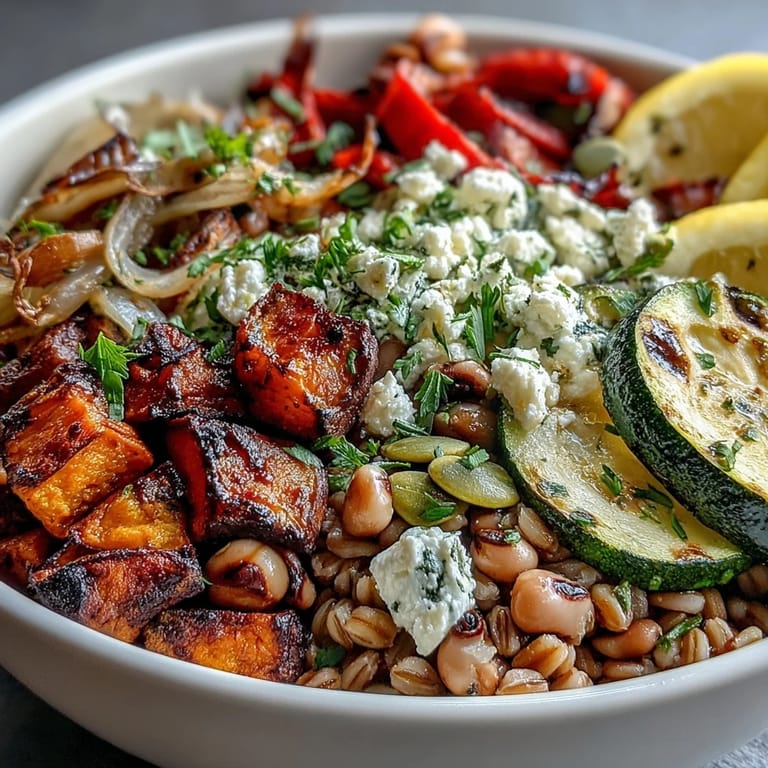
Save My neighbor handed me a container of black-eyed peas one autumn afternoon, the kind that come from a grandmother's recipe, and suddenly I had to figure out what to do with them beyond the traditional Southern sides. I started layering them over warm farro with roasted vegetables purely out of curiosity, and the moment I took that first bite, something clicked—it felt both comforting and completely fresh. That bowl became a regular Thursday thing, and now it's the recipe people ask me to bring when they want something that feels homemade but doesn't shout about it.
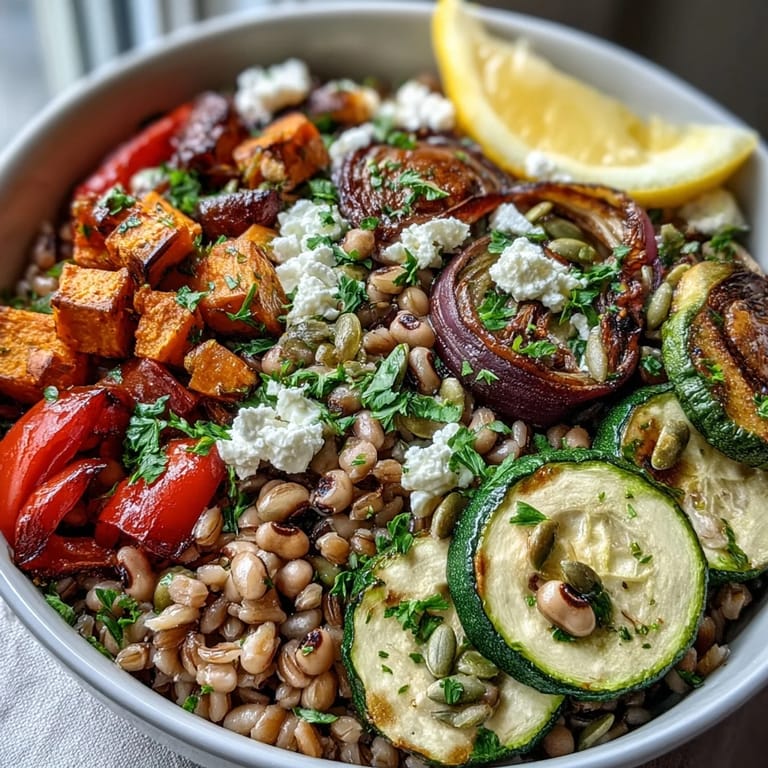
I made this bowl for my friend Sarah when she decided to go vegetarian, and I was nervous it wouldn't feel substantial enough until she cleaned her bowl and asked for the recipe before leaving. The seeds on top gave it that toasty crunch she's always looking for, and the lemon wedge on the side meant she could control how bright it tasted. That afternoon taught me that vegetarian doesn't mean compromising on feeling truly satisfied.
Ingredients
- Farro or wild rice: Choose farro for a nutty chew or wild rice for earthiness; both hold their shape beautifully and won't turn mushy if you're not watching the clock.
- Cooked black-eyed peas: Canned works perfectly and saves time, but if you cook them from dried, you'll notice they have a slightly firmer texture that some people prefer.
- Sweet potato: It caramelizes around the edges when roasted, creating pockets of concentrated sweetness that balance the earthiness of everything else.
- Red bell pepper and zucchini: These vegetables release just enough moisture to create a light steam in the oven, helping everything cook evenly without drying out.
- Red onion: Cut into wedges rather than small pieces so they hold together and develop those charred, sweet edges.
- Smoked paprika and cumin: Together they create a warm flavor that ties the whole bowl together, especially important since there's no meat to anchor the seasoning.
- Fresh herbs: Parsley brings brightness while cilantro adds a peppery note—taste as you decide which direction feels right for your mood.
- Toasted seeds: Pumpkin or sunflower seeds add texture and protein; toasting them yourself takes two minutes and makes a noticeable difference in flavor intensity.
Tired of Takeout? 🥡
Get 10 meals you can make faster than delivery arrives. Seriously.
One email. No spam. Unsubscribe anytime.
Instructions
- Get your oven ready and start the grains:
- Preheat to 425°F and combine your chosen grain with water or broth and salt in a medium saucepan. Bring to a boil, then lower the heat and let it simmer gently—the steam should barely disturb the surface.
- Prepare vegetables while grains cook:
- Cut your sweet potato into roughly half-inch cubes so they roast in time, dice the pepper, slice the zucchini into half-moons, and cut the onion into wedges. Toss everything with olive oil and spices until evenly coated, then spread on a baking sheet in a single layer.
- Roast until caramelized:
- Place the baking sheet in the oven and let the vegetables work for 20 to 25 minutes, stirring halfway through so the pieces on the edges have a chance to brown. You'll know they're ready when the sweet potato edges look slightly shriveled and golden.
- Warm the black-eyed peas:
- While vegetables finish roasting, heat your black-eyed peas gently in a small saucepan or quickly in the microwave just until they're warm through.
- Build your bowls:
- Divide the cooked grains among four bowls, then top each with black-eyed peas and roasted vegetables, creating little piles so you get everything in each bite.
- Finish with fresh elements:
- Scatter herbs, seeds, and cheese (if using) over each bowl, then serve immediately with lemon wedges on the side so people can squeeze as much brightness as they want.
 Save
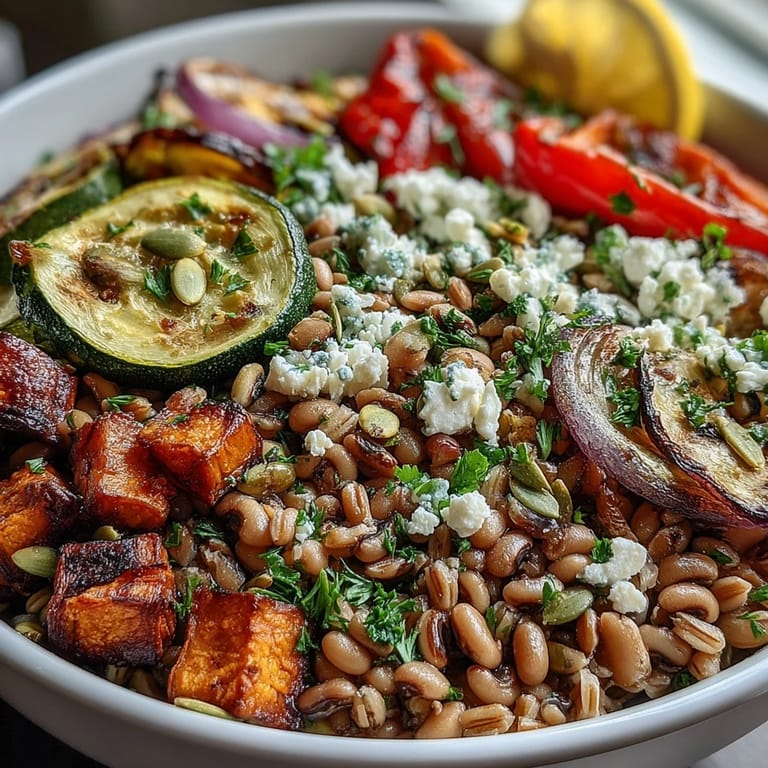
Save My daughter took one look at this bowl and decided black-eyed peas weren't scary after all, which felt like a quiet victory in the ongoing food conversation we have at our table. Now she asks specifically for the one with the seeds on top, and I realized this recipe isn't just nourishing—it's become something we both look forward to.
Grain Choices and Their Personalities
Farro brings a slightly chewy texture and subtle nutty flavor that makes you feel like you're eating something traditionally hearty, while wild rice tastes more earthy and mineral-like, almost like something foraged. Brown rice works when you want something more predictable, and quinoa transforms the bowl into something lighter and fluffier. I've found that the grain choice changes the entire mood of the bowl, so don't hesitate to experiment and notice which one feels right depending on the season and what else you're eating that week.
Making It Your Own
The beauty of this bowl is that it welcomes improvisation without falling apart. Add avocado slices after assembling for creaminess, top with a poached egg if you want extra richness, or drizzle with tahini-lemon dressing for something more indulgent than just lemon wedges. I've added roasted chickpeas for extra crunch, swapped the seeds for toasted nuts, and once even topped it with crispy shallots from a jar when I was short on time.
Flavor Boosters and Customization Tips
A squeeze of fresh lemon or lime at the end brings everything into focus in a way that nothing else can replicate. Hot sauce or chili flakes work beautifully if you want heat, while a drizzle of herbed vinaigrette turns it from weeknight dinner into something you'd serve to guests. This bowl adapts to your cravings rather than demanding anything specific.
- Taste the grains after cooking and season them directly with salt and pepper rather than relying on the vegetables to do all the seasoning work.
- Prep vegetables the night before and store them in the refrigerator so the actual cooking time feels manageable on busy evenings.
- Toast your seeds in a dry skillet for a minute or two right before serving so they're still warm and most fragrant.
 Save
Save This bowl has become my answer to the question of what to make when you want something that feels nourishing without any fuss. It's the kind of recipe that quietly proves that simple food, built with intention and good ingredients, needs no apology.
Kitchen Tips & Answers
- → Can I use dried black-eyed peas instead of canned?
Yes, soak dried black-eyed peas overnight, then simmer for 45-60 minutes until tender. One cup dried yields about 3 cups cooked.
- → What other grains work well in this bowl?
Brown rice, quinoa, barley, or even freekeh make excellent substitutions. Adjust cooking time according to package instructions.
- → How long do the roasted vegetables stay fresh?
Store roasted vegetables in an airtight container for up to 4 days. Reheat in the oven at 350°F for 10 minutes to restore crispness.
- → Can this bowl be made entirely gluten-free?
Absolutely. Use wild rice, quinoa, or certified gluten-free grains instead of farro to make it completely gluten-free.
- → What protein additions work well?
Consider adding chickpeas, roasted chickpeas, grilled chicken, tofu, or a poached egg to boost protein content.