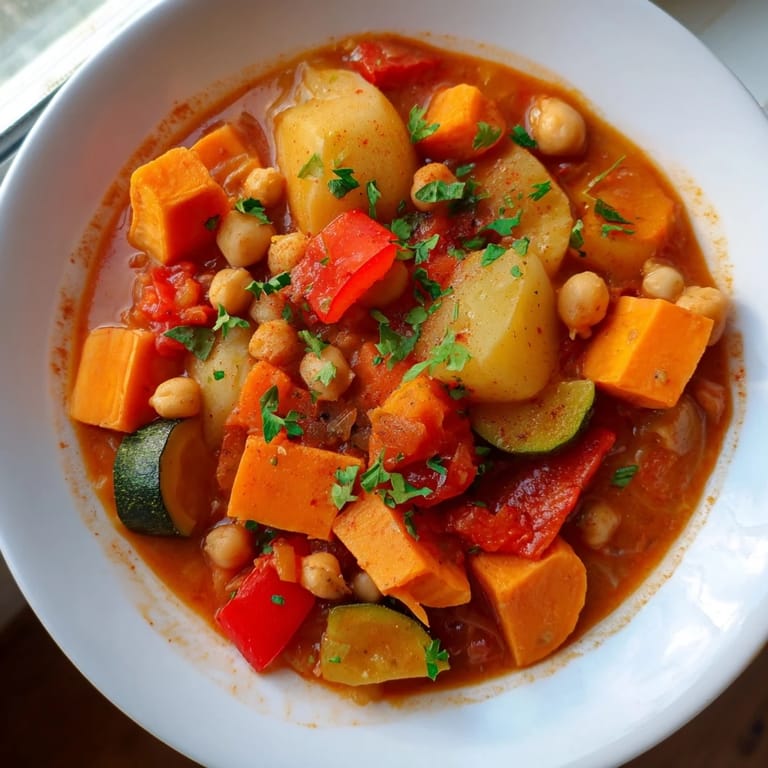
 Save
Save There's something almost magical about watching a pot of humble vegetables transform into something deeply satisfying. I discovered this stew by accident one November evening when my fridge was crowded with sweet potatoes from the farmers market and I wanted something more interesting than the usual roasted vegetables. What started as improvisation became my go-to comfort meal, the kind of dish that fills your kitchen with warmth and makes everyone around the table slower down and actually talk to each other.
I made this for a dinner party last winter when I was nervous about feeding a table full of people with different dietary needs, and it became the thing everyone kept talking about. One guest who claims she never eats stew came back for seconds and asked for the recipe right there between bites, which felt like winning some kind of unspoken cooking award.
Ingredients
- Sweet potatoes: They're the heart of this stew, providing natural sweetness and a velvety texture as they break down slightly during cooking.
- Regular potatoes: These ground the sweet ones with earthiness and help thicken the broth as they soften.
- Carrots: Slice them on a slight diagonal so they cook at the same pace as the potatoes and stay tender-crisp.
- Onion, celery, and garlic: The holy trinity that builds flavor from the very first minute in the pot, creating an aromatic base that everything else builds on.
- Red bell pepper and zucchini: These add brightness and texture, plus they cook quickly so save them for the second sauté step.
- Cannellini beans and chickpeas: Either one works beautifully, but the combination gives you two different textures that make each spoonful interesting.
- Diced tomatoes and tomato paste: The tomato paste concentrates the flavor in just two tablespoons, so don't skip it or dilute it with water.
- Vegetable broth: Quality matters here since it's the backbone of your stew, so use something you'd actually drink.
- Smoked paprika, thyme, and cumin: This spice trio creates warmth and depth without being aggressive or overshadowing the vegetables.
- Bay leaf: It sits quietly in the background adding subtle complexity, so remember to fish it out before serving.
- Olive oil: Use decent olive oil for sautéing, not the expensive stuff, but something with actual flavor.
Tired of Takeout? 🥡
Get 10 meals you can make faster than delivery arrives. Seriously.
One email. No spam. Unsubscribe anytime.
Instructions
- Build your flavor base:
- Heat olive oil in a large pot and add diced onion, celery, and carrot, letting them soften for about 5 minutes until the onion turns translucent. You'll know it's ready when the kitchen smells sweet and savory at the same time.
- Add brightness and texture:
- Stir in minced garlic, red bell pepper, and diced zucchini, cooking for another 3 minutes until the garlic loses that sharp raw edge. This is when you realize you're doing something intentional instead of just throwing things in a pot.
- Toast the spices:
- Add the sweet potatoes, regular potatoes, smoked paprika, thyme, cumin, black pepper, and salt, then let everything cook together for 2 minutes until the spices wake up and perfume the whole pot. The kitchen should smell incredible at this point.
- Create the broth:
- Stir in the tomato paste first, letting it coat everything and deepen the color, then add the diced tomatoes, vegetable broth, and bay leaf. Bring the whole thing to a boil so the liquid comes alive, then immediately turn the heat down to low.
- First simmer:
- Cover the pot and let it bubble gently for 20 minutes, which gives the potatoes time to soften without falling apart and lets all the flavors start talking to each other. Peek under the lid once or twice just to make sure it's gently simmering, not aggressively boiling.
- Bring in the beans:
- Add the drained cannellini beans and chickpeas, then simmer uncovered for 10 to 15 more minutes so the stew can thicken slightly and the beans warm through. The liquid should reduce by maybe a quarter, becoming deeper in color and more concentrated in flavor.
- Final touch with spinach:
- If you're using spinach, stir it in now and cook for just 2 minutes until it wilts into the warm broth, turning the whole pot a darker green. If you're skipping it, that's completely fine, the stew is already full and complete.
- Taste and balance:
- This is when you become the chef, tasting and deciding if you want more salt, a pinch more paprika, or even a squeeze of lemon juice if the tomato feels too dominant. Remove the bay leaf before anyone eats it.
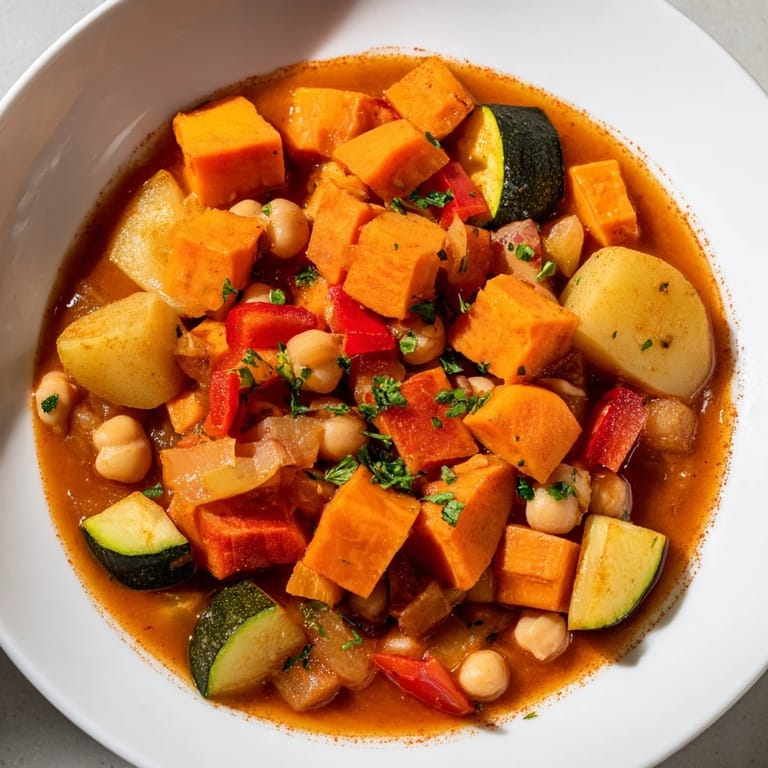 Save
Save There was a moment midway through cooking when my son walked into the kitchen after school, smelled the pot, and just sat down at the table without even being asked. That's when I knew this wasn't just another recipe, it was something that actually works in real life.
Why This Stew Works for Weeknights
The magic here is that you do almost everything in one pot with minimal cleanup, but the stew tastes like you've been tending it for hours. Most of the work happens in the first 10 minutes of chopping, then you can step away and do something else while the oven, pot, or the world turns. By the time you come back, dinner is waiting.
Stretching It and Making It Your Own
This stew is genuinely forgiving, which is the best quality a comfort food can have. If you don't have cannellini beans, kidney beans or black beans work just as well, and if that red bell pepper hasn't arrived yet at your market, a cup of diced mushrooms slides right in without anyone noticing the difference. The vegetable amounts are guides, not commandments—adjust for what you have and what you love.
Serving and Storing Your Stew
Serve this stew in wide bowls with a grind of fresh black pepper and a shower of parsley if you have it, but honestly it's perfect on its own. A wedge of lemon on the side lets people brighten it up if they want, and crusty bread is never unwelcome.
- This stew actually improves the next day when the flavors have time to settle and deepen, making it perfect for meal prep.
- Store it in the fridge for up to four days in an airtight container, or freeze it for up to two months.
- Reheat gently on the stovetop with a splash of broth if it's thickened too much, never blast it in the microwave where it can scorch.
 Save
Save This stew has become the meal I make when I want to feel like I'm taking care of people, including myself. It's the kind of food that reminds us that comfort and nutrition aren't mutually exclusive.
Kitchen Tips & Answers
- → Can I substitute the beans in the stew?
Yes, lentils or other legumes can be used in place of beans to vary texture and flavor.
- → How long should I simmer the stew for best results?
Simmer uncovered for 10-15 minutes after adding the beans to meld flavors and thicken the broth.
- → Is this dish suitable for gluten-free diets?
Yes, all ingredients are naturally gluten-free, making this stew a safe choice for gluten-sensitive individuals.
- → Can I make the stew spicier?
Add ½ teaspoon of chili flakes when sautéing the vegetables to introduce a spicier kick.
- → What garnishes enhance the flavor?
Fresh chopped parsley and lemon wedges brighten the dish and complement the rich tomato broth.