 Save
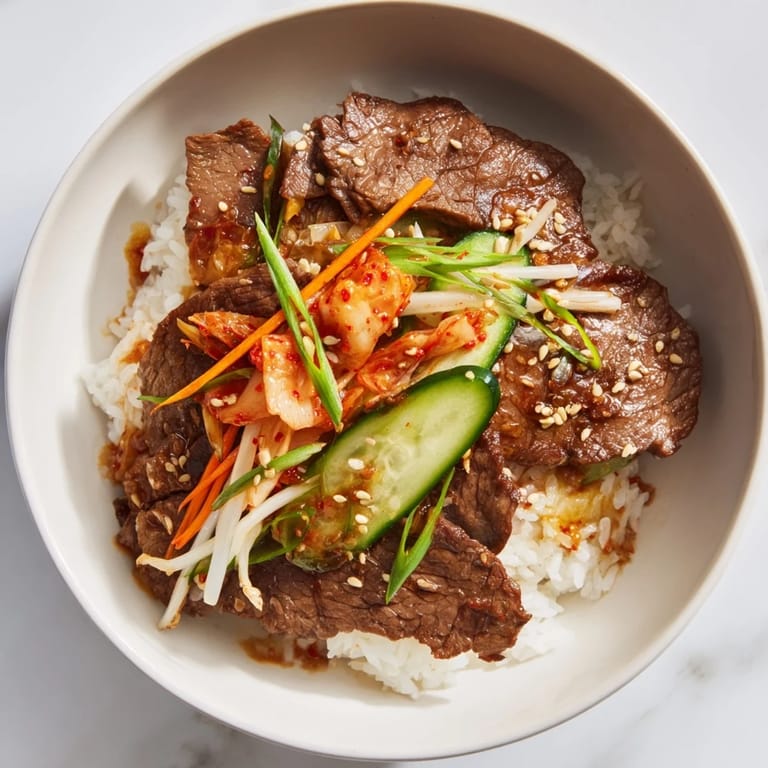
Save The first time I made bulgogi at home, I was chasing a memory of a late-night Korean restaurant visit where the server brought a sizzling plate to our table. The beef was so tender it dissolved on my tongue, glazed in this glossy caramel sauce that tasted like someone had bottled sweetness and umami together. I stood in my kitchen weeks later, determined to recreate that magic with just a sharp knife and a hot skillet, and somehow, a grated pear changed everything.
I remember cooking this for my partner on a random Tuesday when we were both tired of takeout menus. The smell of the beef hitting the hot pan filled the kitchen so completely that within thirty seconds, they wandered in from the other room asking what was happening. By the time I'd finished assembling the bowls with all those bright vegetables, they were already reaching for chopsticks.
Ingredients
- Beef sirloin or ribeye, thinly sliced (500 g): Slicing against the grain makes all the difference—it keeps each bite tender instead of chewy. Ask your butcher to slice it, or freeze the meat for an hour first and use a sharp knife.
- Soy sauce (3 tbsp): This is your umami foundation, the salty backbone that makes the whole dish sing.
- Brown sugar (2 tbsp): It dissolves into the sauce and caramelizes when the beef hits the pan, creating that glossy, mahogany finish.
- Sesame oil (1 tbsp): Use the good stuff—it's nutty and aromatic and worth every penny.
- Rice vinegar (1 tbsp): A small splash that brightens everything and keeps the sauce from feeling one-note.
- Garlic and ginger (2 cloves and 1 thumb-sized piece): Fresh is non-negotiable; these two are the flavor engine.
- Grated pear or apple (1): The secret ingredient that nobody expects—it adds subtle sweetness and helps tenderize the beef.
- Gochujang (1 tbsp, optional): Korean chili paste that brings heat and depth; leave it out if you prefer mild, add extra if you like a kick.
- Scallions and toasted sesame seeds: These go into the marinade and also get sprinkled on top for texture and brightness.
- Jasmine or short-grain white rice (2 cups cooked): The blank canvas that lets the beef shine.
- Carrot, cucumber, and bean sprouts (1 cup each): Raw crunch and freshness against the warm, caramelized beef—this contrast is everything.
- Kimchi (1 cup, optional): Adds funk and fermented depth if you want it; totally optional but never a mistake.
Tired of Takeout? 🥡
Get 10 meals you can make faster than delivery arrives. Seriously.
One email. No spam. Unsubscribe anytime.
Instructions
- Build the marinade:
- In a large bowl, whisk together soy sauce, brown sugar, sesame oil, rice vinegar, minced garlic, grated ginger, and grated pear. The mixture should smell sweet and funky at the same time. Stir in gochujang if you're using it, then add the scallions, sesame seeds, and black pepper.
- Marinate the beef:
- Add your thinly sliced beef to the bowl and toss it around so every piece gets coated in that glossy sauce. Cover it and let it sit for at least 15 minutes—but if you have time, an hour makes the beef even more tender and flavorful.
- Get your pan screaming hot:
- Heat a large skillet or wok over high heat until it's almost smoking. You want it hot enough that the beef sizzles immediately when it hits the surface.
- Sear the beef in batches:
- Don't overcrowd the pan; work in two batches if you need to. Add the beef with all its marinade and stir-fry for 2-3 minutes, until the edges are caramelized and the meat is cooked through but still tender. The sauce will reduce and cling to the beef in this beautiful, glossy way.
- Assemble your bowls:
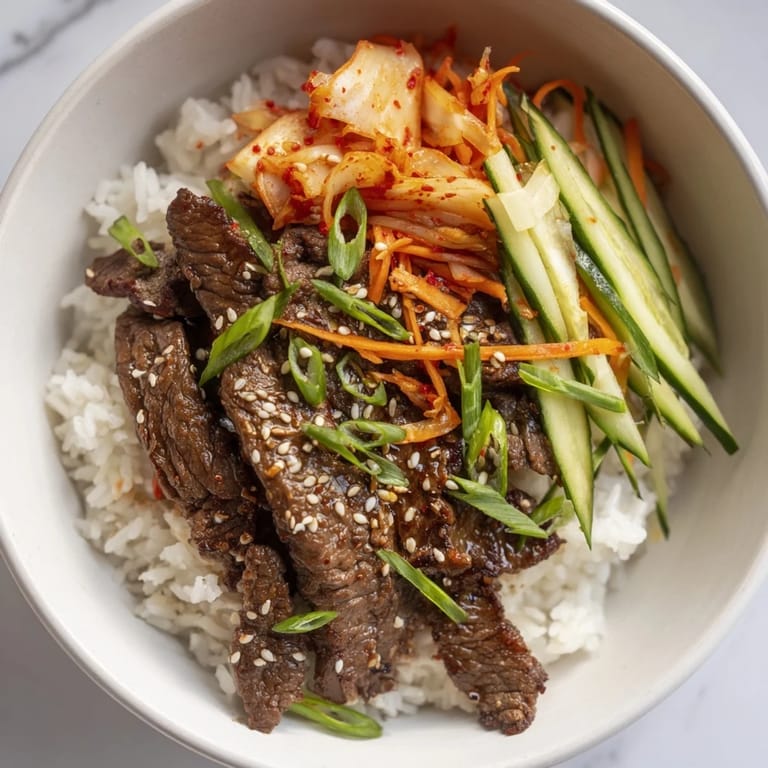
- Divide the cooked rice among four bowls, then arrange the beef on top. Arrange the carrot, cucumber, bean sprouts, and kimchi around it like you're composing a painting.
- Finish and serve:
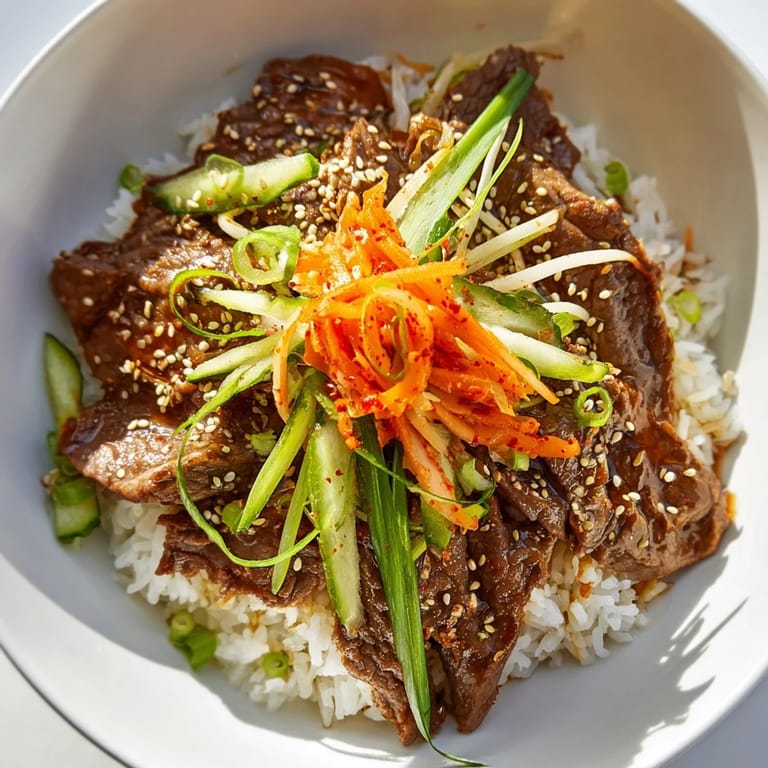
- Scatter the remaining scallions and sesame seeds on top, and serve immediately while the beef is still warm and the vegetables are still crisp.
 Save
Save There was an evening when I made this for friends who were skeptical about any recipe that involved grating a pear into beef marinade. Watching them taste it and immediately go quiet, then look up with raised eyebrows—that's when I knew this recipe had become something special to me. It's the kind of dish that turns a casual dinner into something memorable.
The Slicing Secret
I learned the hard way that how you slice your beef matters more than you'd think. Slicing against the grain means cutting perpendicular to the muscle fibers, which shortens them and makes every bite tender. The first time I didn't pay attention to this detail, I ended up with beef that was technically cooked but still chewy. Now I always ask the butcher to do it, or I pop the meat in the freezer for an hour first so it's firm enough to slice cleanly with a sharp knife.
Customizing Your Bowl
The beauty of this dish is that it's endlessly flexible. Some nights I'm in the mood for the full experience with all the vegetables and kimchi. Other times, especially after a long day, I'll just do beef over rice with a sprinkle of sesame seeds and call it done. I've seen people add a fried egg on top, and honestly, that runny yolk mixing into the warm rice is a game-changer if you're looking for extra richness. For a low-carb version, cauliflower rice works beautifully and doesn't fight with the sauce the way some grain substitutes do.
Building Flavor Layers
What makes bulgogi feel so sophisticated is that it's built on contrasts. You have the warm, caramelized beef against the cool, crisp vegetables. The sweet marinade balanced by the vinegar. The nuttiness of sesame against the brightness of fresh scallions. Each element is simple on its own, but together they create something that feels more complex than the ingredient list suggests. This is why taking time with the marinade and not rushing the sear matters so much.
- Taste the marinade before you add the beef—it should hit you with sweet, salty, and savory all at once.
- If gochujang seems intimidating, start with half the amount and taste as you go.
- Save any extra marinade in the fridge; it keeps for weeks and is incredible on chicken or tofu too.
 Save
Save This dish has become my answer to the question of what to make when I want something that feels both nourishing and exciting. It's quick enough for a weeknight but impressive enough to serve to people whose opinions matter to you.
Kitchen Tips & Answers
- → What cut of beef works best for this dish?
Ribeye or sirloin are ideal due to their tenderness and quick cooking time, ensuring juicy results.
- → Can I adjust the spice level?
Yes, the heat can be tailored by adding more or less gochujang, or omitting it for a milder flavor.
- → What are good rice options to serve with this bowl?
Jasmine or short-grain white rice works well, but cauliflower rice can be used for a low-carb alternative.
- → How long should the beef marinate?
At least 15 minutes is recommended, but up to an hour allows flavors to deepen further.
- → Can I prepare any ingredients in advance?
Yes, vegetables like carrots and cucumbers can be prepped ahead, and the beef marinade can be made earlier for convenience.