 Save
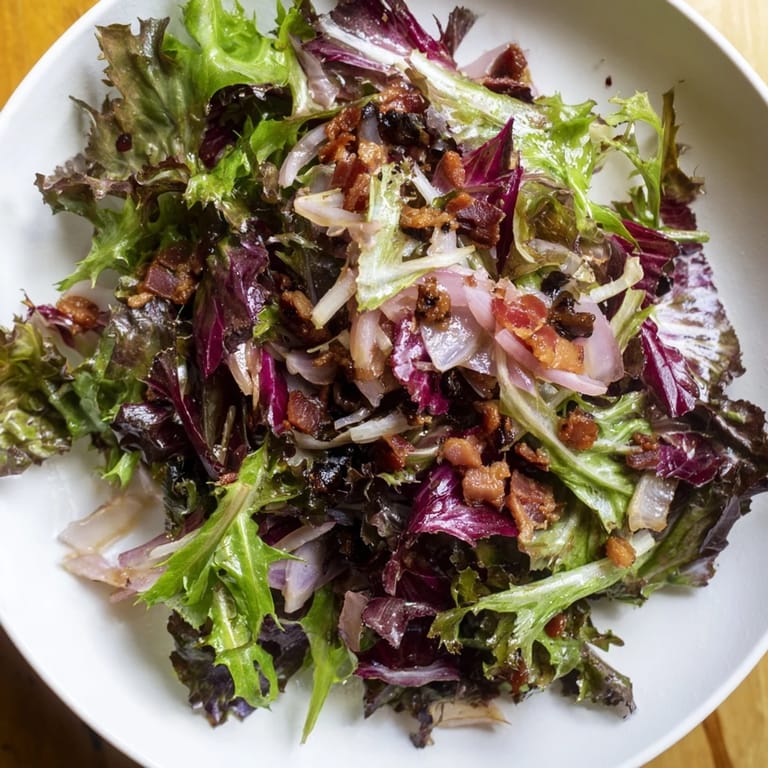
Save There's something about a warm salad that catches you off guard in the best way. Years back, my dad insisted that salad had to be hot to matter, and I thought he was being deliberately contrary. Then one winter evening, I tossed bitter greens with the sizzling fat from bacon and watched them soften just slightly, turning glossy and alive. That single bowl changed everything I thought I knew about what salad could be.
I made this for a dinner party once when I was nervous about impressing someone's mother. The salad came out warm and glistening, and she actually asked for the recipe before dessert arrived. That's when I realized good food sometimes comes down to simple things done with intention.
Ingredients
- Mixed bitter greens (escarole, frisée, dandelion, radicchio, chicory): These aren't mild—they have personality, with a gentle bitterness that becomes sweeter when kissed by warmth and acid.
- Red onion: Sliced thin, it adds a bright sharpness that plays beautifully against the richness of bacon.
- Thick-cut bacon: Use the best bacon you can find; those rendered drippings are liquid gold for the dressing.
- Red wine vinegar: This is the backbone of the dressing, bright and clean.
- Dijon mustard: An emulsifier and flavor anchor that keeps everything cohesive.
- Honey: Just a teaspoon, enough to round out the sharp edges without making it sweet.
- Black pepper and salt: Season generously; these greens can handle it.
- Extra-virgin olive oil: Added last and slowly, it mellows the vinegar and creates that silky finish.
- Hard-boiled eggs and toasted nuts (optional): Either turns this into something more substantial, a quiet luxury.
Tired of Takeout? 🥡
Get 10 meals you can make faster than delivery arrives. Seriously.
One email. No spam. Unsubscribe anytime.
Instructions
- Prepare the greens:
- Rinse and dry them well—water is the enemy of a good salad. Tear larger leaves into bite-size pieces and pile them into your bowl with the thin red onion slices.
- Render the bacon:
- Cook it in a large skillet over medium heat until the edges are crispy and the fat is golden, about 7 to 9 minutes. Scoop the bacon onto paper towels, but leave every bit of fat behind in the pan.
- Build the dressing:
- Lower the heat and pour in the red wine vinegar, mustard, honey, pepper, and salt directly into the warm fat. Whisk hard, scraping the bottom of the skillet to release all those caramelized bits. You're coaxing flavor from every corner.
- Emulsify with oil:
- Slowly drizzle the olive oil while whisking constantly. You'll feel it come together, becoming smooth and glossy, warm to the touch.
- Dress the salad:
- Pour that hot dressing over the greens immediately—the heat is doing the work here, gently wilting them just enough to make them tender but still have some snap. Toss well, scatter the bacon back over everything, then taste and adjust.
- Finish and serve:
- Arrange on plates, top with quartered hard-boiled eggs or toasted nuts if you're using them, and serve while it's still warm.
 Save
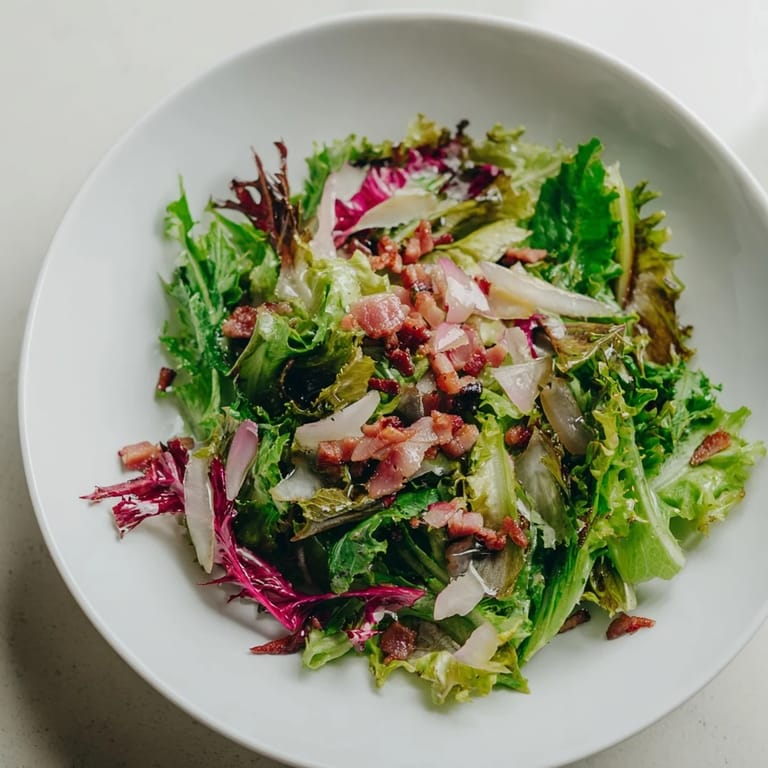
Save There was a night when my partner came home from a terrible day, and we stood in the kitchen while this salad came together in the pan. By the time we sat down, something had shifted. Not because of what was on the plate, but because we'd slowed down enough to do something intentional together.
The Magic of Warm Vinaigrettes
Warm dressings do something cold vinaigrettes can't—they soften bitter flavors without masking them, they make greens tender without making them mushy, and they create this sense of comfort that feels almost like being cared for. The bacon fat carries flavor deeper into the leaves, making every bite taste better than the last.
Customizing Without Losing the Spirit
This salad is flexible enough to bend to what you have on hand. Maple syrup instead of honey brings an earthier sweetness that whispers instead of shouts. Thinly sliced pears or apples add a delicate crunch and a little sweetness that makes the bitterness shine brighter. If you're cooking for someone who doesn't eat pork, mushrooms sautéed until golden and nutty will give you that umami depth you're after, though you'll want to use a little extra olive oil to replace the bacon fat.
Why This Works Every Time
The formula here is simple but unforgiving—quality ingredients and proper technique. The emulsification of oil into vinegar, the careful balance of acid and heat, the way the greens release just enough moisture to mingle with the dressing. Get the fundamentals right, and this salad becomes your secret weapon.
- Choose your greens with intention; if they're wilted or sad-looking at the market, they'll taste that way on your plate.
- Don't be shy with seasoning the dressing; it needs to be bold enough to stand up to the bitterness without tasting salty.
- Serve it warm but not steaming hot, so the greens soften without turning to mush.
 Save
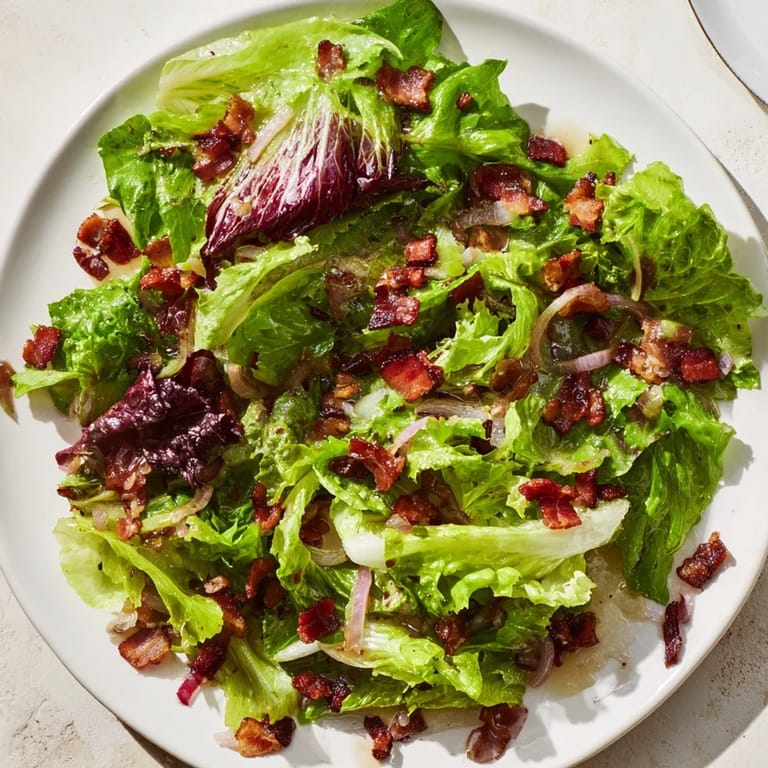
Save This is the kind of salad that reminds you why cooking matters. It's simple enough to make on a Tuesday night, generous enough to serve with pride, and warm enough to feel like more than just vegetables on a plate.
Kitchen Tips & Answers
- → What types of greens work best for this salad?
Bitter greens such as escarole, frisée, dandelion, radicchio, or chicory provide the ideal texture and flavor balance for this preparation.
- → How does the warm bacon dressing affect the greens?
The warm dressing gently wilts the bitter greens, softening their texture while infusing them with savory bacon flavor.
- → Can I substitute honey in the dressing?
Yes, maple syrup can be used as an alternative sweetener to add a different but complementary sweetness.
- → Is there a vegetarian version of this dish?
Omit the bacon and replace bacon fat with extra olive oil, using sautéed mushrooms for a similar savory effect.
- → What garnishes complement the flavors here?
Hard-boiled eggs and toasted walnuts or pecans add rich texture and contrast, enhancing the overall dish.
- → How do I ensure the greens are not soggy?
Thoroughly rinse and dry the greens before dressing, and immediately toss with the warm vinaigrette to maintain a crisp yet slightly wilted texture.